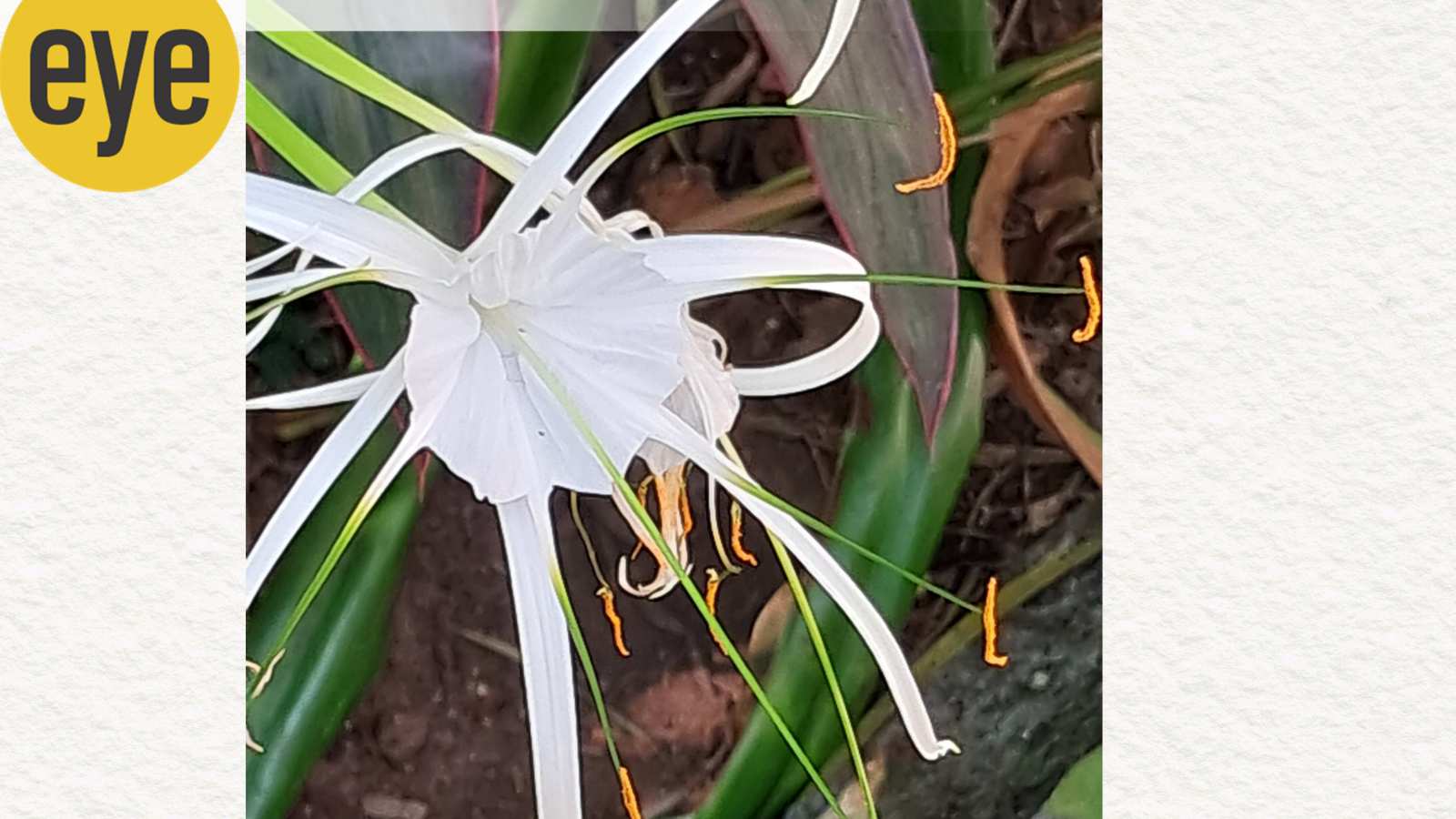
Weather ePaper Today’s Paper Journalism of Courage Home ePaper Politics Explained Opinion India Business Premium Cities UPSC Entertainment Sports World Lifestyle Tech Subscribe Sign In TrendingUPSC OfferIPL 2026US NewsPuzzles & GamesLegal NewsFresh TakeHealthResearch🎙️ Podcast Advertisement function checkAndLoadWindowSizeScript() { if (window.jQuery) { // jQuery is loaded, include your script jQuery(document).ready(function($) { // Your existing script for checking window width if (window.innerWidth) var page_w = window.innerWidth; else if (document.all) var page_w = document.body.clientWidth; if (page_w > 1024) { $(".add-left, .add-right").show(); } else { $(".add-left, .add-right").hide(); } }); } else { // jQuery is not loaded, check again after 0.2 seconds setTimeout(checkAndLoadWindowSizeScript, 200); } } // Initial call to the function checkAndLoadWindowSizeScript(); NewsEyePoisonous yet beautiful: The hidden dangers and fascinating myths of Spider Lilies and Lily of the Valley Premium Poisonous yet beautiful: The hidden dangers and fascinating myths of Spider Lilies and Lily of the Valley It is astonishing how this huge group of lovely plants, each one deadly to some degree, has held enough fascination for us to give rise to folklore, making us believe that if something is beautiful, it must be good. Written by: Ranjit Lal6 min readNew DelhiApr 20, 2026 02:09 PM IST Spider Lily (Photo by Ranjit Lal) Make us preferred source on Google Whatsapp twitter Facebook Reddit PRINT Perhaps the most familiar of these three lovely (and toxic) lilies is the Spider lily, often grown in pots and beds – with its slim, long, white, gracefully curling petals. Actually, there’s more than meets the eye in this group of lilies, and Spider lily is just the common name given to several species belonging to the lily subfamily called Amaryllidoideae, not all of them white. For instance, there is the Crinum genus containing around 180 species, usually found along the sides of streams, lakes and waterbodies in tropical and subtropical areas worldwide but especially in South Africa. It is also known as the poison bulb lily and one species, with its showy drooping spoke-like white petals is a favourite among horticulturists and the one that we’re probably most familiar with. Another genus, Hymenocallis, has 60 species, of which one species is quite similar to the one above, and is native to the Caribbean and South-East United States, with blooms that may be white, green or yellow. Their name is derived from the Greek ‘hymen’, meaning membrane and ‘Kalos’ meaning beautiful. Also read | Are peace lilies real lilies? Types, toxicity, and symbolism explained The Lycoris genus has 20 species, native to eastern, southeast Asia, west to Pakistan and Iran. The blooms of one species may be pink, white, orange or red and resemble small Easter lilies. Disrespectfully, they are also known as ‘naked ladies’, a sobriquet even given to other plants. More charitably, they are also called hurricane lilies or cluster amaryllis. These are native to southeast China and Korea, growing in wet areas such as marshes, streambanks and even seashores. The red ones often grow near cemeteries giving rise to the belief that they grow in hell and guide the dead into their next reincarnation. The Amaryllis belladonna (Gurnsey lily or Jersy lily), not to be confused with the deadly nightshade, also known as belladonna, is again similar to the Easter lily, and native to South Africa. It also goes by the nickname ‘naked lily’, the blooms are pink and have been cultivated extensively. Up in the mountains near Mukteshwar, I saw my first bunch of Lilies of the Valley growing on a hillside, and was entranced. They looked like a cluster of white bells drooping coyly in bunches. These sweetly fragrant woodland plants are native to Europe, West Asia and North Asia. And behind their innocent beauty lay a deadly secret: they are highly poisonous for us and animals, containing high concentrations of cardiac glycosides (cardenolides) and their red berries, attract children who may ingest them and suffer the consequences – nausea, abdomen pain and irregular heartbeats. The plant, however, is used as a food plant by several species of moths and butterflies and beetles, which ingest the toxins with no ill-effects. In spite of their lethal toxicity, they are widely cultivated in gardens. It has several aliases including May’s bells, Lady’s tears and Mary’s tears. In French, they are called muguet and in the UK, glovewort and Apollinaris because legend has it, it was first discovered by Apollo. Like so many toxic natural entities, Lily of the Valley seems to have held an irresistible attraction for us. It has been used in folk medicine for centuries and Robert Louis Stevenson apparently wrote that it is ‘good for gout’ and that it comforts the heart and strengthens the memory. There is no scientific medical evidence that it does. Their sweet fragrance inspired Christan Doir to produce a synthetic perfume called Doirssimo – it was his favorite flower. It is the National Flower of Yugoslavia and Finland, and in the ‘language of flowers’ signifies the return of happiness. It has been extensively represented in art, literature and music, and tellingly was Queen Elizabeth II’s favourite flower too. Looking at them growing in delicate clusters on that hillside I could well understand why these blooms held such a spell over us – they looked good enough to decorate a wedding cake or salad with. Another lily that we were warned against as children was the Arum lily. There are eight species in this large perennial genus native to South Africa. It is also called the Calla lily. Again, it is not a ‘true’ lily and, in spite of being highly toxic, is admired and grown all over in gardens as an ornamental. The Arum lily has a showy, long, solitary white or yellow ‘false’ flower, the specialised petal-like spathe guarding the true small flowers inside it. The spathe may turn white, green, pink and orange and is attractive to pollinators. In the wild, it grows in marshy areas and has been condemned as a ‘weed’ in Western Australia because it affects the health of watercourses and wet pastures. All parts of this plant are toxic causing vomiting, diarrhea and localised burning, in spite of which its leaves are sometimes cooked and eaten. In Ireland, it has been long associated with Republicanism and traditionally worn during Easter to commemorate the dead, and so is another, which gets on to the Easter Lily bandwagon. It is astonishing to note how this huge group of delicate, lovely plants, each one deadly to some degree or the other, has held such a fascination for us and given rise to so much folklore. With them, as with so many other entities, we seem to believe that if something is beautiful, it must be good for us, in spite of it being toxic. Most of the lilies of the field are indeed attractive and at the moment my favourite has got to be the peace lily, which we need so much of, closely followed by the Lily of the Valley.
المصدر: Indian Express
| Source: Indian Express