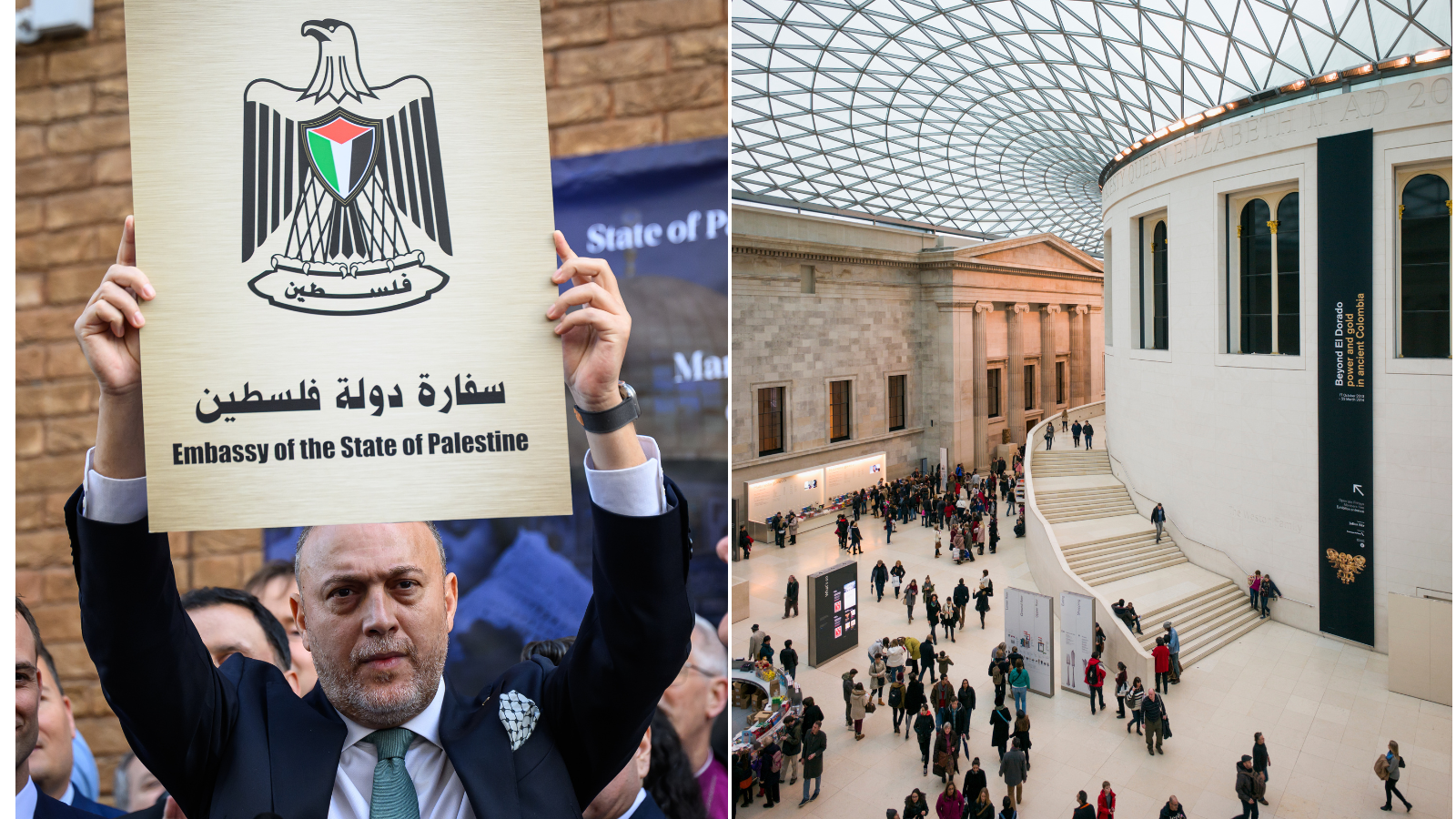
Palestinian ambassador rages at British Museum after 'Palestine' removed from ancient maps
•The Palestinian ambassador to the UK has raged at the British Museum after “Palestine” was removed from ancient maps.Husam Zomlot demanded the Foreign Office intervene after the British Museum removed...
•TRENDING Stories Videos Your Say The changes involved removing "Palestine" from a panel listing the present-day countries that fall within the ancient Levant region."Gaza" and "the West Bank” wer...
•This is not only a legal issue.
هذا الخبر من GB News. خبر يقدم أدوات ذكاء اصطناعي للتلخيص والترجمة والاستماع.
المصدر: GB News | Source: GB NewsThe Palestinian ambassador to the UK has raged at the British Museum after “Palestine” was removed from ancient maps.
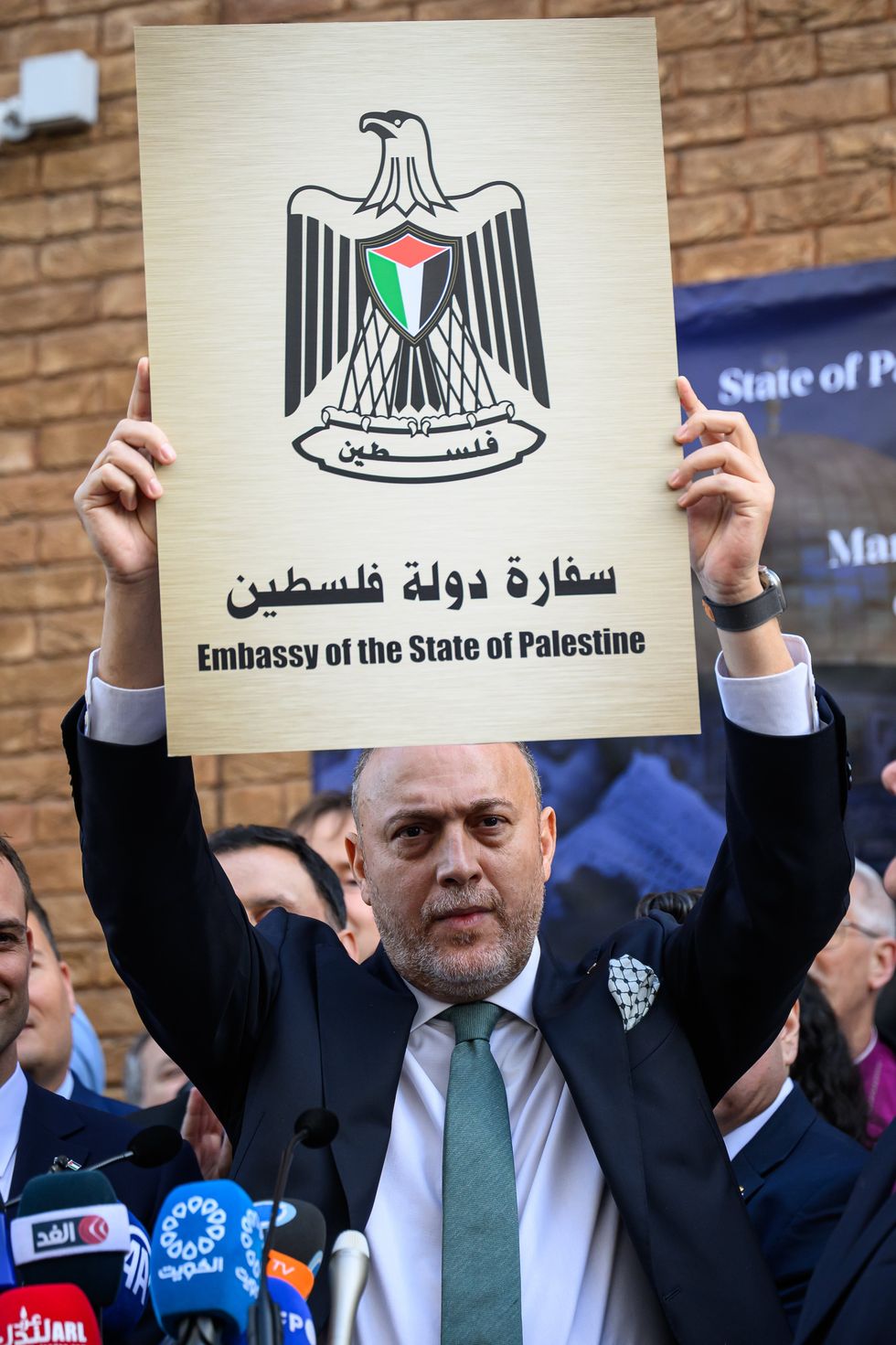
Husam Zomlot demanded the Foreign Office intervene after the British Museum removed references to Palestine from exhibits covering the Middle East.
The Palestinian ambassador has called for the word to be reinstated and has written to the museum's director, Nicholas Cullinan, as well as to ministers, to reverse the changes.
Britain formally recognised the state of Palestine in September 2025, which was the same year the museum made the alterations.
TRENDINGStoriesVideosYour SayThe changes involved removing "Palestine" from a panel listing the present-day countries that fall within the ancient Levant region.
"Gaza" and "the West Bank” were used, replacing "Palestine" and "Palestinian" from explanatory panels in the ancient Levant and Egyptian rooms.
Mr Zomlot described the removals as a historical "erasure" and said the issue went far beyond politics or history.
He said: "For me, this is not only a political issue. This is not only a legal issue. This is not even just a historical issue. This is an existential issue. Because erasing our past is erasing our present."
The ambassador was invited to meet Mr Cullinan and curators in March but said he left the meeting without any commitment the changes would be reversed.
Instead, Mr Zomlot was offered a tour of the museum, which he declined.
In a subsequent letter to the museum’s director, Mr Zomlot said it would not have been appropriate to engage further in a way that could be interpreted as endorsing the museum's current presentation.
However, Mr Zomlot said he remained willing to continue discussions once the changes had been addressed.
LATEST DEVELOPMENTS
- Teenager jailed after downloading guide on how to build bombs and Islamist material
- Oxford Union plunged into fresh scandal after president removed from office for 'election-rigging'
- Iconic British beach could REOPEN after being closed for two decades
The British Museum insisted it has not removed the term "Palestine" from its displays entirely and said the word continues to appear across galleries and on its website, but this appeared to contradict photographic evidence of the changes.
First reported by The Telegraph in February, the changes were made in 2025.
The museum made the alterations following audience research and after receiving a letter from UK Lawyers for Israel, a voluntary association, which argued applying the name "Palestine" retrospectively across thousands of years of ancient history created a false impression of historical continuity and risked obscuring the origins of Jewish people.
In correspondence shared with media, the museum reportedly told the group audience testing had shown the historic use of the term "Palestine" was "in some circumstances no longer meaningful".
Among the specific changes made, the word "Palestinian" was replaced with "Canaanite" in a panel about the Hyksos rulers of Egypt from roughly 1700 to 1500 BC.
References to Palestine and the Philistines were also removed from a text about the Phoenicians.
Marchella Ward, a lecturer in classical studies at the Open University, said the decision had nothing to do with historical accuracy, reports The Guardian.
She argued the term "Palestine" appeared frequently in historical sources and could in some respects be considered more accurate than alternative terms.
Josephine Quinn, professor of ancient history at Cambridge University, said the more troubling issue was the suggestion ancient place names had any direct relevance to contemporary politics, warning against using historical terminology to justify or excuse modern events.
The British Museum is publicly funded but governed by an independent board of trustees chaired by former Conservative chancellor George Osborne, meaning the Government has no direct authority over its curatorial decisions.
A Government spokesman confirmed museums and galleries in the UK operate independently, with decisions about collections a matter for their trustees rather than ministers.
The British Museum said in a statement: "For the Middle East galleries for maps showing ancient cultural regions, the term ‘Canaan’ is relevant for the southern Levant in the later second millennium BC."
We use the UN terminology on maps that show modern boundaries, for example, Gaza, West Bank, Israel, Jordan, and refer to ‘Palestinian’ as a cultural or ethnographic identifier where appropriate."
Mr Zomlot said he was still awaiting a response from the Foreign Office.
Our Standards: The GB News Editorial Charter
ملاحظة تحريرية | Editorial Note: نُشر هذا المقال في الأصل بواسطة GB News. خبر (Khabr) هي منصة إعلامية أردنية مرخّصة تعمل بالذكاء الاصطناعي. نضيف قيمة تحريرية من خلال: تحليل ذكي للأخبار، ملخصات تلقائية، رواية صوتية بالذكاء الاصطناعي، ترجمة متعددة اللغات، وتدقيق الحقائق. هدفنا جعل الأخبار أكثر وضوحاً وسهولةً للقارئ العربي.
This article was originally published by GB News. Khabr is a licensed Jordanian AI-powered news platform (Registration #82086). We add editorial value through: AI-powered news analysis, automated summaries, AI audio narration, multi-language translation (Arabic, English, French, Turkish), and AI fact-checking. Our mission is to make news more accessible and understandable for Arabic-speaking audiences worldwide.