As regional tensions in the Middle East intensify, and the scope of confrontation between Iran on one side and Israel, backed by the United States, on the other expands, Damascus is once again entering the circle of security threats, in a scene that reflects the fragility of regional balances and the transformation of the region into an open arena for settling regional and international scores.
Iran’s Fars News Agency quoted security sources as saying it had detected what it described as “unusual activity” by foreign experts and advisers inside the Syrian capital, Damascus. It pointed to the use of vital sites and civilian facilities, including prominent hotels, as places of residence and deployment for these cadres.
According to the agency, these movements involve Israeli, American, and British experts stationed at specific locations inside the city, which Tehran considers a direct threat requiring action.
This coincided with what were described as “decisive” Iranian warnings directed at local parties in Damascus, including hotel administrations, most notably the Four Seasons and Sheraton hotels, in addition to sovereign sites such as the Presidential Palace.
Tehran also hinted that it could consider these points “legitimate targets” if they continue to be used to host or support foreign military personnel.
These developments come amid an unprecedented escalation in the confrontation between Iran and Israel, which has taken on a more direct character since the beginning of March, with an exchange of strikes and security messages, raising the likelihood that the region could slide into broader confrontations, with Syria potentially becoming one of the main theaters.
Damascus at the heart of an escalating regional conflict
Amid the rapid regional escalation, security and political dynamics in both Syria and Lebanon are intersecting, alongside growing Lebanese fears over the repercussions of recent developments and the possibility that they may spill over into Lebanon.
These concerns are centered on the nature of Syria’s role at the current stage, especially as the Syrian army has strengthened its deployment along the border, which Damascus says is part of “defensive measures” to maintain security and prevent smuggling.
At the same time, unofficial estimates speak of tension between the Syrian army and Hezbollah along the border, though there has been no clear announcement of this.
In parallel, questions are emerging over the extent of Damascus’ commitment to the new political discourse announced after the fall of the former regime, one based on non-interference in Lebanese affairs in exchange for focusing on rebuilding Syria internally.
Despite this discourse, fears remain that any security vacuum could be exploited or that Syrian influence could be restructured in a different form.
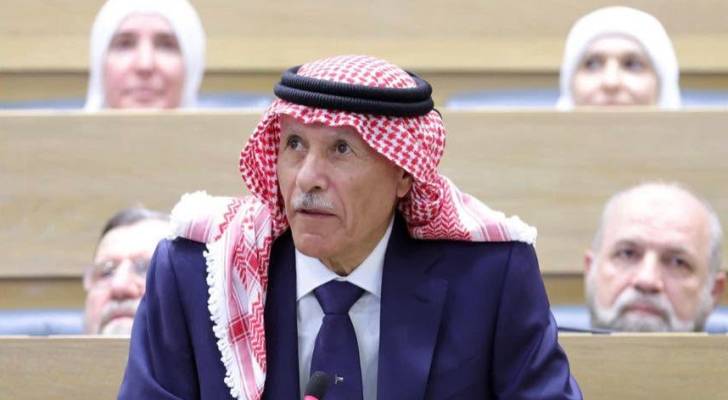
In this context, political writer Colonel Khaled Al-Mutlaq believes the region is heading toward greater escalation and may be facing a “broad battle” now being prepared for.
Speaking to Enab Baladi, al-Mutlaq said Iran senses these shifts, particularly in light of what he sees as indicators of undeclared international understandings aimed at containing Hezbollah’s influence.
Under this view, Syrian military buildups on the Lebanese border may be part of these arrangements and could pave the way for opening a front against the group from Syrian territory, which, according to al-Mutlaq, explains Iran’s recent threats toward Damascus.
He added that these threats are not linked only to talk of foreign experts inside Damascus, but also reflect Iranian concern over a possible shift in the regional balance of power and an attempt to preempt any move that could target its allies.
Is Tehran afraid of a stable Syria?
For his part, academic and researcher Abdulrahman al-Haj offers a different interpretation of the recent Iranian threats, arguing that they go beyond the issue of foreign experts in Damascus and fall within a broader context related to the future of Iranian influence in the region.
Speaking to Enab Baladi, al-Haj said what Fars published about identifying sites in Damascus as potential targets comes within the framework of justifying possible escalation, under the pretext of the presence of foreign military advisers of American, British, and Israeli nationalities.
According to al-Haj, Iran does not view the matter as merely a security issue, but also as a strategic one, since a stable Syria could, in the long run, pose a direct threat to its regional influence.
He believes that a stable Syria could become a strategic alternative for energy supply routes, reducing dependence on passages such as the Strait of Hormuz and limiting Tehran’s ability to influence energy markets.
Al-Haj added that Iran may seek, in this context, to drag Syria into the ongoing conflict, or push it into an indirect confrontation through the Lebanese arena, especially given Syria’s limited long-range missile capabilities, which would make any direct escalation unequal.
He also believes that any potential Iranian targeting of Syria, if it happens, would not be isolated from the interests of other parties, but could benefit Israel, which is monitoring these shifts and would gain from any mutual weakening among its rivals in the region.
Does Tehran have the ability to escalate?
Researcher Diaa Qaddour, who specializes in Iranian affairs, offers another reading that downplays the importance of the Iranian threats, arguing that they fall more within the framework of “media escalation” than actual indicators of military action.
Speaking to Enab Baladi, Qaddour said Iran’s threat to target sites in Damascus is aimed primarily at boosting the morale of its allies in the region, particularly in Iraq and Lebanon, amid the pressures these parties are facing.
He bases this assessment on Western estimates indicating a decline in Iran’s missile capabilities compared with the past, which, in his view, limits its ability to engage in broad escalation or open new fronts.
He also points out that Tehran is facing growing challenges to its regional influence and its relations with neighboring countries, which is reflected in the nature of its political and military discourse at the current stage.
Under this interpretation, the recent threats reflect an attempt to reassert regional presence more than they signal the beginning of direct field action, given what he describes as the internal and external complexities Iran faces.
Where has the war reached?
The positions of the United States, Iran, and Israel regarding ending the war are escalating, amid concerns over global energy supplies.
Washington has presented Iran with a 15-point plan that includes ending uranium enrichment and scaling back its missile program.
But it is still threatening to strike Iran “with unprecedented force,” with the possibility of sending additional forces to the region.
For its part, Tehran is currently rejecting the proposals and demanding a permanent end to the war, compensation, and recognition of its sovereignty over the Strait of Hormuz.
It has also threatened to close the Bab al-Mandab and the Red Sea if the escalation continues, amid Israeli skepticism that Tehran would agree to a deal between the two sides, while insisting on continuing to target Iran’s military capabilities.
The post On the Front Lines, Why Is Tehran Threatening Damascus? appeared first on Enab Baladi.