⚡ عاجل: كريستيانو رونالدو يُتوّج كأفضل لاعب كرة قدم في العالم●⚡ أخبار عاجلة تتابعونها لحظة بلحظة على خبر●⚡ تابعوا آخر المستجدات والأحداث من حول العالم●
AI اقتراحات ذكية
AI مباشر|--مشاهد مباشر
914,509مقال401مصدر نشط228قناة مباشرة4,117خبر اليوم
آخر تحديث:منذ ثانية
Oil markets show erratic volatility: WTI slides to $101 as Murban crashes 4% — but some crudes are surging double digits
•Oil prices showed mixed but volatile signals on May 4, 2026, amid reports a crude tanker has been attacked was unknown projectiles in the Gulf. Global energy markets are navigating extreme uncert...
•As of 10.23am on Monday (May 4, 2026) Brent Crude prices hovered around $107, a slight 0.40% drop from the last trading day, amid fears of a historic supply shock.How much control does OPEC still have...
•Mixed reactionMarket reactions remain mixed as nations pivot to desperate mitigation strategies, such as rerouting via Saudi Arabia's East-West pipeline or exploring new land routes through Syria.
هذا الخبر من Gulf News. خبر يقدم أدوات ذكاء اصطناعي للتلخيص والترجمة والاستماع.
Global energy markets are navigating extreme uncertainty fueled by the persistent blockade of the Strait of Hormuz, which has effectively stranded nearly 20 million barrels per day of crude and LNG.
As of 10.23am on Monday (May 4, 2026) Brent Crude prices hovered around $107, a slight 0.40% drop from the last trading day, amid fears of a historic supply shock.
Mixed reaction
Market reactions remain mixed as nations pivot to desperate mitigation strategies, such as rerouting via Saudi Arabia's East-West pipeline or exploring new land routes through Syria.
Despite these shifts, Asian refineries — heavily reliant on Gulf imports — continue to slash throughput, exacerbating global inflationary pressures and prompting major international institutions to slash 2026 growth forecasts.
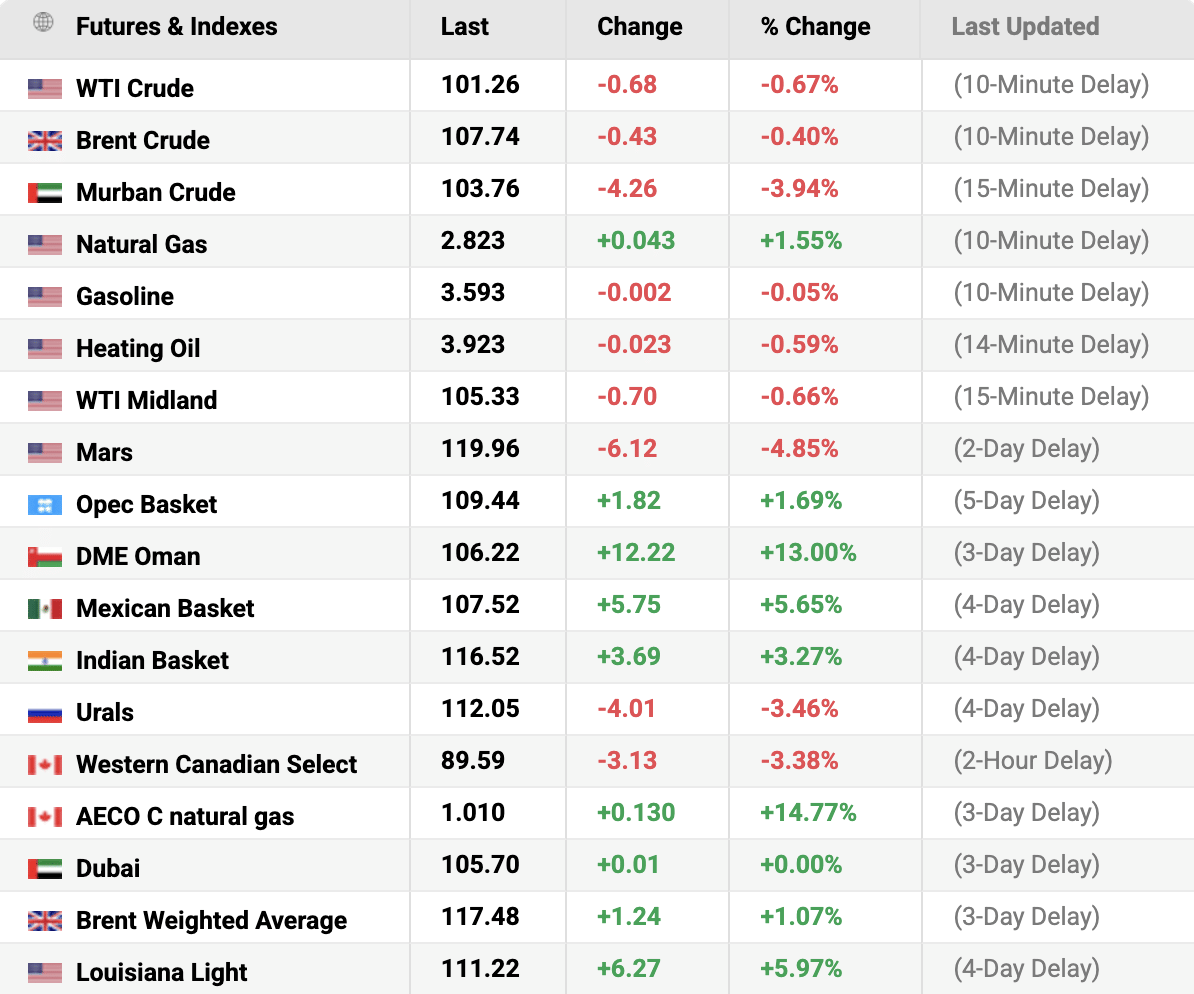
Fossil fuel rates as of 10.23am Tokyo time, May 4, 2026.
Major Benchmarks:
WTI (US): $101.26 (-0.67%)
Brent (Global): $107.74 (-0.40%)
Murban (UAE): $103.76 (-3.94%) — the sharpest daily drop among major grades
Other notable moves:
DME Oman surged +13.00% (heavily delayed data)
Louisiana Light jumped +5.97%
Mexican and Indian Baskets also posted solid gains (+5.65% and +3.27%)
Natural Gas rose +1.55% to $2.823
Several grades (including Mars, Urals, and Western Canadian Select) were trading lower, while others with multi-day delays showed big upward revisions.
Prices elevated
Oil prices remain elevated above $100 for WTI and over $107 for Brent — levels that signal continued geopolitical tension, tight supply concerns, or strong demand expectations in 2026.
Traders point to the wide "divergence" between benchmarks (some down nearly 4%, others up over 5-13%), which often reflects:
Regional supply disruptions
Quality/grade differences (sour vs sweet, heavy vs light)
Data lags from different reporting agencies
Shifting refinery demand or OPEC+ production decisions
Whipsawing: erratic volatily
The oil market is currently whipsawing, delivering the type of erratic volatility that fuels speculative trading gains while igniting deep anxiety among everyday consumers.
These elevated energy prices act as a double-edged sword: they stifle global growth by keeping inflation stubbornly high, even as they provide a windfall for oil-producing nations.
ملاحظة تحريرية | Editorial Note:
نُشر هذا المقال في الأصل بواسطة Gulf News.
خبر (Khabr) هي منصة إعلامية أردنية مرخّصة تعمل بالذكاء الاصطناعي.
نضيف قيمة تحريرية من خلال: تحليل ذكي للأخبار، ملخصات تلقائية، رواية صوتية بالذكاء الاصطناعي، ترجمة متعددة اللغات، وتدقيق الحقائق.
هدفنا جعل الأخبار أكثر وضوحاً وسهولةً للقارئ العربي.
This article was originally published by Gulf News.
Khabr is a licensed Jordanian AI-powered news platform (Registration #82086).
We add editorial value through: AI-powered news analysis, automated summaries, AI audio narration, multi-language translation (Arabic, English, French, Turkish), and AI fact-checking.
Our mission is to make news more accessible and understandable for Arabic-speaking audiences worldwide.
هذا الخبر ضمن تغطية خبر لقسم اقتصاد.
نقدّم لك تحليلات ذكية وملخصات يومية لأهم الأخبار من مصادر موثوقة متعددة.
المصدر: Gulf News.
يوجد 6 مقالات مرتبطة بهذا الموضوع.
This article is part of Khabr's coverage of Economy.
We provide AI-powered analysis, summaries, and multi-source aggregation to keep you informed.
Source: Gulf News.
Tags: oil, market, volatility, WTI.
🍪 نستخدم ملفات تعريف الارتباط لتحسين تجربتك وعرض الإعلانات المخصصة. باستخدامك للموقع، فإنك توافق على سياسة ملفات تعريف الارتباط وسياسة الخصوصية.
We use cookies to enhance your experience and show personalized ads. By using this site, you agree to our Cookie Policy and Privacy Policy.
🔍
FREEFree 1GB Internet + Free International Calls
$1 trial — eSIM in 190+ countries — No roaming charges