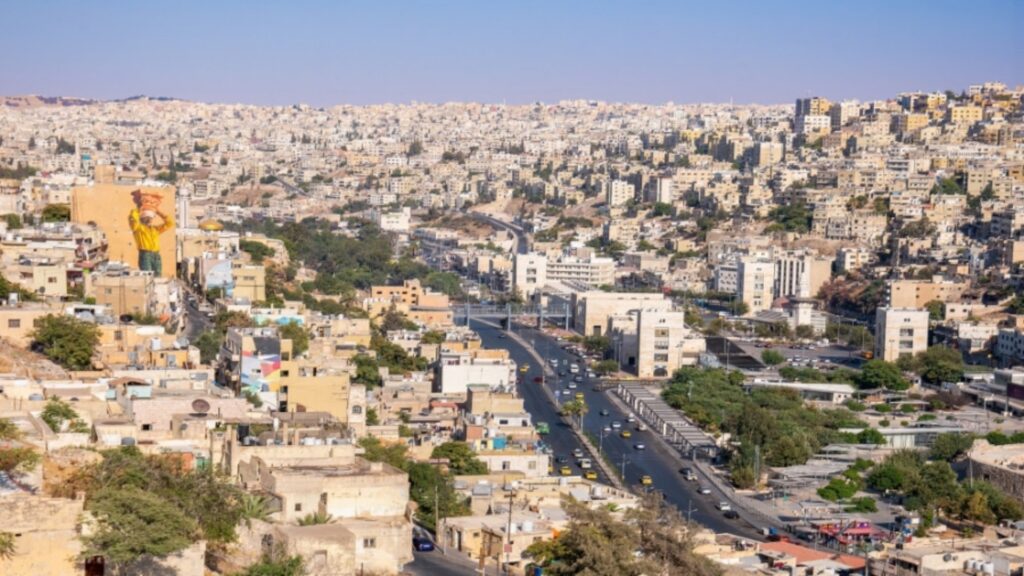
Marrakech – Morocco is Africa’s frontrunner in water and sanitation services, according to a new Afrobarometer survey covering 38 countries across the continent.
The North African kingdom recorded the highest rate of sewage coverage on the continent and near-universal access to piped water, even as most African nations struggle to provide basic water services to their populations.
The survey, published on March 21 as Afrobarometer Dispatch No. 1153, found that 95% of enumeration areas visited by field teams in Morocco have a piped water system accessible to most households. Only Mauritius, at 100%, surpassed the kingdom.
Morocco also topped the continent in sewage infrastructure, with 82% of surveyed communities served by a sewage system. Tunisia came second at 67%.
Inside Moroccan homes, the picture is equally distinct. Some 88% of Moroccan respondents reported having their main water source inside their house, trailing only Mauritius at 93%. On toilet access, 94% of Moroccans have facilities inside the home, placing the country third behind Seychelles (99%) and Mauritius (97%).
Water shortages remain rare in Morocco compared to the rest of the continent. Only 3% of Moroccan respondents said they went without enough clean water “many times” or “always” during the previous year. That figure is the lowest across all 38 countries surveyed. Some 68% of Moroccans reported never experiencing a water shortage at all.
These results explain why only 3% of Moroccan citizens cite water supply as one of the most important problems facing the country. That is the second-lowest rate in Africa, just above Seychelles at 1%. Across the continent, the average stands at 23%.
Morocco’s government also earned relatively strong marks. Some 61% of Moroccan respondents rated their government’s handling of water and sanitation as “fairly well” or “very well.” The 38-country average is just 39%. Approval of the Moroccan government’s performance in this area rose by 12 percentage points between the 2014/2015 and 2024/2025 survey rounds.
Access to toilet facilities also improved. The share of Moroccan households without any access to a toilet or latrine dropped by 4 percentage points over the same decade.
However, one area of concern emerged. Despite its strong infrastructure, Morocco recorded one of the highest rates of climate-related water stress on the continent.
Some 47% of Moroccan respondents said their families had to reduce their water consumption or change their water sources over the past five years due to changing weather patterns. That placed Morocco fourth among the 38 surveyed countries, behind Tunisia (55%), Guinea (51%), and Guinea-Bissau (50%).
The continent at large faces a far grimmer reality
The findings come as the African Union declared 2026 the “Year of Water Sustainability.” In February, the AU for the first time made water and sanitation the central theme of its annual summit. The continental body adopted an Africa Water Vision 2063 and Policy framework aimed at accelerating infrastructure investment, strengthening climate resilience, and presenting a unified African position at the 2026 United Nations Water Conference in December.
The urgency is clear. More than 400 million Africans still lack access to safe drinking water. More than 700 million live without basic sanitation. The World Bank approved $1.58 billion to support climate-resilient water supply, sanitation, and hygiene services across 12 countries in Eastern and Southern Africa.
Across the 38 countries surveyed, water supply ranks as the third most important problem citizens want their governments to address, cited by 23% of respondents. It trails only health (38%) and unemployment (33%), tying with education, the rising cost of living, and infrastructure.
Water is the single most cited problem in Guinea (57%), Chad (53%), Benin (42%), and Mozambique (38%). It ranks second in Sierra Leone (47%), Congo-Brazzaville (37%), Tanzania (36%), and Zambia (35%).
The demand for government action on water is far more pronounced in rural areas (29%) than in cities (16%). Respondents experiencing high lived poverty are four times as likely as well-off citizens to consider water supply an urgent problem requiring action, at 33% compared to 8%.
On the ground, more than half of Africans – 57% – reported that their household went without enough clean water at least once during the year preceding the survey. A quarter said this happened “many times” or “always.” Shortages affected more than eight in 10 households in Gabon (84%), Chad (83%), and Mauritania (82%). Frequent water shortages were particularly common in Gabon (52%), Guinea (46%), and Angola (40%).
The trend is worsening. Across 28 countries surveyed consistently since 2014/2015, the share of respondents experiencing water shortages at least once rose from 46% to 56%. Those facing frequent shortages increased from 19% to 24%.
Infrastructure gaps remain severe. Only 52% of communities visited by Afrobarometer teams had piped water systems accessible to most households. That figure drops below one-fourth in Angola (24%), Guinea (23%), Nigeria (16%), Sierra Leone (15%), and Liberia (9%).
Where Africans get their water varies just as widely
About half of Africans – 49% – rely mainly on piped public or community water systems for household use. Another 20% depend on boreholes or tubewells, 18% on dug wells, and 5% on surface water. Urban residents are more than twice as likely as rural ones to have piped water (67% versus 31%). Well-off citizens enjoy piped water at more than double the rate of the poorest (77% versus 34%).
Nearly half of respondents (48%) must go outside their compound to access water. In 21 countries, this is the majority experience. Uganda (87%), Sierra Leone (86%), and Liberia (84%) have the highest rates.
Sanitation infrastructure is even more limited. Only 25% of surveyed communities have sewage systems. That figure drops to just 2% in Mauritania and The Gambia.
One-third of Africans (34%) have toilets inside their homes. Another 38% have facilities outside the dwelling but within the compound. One in five (20%) rely on toilets outside the compound, and 8% have no access to any toilet or latrine at all. The share of households with no toilet access has not changed over the past decade on the 30-country average.
Government performance ratings reflect the scale of the challenge. Six in 10 respondents (60%) across the 38 countries say their government is handling water and sanitation “fairly badly” or “very badly.” Majorities in 28 of 38 countries hold this view. Congo-Brazzaville (90%) and Nigeria (87%) recorded the most negative assessments. Only 10 countries had majority approval, led by Seychelles (69%) and Malawi (66%).
Some countries made major strides. Senegal recorded the largest jump in approval, at 23 percentage points. Tanzania and Mali each gained 21 points. But approval dropped sharply in Namibia (-32 points), São Tomé and Príncipe (-28 points), Mauritius (-27 points), and South Africa (-25 points).
The Afrobarometer Round 10 analysis is based on 50,961 face-to-face interviews conducted across the 38 countries in 2024 and 2025. Morocco’s fieldwork took place in February and March 2024.
Read also: Afrobarometer: 56% of Moroccans Approve of Government’s Water and Sanitation Efforts
The post Morocco’s 95% Piped Water Rate Tops Africa’s Sanitation Rankings appeared first on Morocco World News.