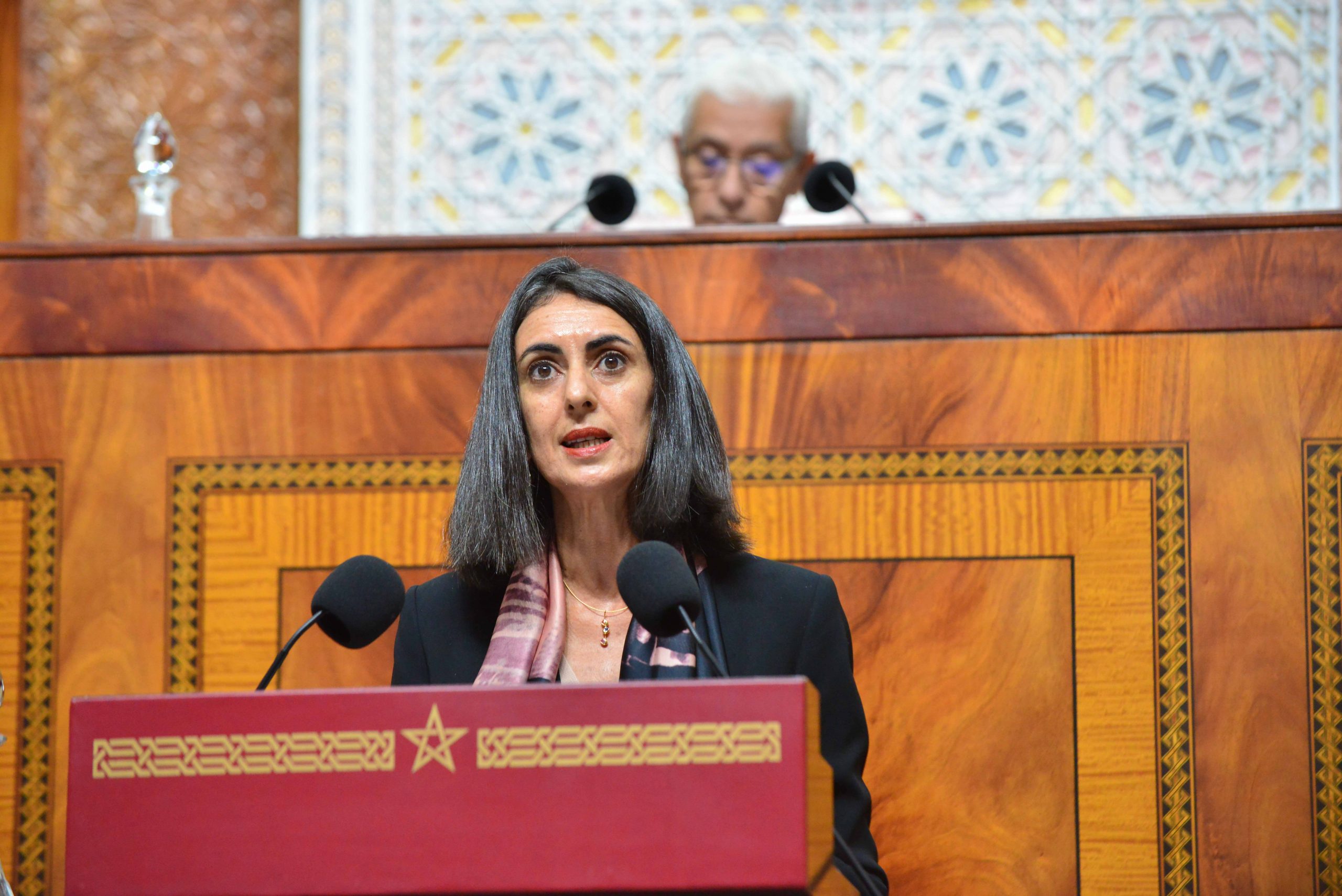
Marrakech – Morocco’s Economy and Finance Minister Nadia Fettah Alaoui told parliament on Monday that the government has been allocating MAD 1.6 billion ($160 million) per month since March 15 to soften the blow of rising fuel prices on Moroccan households.
Addressing lawmakers during the weekly oral questions session at the House of Representatives, Fettah Alaoui acknowledged that surging pump prices are driving up transport and supply chain costs, directly eroding citizens’ purchasing power.
She insisted, however, that the government is handling the issue “with a social sense and financial and economic responsibility.”
The minister attributed the price spike to geopolitical tensions in the Middle East, which she noted have pushed energy costs up by 40% to 65%, with oil prices climbing to between $100 and $110 per barrel. “We cannot isolate our prices from global reality,” she stated, adding that the government’s approach is not purely technical or numerical.
Beyond fuel, Fettah Alaoui addressed the broader wave of price increases hitting everyday essentials. She acknowledged that prices cited by lawmakers, including Moulay Mehdi El Fathemy of the Socialist Group – Ittihadi Opposition, – tomatoes at MAD 15 ($1.5), onions at MAD 10 ($1), meat at MAD 140 ($14), and lentils at MAD 18 ($1.8) – represent an “undeniable economic truth.”
She attributed this surge to an accumulation of shocks, including years of persistent drought and devastating floods that damaged more than 110,000 hectares of agricultural land, compounded by soaring fuel costs that mechanically push up prices across markets.
Fettah Alaoui recalled that the state has mobilized over MAD 110 billion ($11 billion) to support basic commodities, alongside a fiscal reform designed to ease the cost of living, reinforced market monitoring mechanisms, and MAD 10 billion ($1 billion) in direct support for farmers.
She pointed to minimum wage increases and the rollout of social allowances as additional measures to strengthen household budgets.
Yet the minister conceded that these efforts remain insufficient. “We have never claimed that what the government has done is enough,” she declared, while defending the executive’s refusal to resort to short-term fixes. “We will not take easy decisions, because we do not want to compromise the future of Moroccan children.”
The government is betting on renewables
On the government’s strategic orientation, Fettah Alaoui affirmed that the executive prioritizes renewable energy development over investment in oil refining, describing this as a forward-looking choice to preserve fiscal room for major structural projects, including critical water infrastructure investments.
Regarding market structure, the minister rejected accusations of monopolistic behavior in the hydrocarbons sector. She noted that around ten companies currently operate in the market, arguing that concentration would only be a concern with two or three players.
The Competition Council has examined the issue multiple times, she added, within a market that has been liberalized for over 11 years. Several ministries, including Economy, Interior, and Trade, conduct daily monitoring to ensure pricing mechanisms function properly.
Opposition lawmakers pushed back forcefully. Unified Socialist Party (PSU) deputy Nabila Mounib criticized the liberalization policy as a failure, accusing importers and distributors of enjoying excessive profit margins that have made Moroccan fuel prices among the highest globally.
She denounced the fiscal burden of VAT and domestic consumption taxes on consumers and questioned the government’s lack of responsiveness to warnings from oversight institutions.
Mounib also called for restarting the Samir refinery as a strategic lever to reduce energy dependence, citing Spain’s eight refineries as a governance model. She noted that fossil fuels still account for more than 85% of national energy consumption and urged the government to develop local resources, particularly natural gas discoveries at Tendrara near Figuig.
Another deputy questioned the effectiveness of competition in a market she described as “legally liberalized but economically concentrated” among eight to nine major companies controlling imports, storage, and distribution. She pointed to the near-identical pricing across fuel stations as raising serious doubts about genuine market competition.
Read also: Despite Official Claims, Moroccans Reeling from Fuel Price Hikes
The post Morocco Spends $160 Million Monthly to Curb Fuel Price Surge appeared first on Morocco World News.