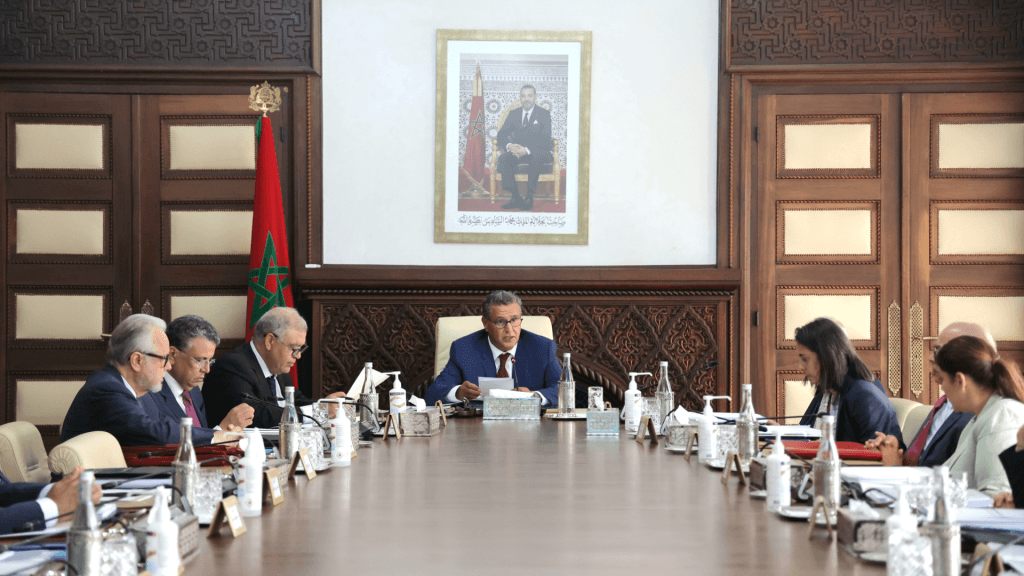
Rabat – Meeting in Rabat today for its weekly session, the Moroccan government approved a series of legislative and regulatory measures spanning the health, justice, economic, and institutional sectors.
Chaired as part of the regular government council, the meeting focused on strengthening public services, modernizing governance frameworks, and aligning national policies with international standards.
Reform of the pharmaceutical sector
Central to the session was the adoption of draft law n° 27.26, which amends and completes the Code of Medicine and Pharmacy. The reform aims to further modernize Morocco’s healthcare system and improve the quality, safety, and regulation of medicines and health products.
According to government spokesperson Mustapha Baitas, the text reinforces the role of the Moroccan Medicines and Health Products Agency by expanding its responsibilities in authorization, market control, inspection, and pharmacovigilance.
The reform also seeks to bring Morocco’s pharmaceutical regulatory framework in line with international standards, with the objective of improving access to safe and effective medicines.
The Council also approved a draft decree concerning the status of students in medicine, pharmacy, and dentistry faculties, including interns and residents working in public health establishments under territorial health groupings.
The measure aims to clarify training conditions and professional pathways while taking into account observations raised during discussions within the Council.
Strengthening judicial cooperation
In the justice sector, the government adopted a decree defining the missions, selection, and appointment procedures of judicial liaison magistrates, presented by the Minister of Justice.
The reform is part of the implementation of organic law 100.13 relating to the Supreme Council of the Judiciary and seeks to enhance Morocco’s judicial cooperation with partner countries.
Officials highlighted the growing importance of liaison magistrates in facilitating international legal cooperation, supporting judicial coordination, and promoting exchange of expertise and best practices.
The Council also approved a restructuring measure within the Ministry of Economy and Finance, particularly affecting customs and indirect tax administrations. The reform is intended to adapt administrative structures to rapid changes in international trade and technological developments, while improving efficiency and economic competitiveness.
Tourism innovation cooperation
On the international front, the government reviewed two agreements with the World Tourism Organization aimed at establishing a thematic office in Morocco dedicated to tourism innovation in Africa.
The initiative is seen as a strategic step to position Morocco as a regional hub for innovative tourism development. A draft law ratifying these agreements was also presented.
Senior appointments
The Council concluded its session by approving several high-level appointments. Among them, Nadia Akmal was named director of the Higher Institute of Nursing and Health Professions in Agadir.
Rachid Tahiri was appointed Director of Climate and Biodiversity, while Dalal Mini was named Director General of Policy Convergence and Evaluation. Hamid Ben Charifa was meanwhile appointed Secretary-General of the Ministerial Delegation for Human Rights.
The Council’s decisions reflect an ongoing effort to modernise public administration, strengthen governance, and support strategic national reforms across key sectors.
The post Morocco Adopts Key Health, Justice, and Economic Reforms appeared first on Morocco World News.