• Untreated slurry, wastewater blocking streams, silting dams
• Experts say flood risks rise as irrigation, water storage undermined
MOHMAND: The rapid expansion of Mohmand district’s marble industry, a key source of jobs and income, is increasingly turning into an environmental and safety concern, as unregulated operations threaten waterways, farmland and public infrastructure, residents and experts warn.
Located in Khyber Pakhtunkhwa, Mohmand is rich in natural resources, including marble, chromite and nephrite, which have significantly contributed to local livelihoods and the national economy.
Over the years, the marble sector has emerged as a major source of employment, with around 200 processing units operating across the district and providing jobs to thousands of workers.
However, the largely unregulated growth of the industry has led to mounting environmental degradation, with limited oversight from relevant authorities.
Officials said the Mohmand Marble City project — now renamed Mohmand Economic Zone — was established at Machnai to relocate factories to a planned industrial zone with proper infrastructure and waste management systems.
Despite this initiative, only a limited number of units have shifted to the site, while the majority continue to operate in Halimzai tehsil, particularly from Chanda to Sangar and the Nasapai area along the banks of seasonal streams.
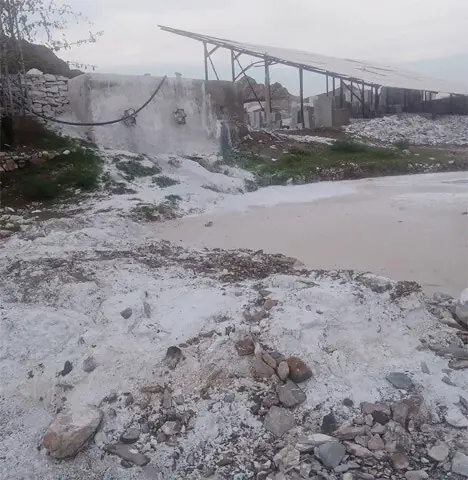
Experts and residents say these marble factories are discharging untreated wastewater, slurry and marble dust directly into natural waterways. This has begun to obstruct the flow of seasonal streams, increasing the risk of flooding during heavy rainfall.
“Blocking these natural drainage channels could have disastrous consequences,” a local official warned, adding that heavy rains could trigger flash floods, damaging homes, agricultural lands and road infrastructure.
The environmental impact has also extended to small dams constructed by the government to address water scarcity and support irrigation. These structures are now facing severe sedimentation as industrial waste is carried downstream by rainwater.
Residents said a check dam near Chanda Bazaar has already been almost filled with debris, while the Abdul Shakoor Small Dam near the district headquarters in Ghalanai, where the fisheries department had introduced fish, is also at risk of becoming ineffective.
“If this continues, these dams will lose their storage capacity, and the district may once again face an acute water shortage,” a local farmer said.
Despite repeated complaints and public concern, residents alleged that the district administration, Tehsil Municipal Administration (TMA) and other relevant departments have failed to take the issue seriously.
“The public has raised this issue time and again, but there has been no response or practical action from the authorities,” said a community elder, reflecting widespread frustration among locals.
Observers said the lack of enforcement of environmental regulations has allowed the situation to worsen, with industries operating without adherence to standard procedures.
Stakeholders have urged the district administration, the Environmental Protection Agency, fisheries and wildlife departments, and industrial authorities to take immediate corrective measures.
They emphasised the need to enforce standard operating procedures, strictly ban the dumping of industrial waste into natural streams and relocate hazardous units to designated zones such as the Mohmand Economic Zone.
Experts also called for urgent desilting of dams and clearing of waterways, along with the establishment of a robust monitoring system to prevent further environmental damage.
Published in Dawn, April 2nd, 2026