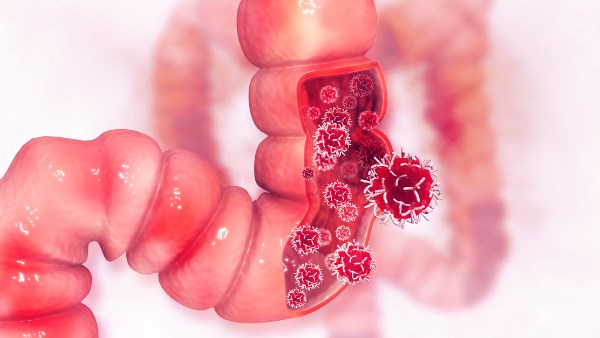
By SHAUN WOOLLER, EXECUTIVE HEALTH EDITOR Published: 23:01, 13 May 2026 | Updated: 23:01, 13 May 2026 Piling on the pounds in adulthood raises the risk of cancer up to five-fold even among those who were slim in their teens, a study suggests. Avoiding middle-age spread and post-menopausal weight gain is crucial if people want to keep their risk of the disease low, researchers say. The warning comes after an analysis of over 600,000 men and women who were weighed repeatedly over four decades found there is no safe age to bulge. Most studies on body weight and cancer have relied on weigh-ins at a single point in time or on changes between two dates. But the new research, presented at the European Congress on Obesity in Istanbul, Turkey, examined body weight trajectories on multiple occasions from ages 17 to 60. Steeper weight gain over this period - whether gained steadily or largely towards the beginning, middle or end - was associated with higher rates of any cancer as well as many types of specific cancers. The researchers, from Lund University, Sweden, analysed weight measurements of 251,041 men and 378, 981 women taken in Sweden between 1911 and 2020, with cancer diagnoses tracked until 2023. The fifth of men who put on the most weight (an average of 32kg) were 7 per cent more likely to develop cancer than the fifth who gained the least weight (an average of 8kg), rising to 46 per cent when considering cancers previously known to be linked to obesity. Avoiding middle-age spread and post-menopausal weight gain is crucial if people want to keep their risk of cancer low, researchers say. For women, the figures were 17 per cent and 43 per cent, respectively, with the biggest weight-gainers putting on an average of 36kg and the lowest an average of 7kg. Notably, the men who gained the most weight were 2.67-times more likely to develop liver cancer and 2.25 times more likely to develop oesophageal cancer than those who gained the least. Meanwhile, women who piled on the most pounds faced a 3.78 times higher risk of endometrial cancer. Smaller increased risks were observed for around a dozen other cancers. Further examination revealed a tendency for cancer incidence to be more strongly associated with earlier ages of obesity onset. This pattern was particularly evident for liver and colon cancer among men, with those who became obese before the age of 30 at a five-times higher risk of liver cancer, a doubled risk of pancreatic cancer and kidney cancer, and a 58 per cent increased risk of colon cancer compared with men who never got that fat. Women who developed obesity before the age of 30 were at a 4.5 times increased risk of endometrial cancer, a 67 per cent higher risk of pancreatic cancer, doubled risk of kidney cancer, and a 76 per cent increased risk of meningioma. Early, middle, and later adulthood weight changes were associated with overall cancer incidence and established obesity-related cancers among both men and women. Associate Professor Anton Nilsson, a researcher on the study, said the findings 'highlight the importance of maintaining a stable, healthy weight throughout adult life'. However, among men, associations per 0.5kg weight increase were stronger for early adulthood weight gain. When women's data was analysed taking account of female-specific cancers, associations with weight increase were similar across all three age periods. Some cancers were most strongly associated with early adulthood weight changes (particularly renal cell carcinoma among men), others with weight changes in middle adulthood (liver cancer among men and colon cancer among both sexes), and others with later adulthood weight changes (gastric cardia cancer among men and meningioma among women). However, these were mostly non-statistically significant trends. The authors say: 'Steeper increases in body weight between ages 17 and 60 were associated with higher incidence of several established obesity-related cancers, as well as some for which previous evidence linking obesity to cancer is more limited.' They add that weight gain among women aged 30 years or older was strongly associated with endometrial cancer, postmenopausal breast cancer, and meningioma – cancers for which sex hormones are considered a primary causative factor. Colon cancer was also strongly linked to female weight changes in these ages. Being overweight at the start of the study, aged 17, was also associated with a higher risk of several cancer types. The 20 per cent who were most overweight aged 17 faced a similar increased lifetime risk of cancer as the 20 per cent who gained the most weight over the course of the study. Associate Professor Anton Nilsson, a researcher on the study, said: 'While our results do not speak to any specific interventions or behaviours, they highlight the importance of maintaining a stable, healthy weight throughout adult life.' More than a quarter (28 per cent) of adults in England are obese and a further 36 per cent are overweight. Megan Winter, health information manager at Cancer Research UK, said: 'Overweight and obesity is the second biggest cause of cancer in the UK. 'Keeping a healthy weight throughout adulthood can help to reduce cancer risk.' A separate study presented at the conference found a third of weight lost on weight loss jabs in not fat, raising concerns users could leave themselves at risk of osteoporosis and frailty in old age. Researchers from the University of Copenhagen compared the loss of 'fat free mass' among those using injections with those relying on diet and exercise. The review of 21 studies found 31.5 per cent of weight lost on obesity drugs came from fat-free mass, which includes muscle, bone and organs. For those who relied on traditional lifestyle changes, the figure was 14.3 per cent. Experts warned that people using weight loss jabs should do strength training or risk losing bone and muscle mass. No comments have so far been submitted. Why not be the first to send us your thoughts, or debate this issue live on our message boards. By posting your comment you agree to our house rules. Do you want to automatically post your MailOnline comments to your Facebook Timeline? Your comment will be posted to MailOnline as usual. Do you want to automatically post your MailOnline comments to your Facebook Timeline? Your comment will be posted to MailOnline as usual We will automatically post your comment and a link to the news story to your Facebook timeline at the same time it is posted on MailOnline. To do this we will link your MailOnline account with your Facebook account. We’ll ask you to confirm this for your first post to Facebook. You can choose on each post whether you would like it to be posted to Facebook. Your details from Facebook will be used to provide you with tailored content, marketing and ads in line with our Privacy Policy.
المصدر: Daily Mail
| Source: Daily Mail
ملاحظة تحريرية | Editorial Note:
نُشر هذا المقال في الأصل بواسطة Daily Mail.
خبر (Khabr) هي منصة إعلامية أردنية مرخّصة تعمل بالذكاء الاصطناعي.
نضيف قيمة تحريرية من خلال: تحليل ذكي للأخبار، ملخصات تلقائية، رواية صوتية بالذكاء الاصطناعي، ترجمة متعددة اللغات، وتدقيق الحقائق.
هدفنا جعل الأخبار أكثر وضوحاً وسهولةً للقارئ العربي.
This article was originally published by Daily Mail.
Khabr is a licensed Jordanian AI-powered news platform (Registration #82086).
We add editorial value through: AI-powered news analysis, automated summaries, AI audio narration, multi-language translation (Arabic, English, French, Turkish), and AI fact-checking.
Our mission is to make news more accessible and understandable for Arabic-speaking audiences worldwide.