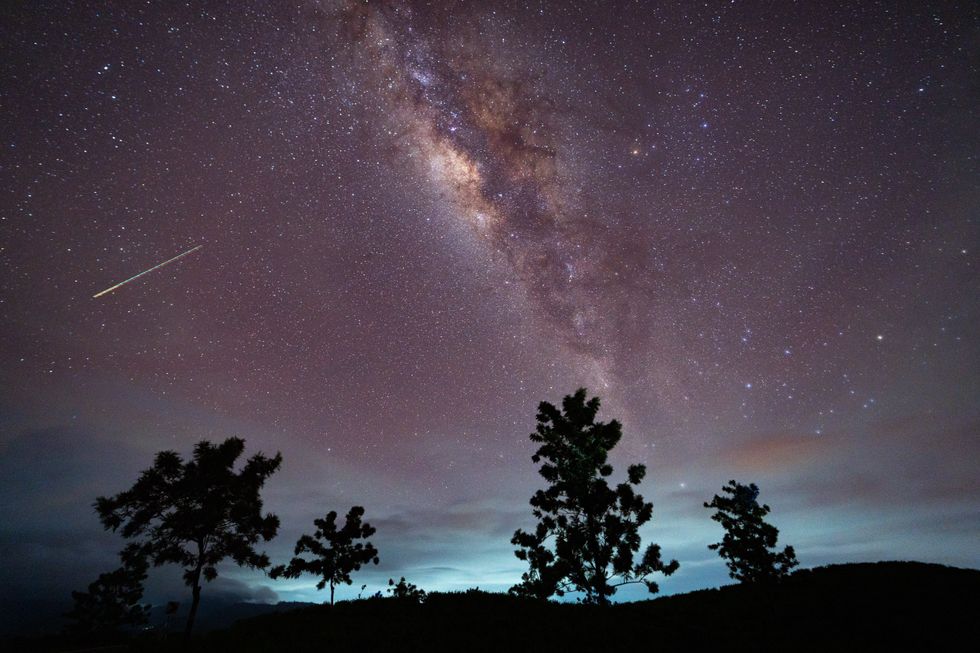

A spectacular meteor shower is set to light up Britain’s skies this week, with stargazers being treated to dazzling "beautiful streaks" overhead.
The Eta Aquariid meteor shower will peak in the early hours of Wednesday, offering skywatchers the best chance to catch the celestial display between midnight and sunrise.
Britons hoping to witness the annual spectacle are being urged to head away from streetlights and artificial light for the clearest possible view.
Royal Museums Greenwich said the shower will remain active until May 28, giving stargazers an extended window to spot the phenomenon.
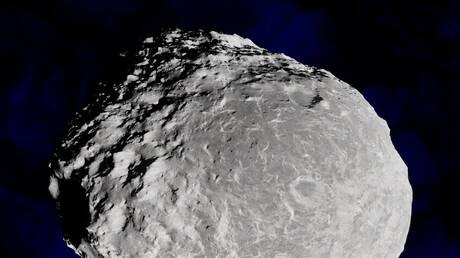
The Eta Aquariids are caused by debris left behind by Halley’s Comet - the famous celestial body that passes through the inner solar system roughly every 76 years.
Although Halley’s Comet last passed Earth in 1986, it continues to leave trails of cosmic dust that create stunning displays when Earth crosses its path.
As these tiny fragments - some as small as grains of sand - slam into Earth’s atmosphere at speeds of up to 43 miles per second, they burn up and produce the glowing streaks known as shooting stars.
Halley’s Comet also creates the Orionid meteor shower, which appears every October.
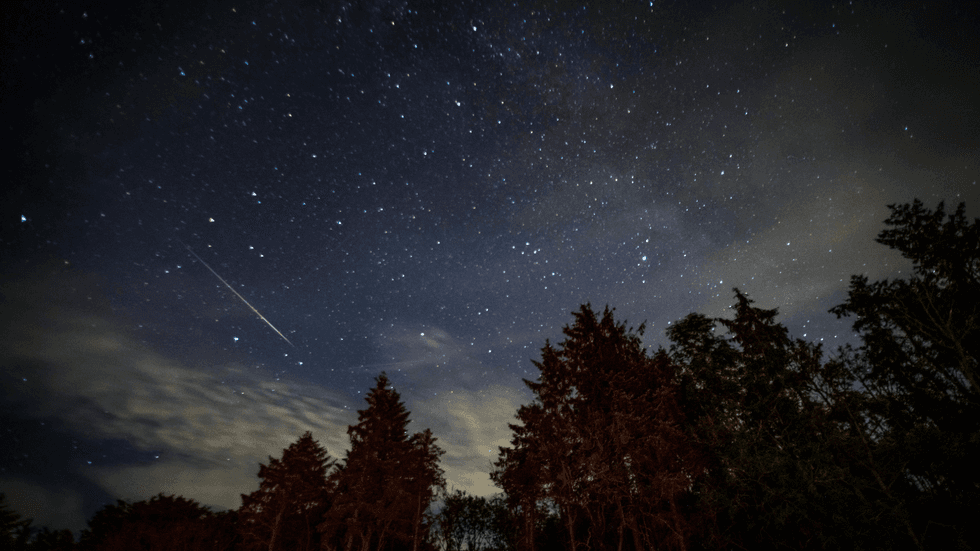
For British stargazers, the display will be most visible low in the eastern sky before dawn on Wednesday.
While the shower is typically more dramatic in the Southern Hemisphere, UK viewers should still be able to enjoy the stunning sight by looking towards the horizon.
A bright waning gibbous moon may make spotting some meteors more challenging this year, but astronomers say there should still be plenty of opportunities to catch flashes across the sky.
Conditions could also improve before midnight, before the moon rises.
SPACE - READ THE LATEST:
- Universe may end 'trillions of years sooner than expected', scientists warn
- Date set for British-made rover to land on Mars in search of life on Red Planet
- Nasa plans to light FIRE on the Moon in preparation for disaster worst-case scenario
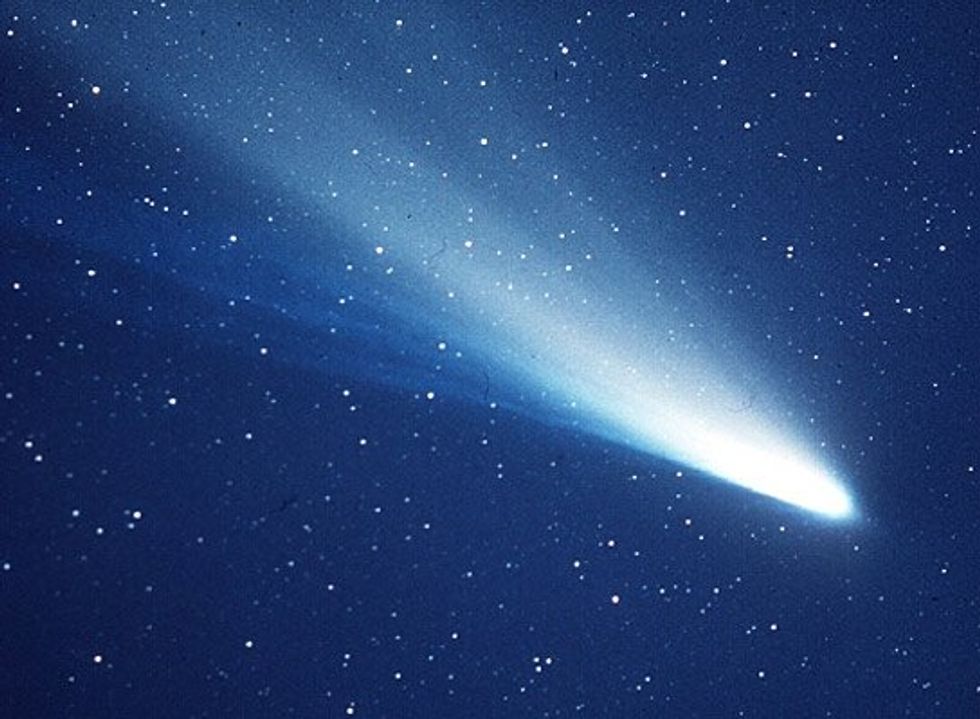
Experts are urging stargazers to be patient, wrap up warm and prepare for a wait to get a glimpse of the celestial show.
"Hunting for meteors, like the rest of astronomy, is a waiting game, so it's best to bring a comfy chair to sit on and to wrap up warm as you could be outside for a while," Royal Museums Greenwich said.
No special equipment is required, though allowing your eyes time to adjust to the darkness will improve your chances.
"You're looking for bright streaks that appear in the corner of your eye for a fraction of a second," said astrophysicist Nico Adams with SSP International.
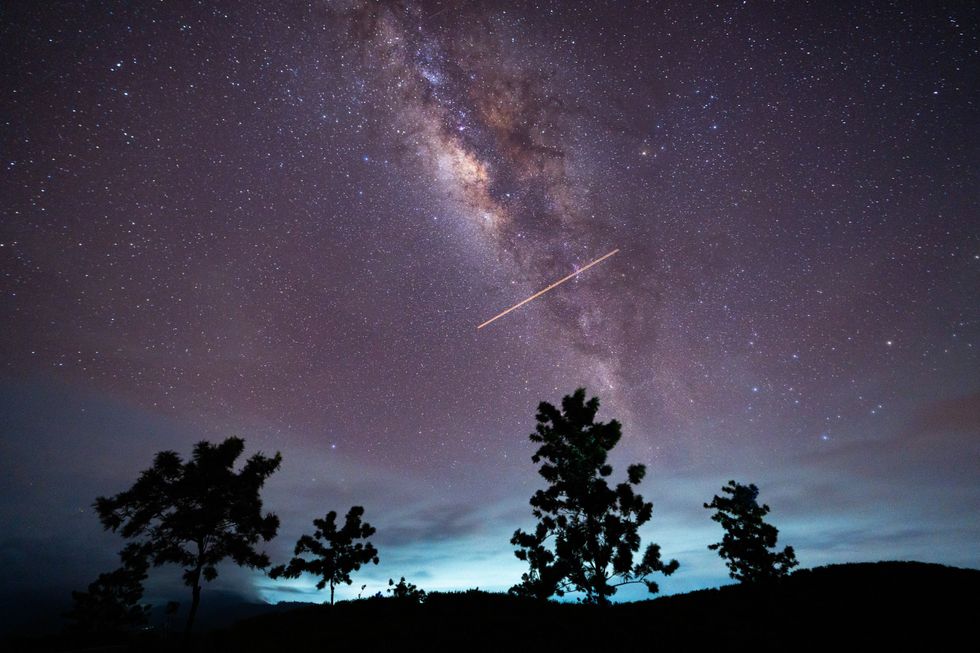
The Eta Aquariid meteor shower is believed to trace its origins back to observations of Halley’s Comet as early as 74 BC, though the shower itself was only formally identified in the late 19th century.
Lieutenant Colonel George Tupman first documented the display while in the Mediterranean, recording 15 meteors on April 30 and 13 more several days later before identifying its radiant point in Aquarius.
The connection to Halley’s Comet was later made by Professor Alexander Stewart Herschel, who recognised the alignment between Mr Tupman’s observations and the comet’s orbital path.
While the meteor shower is expected to deliver spectacular scenes for Britons this week, it is generally best viewed from the Southern Hemisphere.
Our Standards: The GB News Editorial Charter