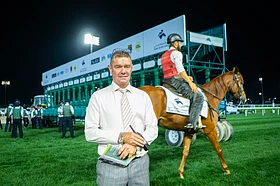
On race night at Meydan, the spotlight belongs to the horses and jockeys. Yet, beyond the limelight is another team; men and women whose work begins long before the starting gates open and continues long after the final race has been run.
From the race starter and outrider to the assistant trainer, travelling head lad and head valet, these professionals keep the machinery of racing running smoothly. Their roles demand precision and an instinctive understanding of the sport.
Stay up to date with the latest news. Follow KT on WhatsApp channels.
They rarely stand in the winner’s enclosure, yet without them there would be no race at all. In this special series marking the Dubai World Cup’s 30th anniversary, we meet some of the unsung figures of the sports whose dedication helps bring one of the world’s greatest race nights to life.
Shayne Ryan, Official Race Starter: Master of the gates
When the starting gates close at the Dubai World Cup, only seconds separate calm from chaos. Standing at the centre of that moment is Shane Ryan, the man responsible for ensuring one of the world’s richest horse races begins without a hitch.
Originally from Tipperary in Ireland, Ryan has built a reputation as one of the most composed starters in international racing. On Dubai World Cup night, he gives himself roughly 90 seconds to load up to 16 thoroughbreds into the gates and send them on their way, a task that requires precision, patience and a deep understanding of the animals in his care. “It’s all about timing and keeping the horses relaxed,” Ryan explains. “If everything flows properly, the start almost takes care of itself.”
Each horse, however, presents a different challenge. Some walk calmly into the stalls; others need careful handling. Ryan aims to keep individual loading times to around 10 or 15 seconds to avoid unnecessary tension among the runners.
“These are powerful animals with their own personalities,” he says. “The job is to read them quickly and make the process as smooth as possible.”
Behind the scenes, Ryan leads a well-drilled team. Assistants, veterinarians, a farrier and medical crews are stationed near the starting area, ready for any eventuality. Preparation is key, and Ryan spends much of his time studying horses before they arrive at the gates. “I speak with starters from other countries and watch race footage, so I know how a horse behaves,” he says. “The goal is to conserve their energy. You don’t want them spending it fighting the gate before the race even begins.”
A former jockey in Britain, Ryan has overseen countless starts at Meydan, where the race unfolds over minutes but the start itself is decided in seconds.
Maria Ritchie, Assistant Trainer: A steady hand behind success
For more than two decades, Maria Ritchie has quietly built a life in racing in the UAE, becoming one of the most respected assistant trainers on the local circuit.
Originally from New Zealand, Ritchie arrived in Dubai in December 2002, initially working with visiting trainer and future New Zealand Racing Hall of Famer, Graham Rogerson. What began as a temporary stint soon turned into a long-term commitment to the sport in the region. “I never imagined I’d still be here all these years later,” she says.
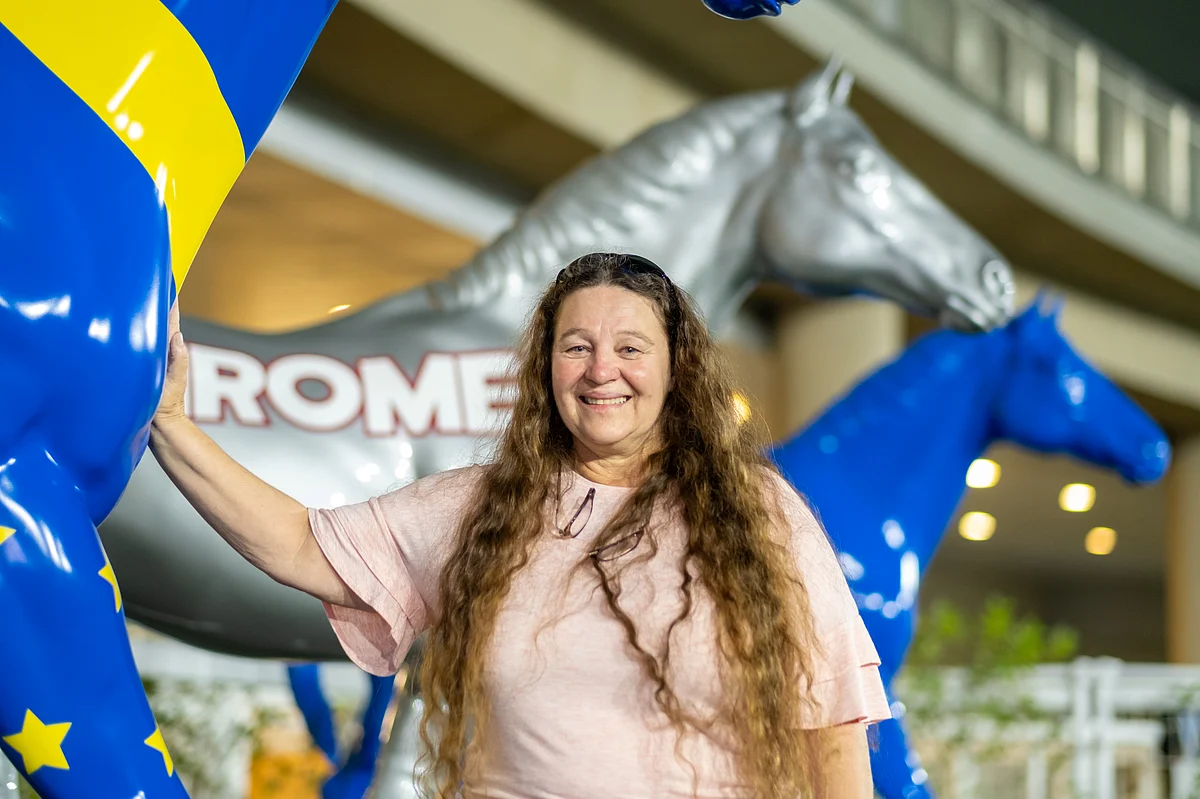
Maria Ritchie – Leading Assistant Trainer to champion trainer Musabbeh Al Mheiri at Meydan Racecourse in Dubai
Over the years, Ritchie has worked with several respected trainers, including John Sadler, before settling into her current role as assistant trainer to UAE champion Musabbeh Al Mheiri, helping manage one of the country’s leading racing stables.
The job demands patience, organisation and a sharp eye for detail. From overseeing training routines to monitoring the condition of horses and coordinating race preparations, Ritchie plays a crucial role in the daily rhythm of the yard. “It’s about making sure everything runs smoothly,” she says. “There’s always plenty to do, but that’s what makes the job rewarding.”
As the Dubai World Cup celebrates its 30th anniversary, Ritchie says it is a privilege to be part of the occasion. “It’s quite an honour to be here,” she says. “To have horses good enough to get an invitation to run on the night is something every stable hopes for.”
Al Mheiri’s yard will send out three runners on the big night, a moment Ritchie approaches with her usual calm perspective. She says the excitement of World Cup night remains as strong as ever, another chapter in a career spent behind the scenes helping horses and trainers reach the sport’s biggest stage.
Ryan Phillips, Head Valet: The man behind the silks
When the world’s best jockeys like Frankie Dettori, Christophe Soumillon and William Buick walk into the weighing room at Meydan Racecourse, Ryan Phillips is already at work. As Head Valet at the track, Phillips runs the quiet operation behind one of racing’s most high-profile stages. While the spotlight falls on the horses and riders outside, he and his team ensure everything inside the jockeys’ room runs with clockwork precision.
“I organise the valets, make sure every jockey is looked after, and that the gear is ready,” Phillips explains. “The silks are prepared, the saddles are checked, and everything is exactly where it needs to be.”
Basil Ritchie, Head Valet on the main track at Meydan at Meydan Racecourse in Dubai
It may sound routine, but on major race nights, especially the Dubai World Cup, the stakes are high and so is the anticipation. Jockeys from around the world rely on the valet team to prepare their equipment and ensure there are no last-minute problems before they head to the track.
Phillips has been part of the Meydan set-up for more than a decade, and over the years, he has worked alongside some of the biggest names in the sport. Early in his career, he experienced an unforgettable moment when a jockey he was assisting, Mirco Demuro, rode the Dubai World Cup winner (Japan’s Victoire Pisa), in his very first season. “That was special,” he recalls. “To be involved in a winning moment like that so early on, it stays with you.”
Despite rubbing shoulders with racing’s elite, Phillips says the moments that mean the most often come from unexpected victories. “When a lesser-known local jockey wins a big race, that’s always nice to see,” he says.
For Phillips, the job may take place away from the grandstand and cameras, but it is no less vital. Inside the weighing room, calm organisation can make all the difference before the race begins.
Wayne Mason, Travelling Head Lad: Dubai racing’s quiet pillar
Few people have witnessed the rise of Dubai’s racing industry as closely as Wayne Mason. For more than three decades, the Indian-born horseman has quietly played his part behind the scenes, helping shape a sport that has grown alongside the city itself.
Mason arrived in Dubai in 1992 with little more than ambition and a small suitcase. The opportunity came through a simple phone call his mother made to Jebel Ali Stables, asking if there might be work for her son. The answer changed his life. “I was just a young guy from Madras who wanted to test himself,” Mason recalls. “Dubai was still developing, and racing here was just beginning to grow.”
His first job was as an exercise rider for trainer Dhruba Selvaratnam. Mason’s dedication soon earned him a riding licence and the trust of those around him. As the sport expanded, so did his responsibilities. Over the years, Mason became a travelling head lad, accompanying horses across the world to race in Qatar, Lebanon, Hong Kong, Singapore, Japan and the US. The experiences broadened his perspective but also reinforced his appreciation for the racing culture developing in Dubai.
Following Selvaratnam’s retirement, Mason joined Zabeel Stables under Bhupat Seemar, where he continues to play a key role in preparing horses for major international races.
Now 54, Mason reflects with pride on a career that has mirrored Dubai’s racing journey. “Dubai has been very good to me,” he says. “I’ve seen the sport grow from the early days to what it is today.”
Basil Ritchie, Head Outrider: Guardian of the track
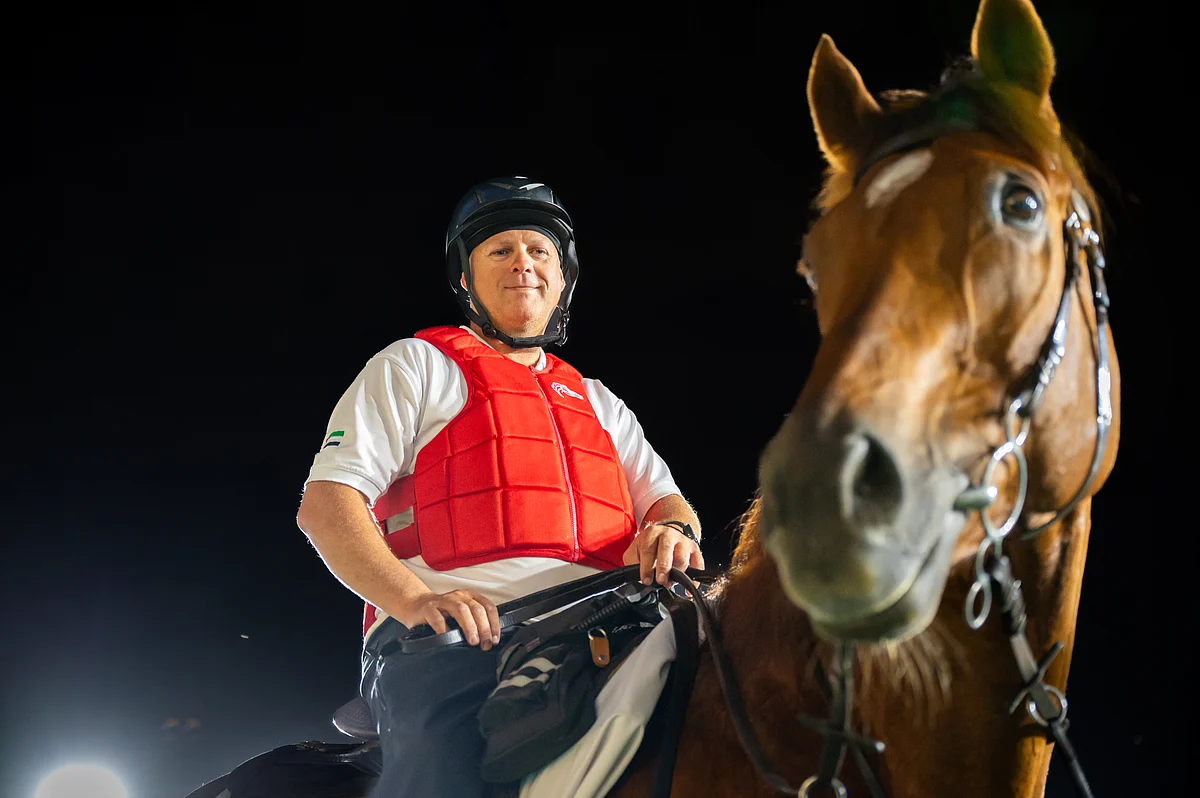
Long before the horses leave the Parade Ring at Meydan Racecourse prior to the start of a race, Basil Ritchie is already in the saddle, surveying the scene. As Head Outrider, Ritchie leads the team responsible for escorting horses safely from the paddock to the starting gates, an essential role on race nights that draw thousands of spectators and some of the best horses in the world.
“Basically, we get a list before each race of the horses that need to be led,” Ritchie explains. “From there, I assign my team their positions and which horse they’ll take. The aim is to make sure everything runs smoothly.”
Mounted on horseback, outriders guide runners to the start while keeping the procession orderly. Some horses walk calmly alongside them. Others require a more careful approach.
“You quickly learn which horses might be difficult and what works best for them,” Ritchie says. “It’s about reading the situation and helping both horse and jockey get to the gates safely.”
On a major race night like the Dubai World Cup, the challenge is amplified. With crowds approaching 60,000 and the pressure building around the track, calm coordination becomes critical.
“It’s not always easy,” he admits. “But you keep the jockeys in mind and focus on doing your job properly.”