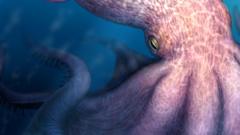
Meet the 19-metre octopus that prowled the seas 100 million years ago
Meet the 19-metre octopus that prowled the ancient seas 13 minutes agoShareSaveAdd as preferred on GoogleHelen BriggsScience correspondentImage: Yohei Utsuki, Department of Earth and Planetary Sciences, Hokkaido UniversityA sketch of what the giant octopus might have looked likeGiant octopuses may have ruled the ancient oceans 100 million years ago, when dinosaurs roamed the land, according to new research.Some of the earliest octopuses are believed to have been powerful predators equipped with strong arms for grabbing prey and beak-like jaws for munching on the shells and bones of other animals.A new study of some remarkably well preserved jaws suggest they reached up to 19 metres, potentially making them the largest invertebrates ever known to scientists.For decades, palaeontologists believed that the largest ocean predators were vertebrates with backbones such as fish and reptiles while invertebrates like octopuses and squid played supporting roles.Getty ImagesA Giant Pacific Octopus meeting a diver on the ocean floorNew research by scientists from Hokkaido University in Japan challenges the picture scientists had of ancient octopuses.Their analysis of fossil jaws suggests giant octopuses glided through the oceans equipped with the ability to chew on the hard shells and skeletons of large fish and marine reptiles.The study estimates a body length of about 1.5 to 4.5 metres, which, when the long arms are included, comes to a total length of roughly 7 to 19 metres.Even at the lower end of that range, the animal would have been enormous by today's standards. Another striking feature is that the wear on the fossilised jaws is uneven from left to right, suggesting the animals may have favoured one side when feeding.In living animals, favouring one side of the body over the other is linked to advanced brain function.Getty ImagesOctopuses are known for their extraordinary intelligence and for being masters of camouflageModern octopuses are known for their intellige...المصدر: BBC News | Source: BBC News
ملاحظة تحريرية | Editorial Note: نُشر هذا المقال في الأصل بواسطة BBC News. خبر (Khabr) هي منصة إعلامية أردنية مرخّصة تعمل بالذكاء الاصطناعي. نضيف قيمة تحريرية من خلال: تحليل ذكي للأخبار، ملخصات تلقائية، رواية صوتية بالذكاء الاصطناعي، ترجمة متعددة اللغات، وتدقيق الحقائق. هدفنا جعل الأخبار أكثر وضوحاً وسهولةً للقارئ العربي.
This article was originally published by BBC News. Khabr is a licensed Jordanian AI-powered news platform (Registration #82086). We add editorial value through: AI-powered news analysis, automated summaries, AI audio narration, multi-language translation (Arabic, English, French, Turkish), and AI fact-checking. Our mission is to make news more accessible and understandable for Arabic-speaking audiences worldwide.