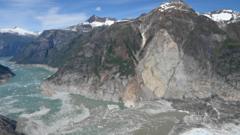
Massive Alaska megatsunami was second largest ever recorded
Massive Alaska megatsunami was second largest ever recordedJust nowShareSaveAdd as preferred on GoogleKate Stephens, Helen Briggs and Kevin Church, BBC Climate and Science teamPhoto by Cyrus Read/U.S. Geological SurveyAerial view of the August 2025 landslide and tsunami near South Sawyer Glacier in AlaskaA massive 'megatsunami' wave created when part of an Alaskan mountain crumbled into the sea is the second tallest ever recorded – and a reminder of the risks posed by melting glaciers, say scientists.Last summer a giant wave swept through a remote fjord in southeast Alaska leaving destruction in its wake.The event went largely unreported at the time, but a new scientific analysis shows tiny earthquakes triggered a massive landslide.An incredible 64 million cubic metres of rock – the equivalent of 24 Great Pyramids - splashed into the water below. The sheer power of that amount of rock plunging into the fjord in under a minute created a gigantic wave almost 500 metres tall.Only the time it happened – in the early hours of the morning – prevented tourist cruise ships being caught up in the devastation, say the researchers.Dr Bretwood Higman, an Alaskan geologist, who saw for himself the damage at Tracy Arm Fjord, said it was "a close call"."We know that there were people that were very nearly in the wrong place," he said. 'I'm quite terrified that we're not going to be so lucky in the future."Tracy Arm in Southeast Alaska is known for its sheer cliffs and icy terrainThese huge waves, labelled megatsunamis, happen when a landslide caused by either an earthquake or loose rock hit water below. They are usually localised and dissipate quickly.The other type of tsunamis happen in the open ocean and are directly triggered by earthquakes, or occasionally other powerful events such as underwater volcanoes. They, like the 2011 Japan tsunami, can travel for thousands of miles, hitting populated areas and causing widespread devas...المصدر: BBC US & Trump News | Source: BBC US & Trump News
ملاحظة تحريرية | Editorial Note: نُشر هذا المقال في الأصل بواسطة BBC US & Trump News. خبر (Khabr) هي منصة إعلامية أردنية مرخّصة تعمل بالذكاء الاصطناعي. نضيف قيمة تحريرية من خلال: تحليل ذكي للأخبار، ملخصات تلقائية، رواية صوتية بالذكاء الاصطناعي، ترجمة متعددة اللغات، وتدقيق الحقائق. هدفنا جعل الأخبار أكثر وضوحاً وسهولةً للقارئ العربي.
This article was originally published by BBC US & Trump News. Khabr is a licensed Jordanian AI-powered news platform (Registration #82086). We add editorial value through: AI-powered news analysis, automated summaries, AI audio narration, multi-language translation (Arabic, English, French, Turkish), and AI fact-checking. Our mission is to make news more accessible and understandable for Arabic-speaking audiences worldwide.