‘Lives paused again’: Kota residents await land titles as Supreme Court stays Chambal denotification
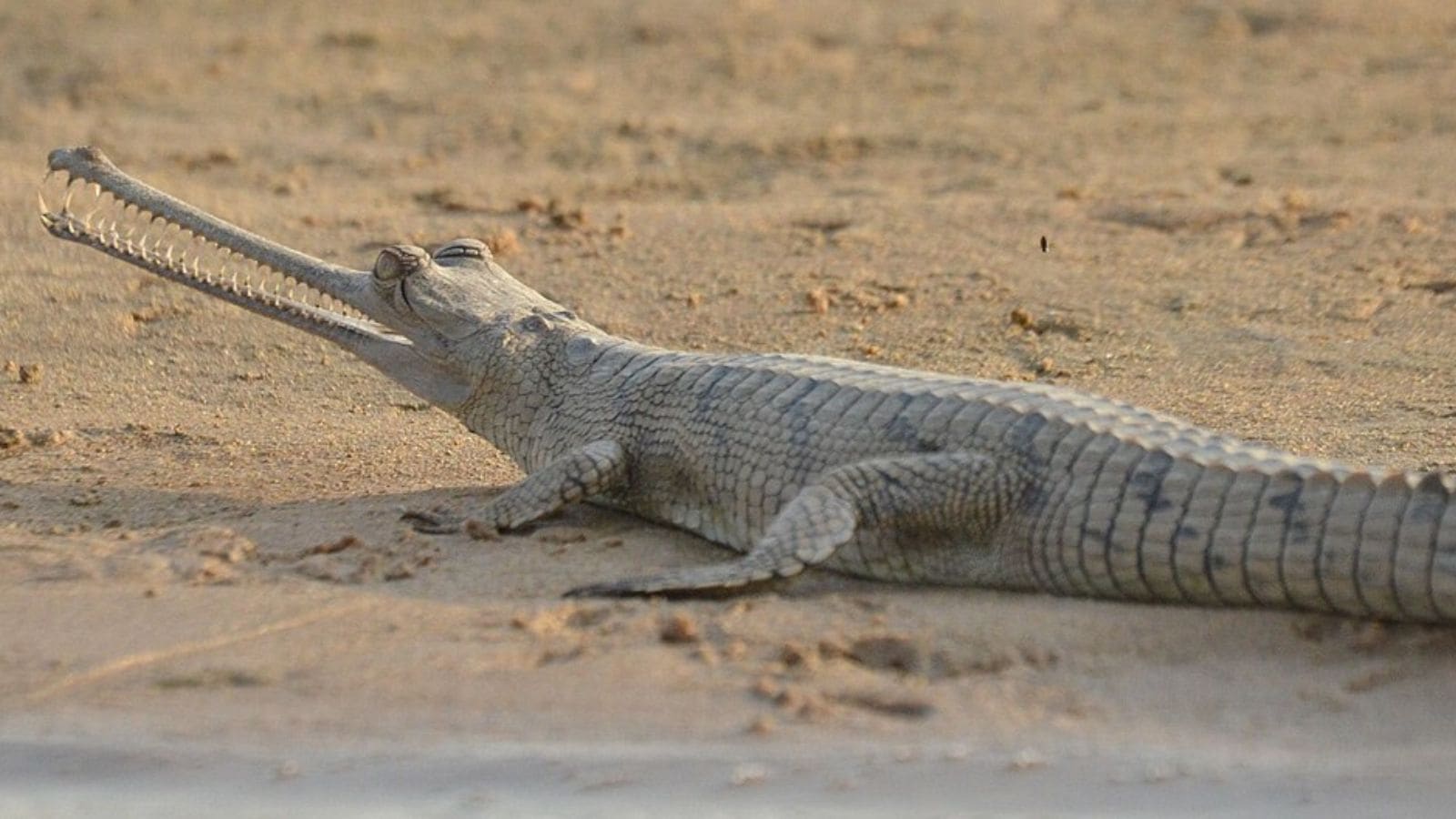
Weather ePaper Today’s Paper Journalism of Courage Home ePaper Politics Explained Opinion India Business Premium Cities UPSC Entertainment Sports World Lifestyle Tech Subscribe Sign In TrendingMumbai NewsDelhi NewsChandigarh NewsBangalore NewsLucknow News Advertisement function checkAndLoadWindowSizeScript() { if (window.jQuery) { // jQuery is loaded, include your script jQuery(document).ready(function($) { // Your existing script for checking window width if (window.innerWidth) var page_w = window.innerWidth; else if (document.all) var page_w = document.body.clientWidth; if (page_w > 1024) { $(".add-left, .add-right").show(); } else { $(".add-left, .add-right").hide(); } }); } else { // jQuery is not loaded, check again after 0.2 seconds setTimeout(checkAndLoadWindowSizeScript, 200); } } // Initial call to the function checkAndLoadWindowSizeScript(); NewsIndia'Lives paused again’: Kota residents await land titles as Supreme Court stays Chambal denotification ‘Lives paused again’: Kota residents await land titles as Supreme Court stays Chambal denotification On April 2, the Supreme Court stayed the denotification of 732 hectares in the Chambal gharial sanctuary. For thousands, this deepens uncertainty over land titles and livelihoods Written by: Parul Kulshrestha7 min readKotaApr 18, 2026 07:05 PM IST Young Indian Gharial on the bank of the Chambal River. (Credit: Wikimedia Commons) Make us preferred source on Google Whatsapp twitter Facebook Reddit PRINT In a gaushala in one corner of Kota’s Kishorpura, Jitendra Singh sits in his office, checking accounts. Around him, the lowing of cattle mixes with the sounds of cars and street vendors — part of the rhythm of peri-urban life. “Our lives are paused again,” Jitendra Singh, a former councillor in Kota and a resident of Kishorpura, sighs. He’s referring to an interim Supreme Court order on Kishorpura — a sprawl of rambling lanes and crowded markets in Kota that falls within the National Chambal Gharial Sanctuary. The order, on April 2, stayed the Rajasthan government’s December 2026 circular de-notifying 732 hectares of sanctuary land, citing potential threats to endangered species such as the gharial. But for thousands of residents in Kishorpura and seven other Kota localities in the sanctuary, the stay means fresh uncertainty over land titles, which many say they have been unable to secure for decades. Residents and their representatives argue that although the land falls within the sanctuary, it is fully built up. The settlement predates the sanctuary’s 1983 notification, says Singh. “Look around the area. You’ll only find residential and commercial buildings,” he says. “There are more than 40,000 houses in this area. Since it’s entirely concretised, gharials don’t live or visit here.” It’s an assessment forest authorities appear to agree with. “Denotification of the 732-hectare area was carried out based on recommendations of the Standing Committee of the National Board for Wildlife,” Kota Chief Conservator of Forests Sugnaram Jat said in a statement. “The recommendation was made after a site inspection by the NBWL team, wherein it was observed that the said 732-hectare area comprised fully developed residential colonies and institutional establishments, and therefore was not viable as wildlife habitat.” He went on to say: “Importantly, the ecologically sensitive areas, including river stretch, forest land, and open areas, were retained within the sanctuary as per NBWL’s directions.” But ecologists say the move could adversely impact the Chambal ecosystem. Krishnendra Singh Nama, an assistant professor of botany at Kota’s Lzebra Girls College, says that while giving deeds to existing colonies, the government should ensure remaining sanctuary areas are clearly demarcated. “The proposed denotification of the Chambal gharial sanctuary stretch raises serious ecological concerns that can’t be overlooked. This isn’t any land – it’s a fragile, interconnected system supporting critically endangered species. So, if the government has made up its mind to de-notify the land, ensure that there’s clear boundaries and construction shouldn’t be allowed beyond this area,” she says. As the Supreme Court continues to hear the case, residents worry about an adverse ruling. “My grandfather bought land here but I don’t have a title deed,” says Kavita Saini, a resident of Nayagaon. “I’ve been trying to secure a business loan but can’t mortgage this land because I don’t own it. I’m waiting for the denotification.” The National Chambal Gharial Sanctuary, notified in 1983, spans Rajasthan, Madhya Pradesh and Uttar Pradesh along the Chambal river, with a 1 km protected stretch on both banks. The 732 hectares between the Kota Barrage and Rajasthan Technical University are recorded as revenue land. This includes 320.33 hectares in Shivpura, 208.56 hectares in Kishorpura, 186.36 hectares in Sakatpura, as well as some parts of areas such as Nayagaon, Gumanpura, and Rampura. According to state records, several of these now-urban villages were established when Kota was still a princely state. Issued by order of the Governor and signed by the state Principal Secretary, the Rajasthan government’s December 23, 2025 circular said: “The State Government has issued an order modifying the boundaries of the National Chambal Gharial Sanctuary, which was originally notified in 1983 under the Wildlife (Protection) Act, 1972. Earlier, the sanctuary covered stretches of the Chambal River from Jawahar Sagar Dam to Kota Barrage, from Keshoraipatan to Pali, and further downstream along the Rajasthan – Madhya Pradesh – Uttar Pradesh border, along with a 1-kilometre-wide protected strip on both sides of the river. The remaining stretches from Keshoraipatan to Pali and further along the interstate boundary remain unchanged”. The notification, which would have meant that close to 206 khasra numbers housing residents would no longer remain under the forest department, sparked environmental concerns, with conservationists arguing it could affect the Chambal ecosystem. On April 2, the Supreme Court, while taking suo motu cognisance of illegal sand mining in Rajasthan, put the notification on hold. “There is no question. Have you been to that location? Go and see how fragile it is. Gharials are now virtually on the verge of extinction. Not only gharials, so many aquatic animals,” the Division Bench of Justices Vikram Nath and Sandeep Mehta said. During a hearing earlier this week, the Supreme Court again voiced displeasure at “illegal sand mining” inside the fragile sanctuary, including damage to infrastructure. Residents, however, claim the area was never a gharial habitat even when it was notified in 1983, blaming procedural lapses. “Officials who conducted the 1983 survey didn’t do it properly on the ground. They passed a notification sitting in their offices,” Singh says. “At that time, we weren’t aware enough of its ramifications. We realised the impact only later.” As a result, residents — even those with land titles from the princely-state era — struggled to assert ownership. “There were people who had land titles from the pre-1949 princely state era but they are no longer valid,” Jitendra Singh says. For residents, denotification means securing land titles, fewer clearances, and easier land sales. “My family’s been living in this house for 60 years but we have no lease deed,” says 35-year-old Udit Singh. “We’ve applied multiple times but nothing’s happened.” Yet, some oppose the denotification. Tapeshwar Singh, president of Mukundra Wildlife and Environment Society, welcomes the court stay but blames authorities for unchecked construction, arguing enforcement has been skewed. “In 1984, when the land was notified, the population in the area was low but construction went unchecked by the Kota Development Authority. As a result, currently, a middle-class person can’t get title deeds but big builders and businessmen can build multi-storeyed buildings here and register flats. How is that happening? Are the rules applicable only to people who cannot afford expensive lawyers?” Singh asked. But the Kota Municipal Commissioner refutes the allegations, saying no building permits were given “either before or after the denotification”. “If there are such complaints, they should be formally registered and we will take action,” Mehra says. The issue has also taken on a political colour. Addressing an event at Chambal Riverfront in Kota in January, Lok Sabha Speaker and Kota-Bundi MP Om Birla noted that denotification was a long-pending demand. The denotification was a good step, Birla’s fellow BJP leader and Kota South MLA Sandeep Sharma says. He hopes for a favourable decision from the high court. “It’s of no use to anybody if this continues to be a sanctuary,” says the BJP MLA. “There are no gharials here, nor is there any place for them to nest.” Back at the gaushala, Jitendra Singh believes denotification will restart lives. “People will be able to move on to other things instead of running around for title deeds,” he says. Parul Kulshrestha is a Principal Correspondent for The Indian Express, based in Rajasthan. A lawyer turned journalist, she brings a unique cross-disciplinary perspective to her reporting, blending legal precision with deep social inquiry to cover one of India's most culturally and politically vibrant regions. Expertise and Experience Legal-Journalistic Synergy: Parul’s transition from a legal background to mainstream journalism provides her with a distinct advantage in interpreting policy, legislation, and judicial impacts. This expertise allows her to "read between the lines" of government orders and court rulings affecting the public. Diverse Beat: With years of experience across both mainstream newsrooms and independent journalism, she has built high-level authority in several critical areas: Nomadic Tribes & Marginalized Communities: She is recognized for her sensitive and in-depth reporting on the struggles and rights of Rajasthan's nomadic populations, often giving a voice to those outside the traditional political spotlight. Gender & Social Justice: Parul focuses on the intersection of law and gender, covering issues ranging from women’s safety and reproductive rights to the socio-economic empowerment of rural women. Environmental & Political Reporting: She tracks Rajasthan’s complex political landscape—including electoral shifts and bureaucratic changes—alongside critical environmental concerns like water scarcity and land use. Academic & Professional Pedigree: Her background as a lawyer, combined with her rise to the rank of Principal Correspondent at a national broadsheet, establishes her as a senior voice in the media landscape. ... Read More Stay updated with the latest - Click here to follow us on Instagramالمصدر: Indian Express | Source: Indian Express
ملاحظة تحريرية | Editorial Note: نُشر هذا المقال في الأصل بواسطة Indian Express. خبر (Khabr) هي منصة إعلامية أردنية مرخّصة تعمل بالذكاء الاصطناعي. نضيف قيمة تحريرية من خلال: تحليل ذكي للأخبار، ملخصات تلقائية، رواية صوتية بالذكاء الاصطناعي، ترجمة متعددة اللغات، وتدقيق الحقائق. هدفنا جعل الأخبار أكثر وضوحاً وسهولةً للقارئ العربي.
This article was originally published by Indian Express. Khabr is a licensed Jordanian AI-powered news platform (Registration #82086). We add editorial value through: AI-powered news analysis, automated summaries, AI audio narration, multi-language translation (Arabic, English, French, Turkish), and AI fact-checking. Our mission is to make news more accessible and understandable for Arabic-speaking audiences worldwide.