THE US-brokered talks between Lebanon and Israel, held in Washington on Tuesday, were closely followed across the world, not only because of the dire humanitarian situation the savage Israeli assault has created in Lebanon, but also due to their bearing on the US-Israeli conflict with Iran.
It is reportedly the first time since the early 1990s that major delegations from both states met directly. However, it appears that their agendas were worlds apart: the Lebanese side was interested in securing an immediate ceasefire, while Israel wanted to only discuss the disarming of Hezbollah, the pro-Iranian Lebanese armed group and political party that is the Zionist state’s arch-foe in Lebanon.
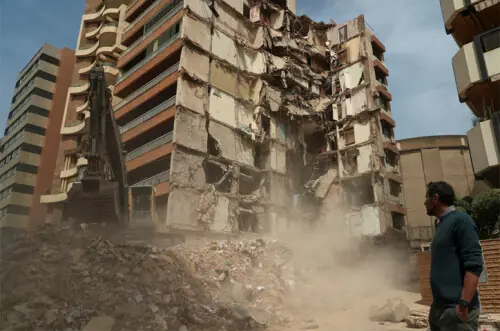
The brutal assault on Lebanon launched recently by Israel has led to the death of around 2,000 people and the displacement of over a million. The assault was apparently sparked by Hezbollah’s attacks on Israel, following the assassination of Ayatollah Ali Khamenei in Iran. It should be recalled that the Lebanese armed group’s guns had been silent since the November 2024 ceasefire, while Israel had violated the truce on a near-daily basis. It seems that Tel Aviv wanted to draw Hezbollah back to the battlefield, and is now pretending to be the victim.
But some memories should not be short-lived. Israel has been violating Lebanese sovereignty since 1948, and had staged several incursions and full-scale invasions before Hezbollah was created in the early 1980s. There is a reason why Tel Aviv wants Hezbollah disarmed — the Lebanese group is the only Arab entity that has ended Israel’s occupation of its land by force of arms when the Zionist state retreated from south Lebanon in 2000.
In the current scenario, Israel wants to create another so-called buffer zone, deep inside Lebanese territory, essentially repeating the failed experiment it started in 1982 until it was ejected from the Arab state. Some extremist Israeli ministers have even spoken of permanently occupying Lebanon. The international community, particularly the OIC and Arab League, must firmly reject such dubious designs, and ensure Israel leaves all Lebanese territory.
The status of Hezbollah’s arms is Lebanon’s internal issue, and Israel has no business dictating terms to Beirut. Meanwhile, Tel Aviv is trying to stir up sectarian trouble inside Lebanon, by painting Hezbollah as the source of Lebanon’s troubles, thereby attempting to pit the country’s other communities against the Shia population. The Lebanese must resist this malicious plan, maintain unity and work to free their country from Israel’s clutches.
If the US wants peace in the region, particularly in the Gulf, it must put pressure on Israel to cease hostilities in Lebanon without delay, while an immediate Israeli withdrawal from all occupied Lebanese territory is essential. Without this, there will be no peace in the Levant or the Gulf.
Published in Dawn, April 16th, 2026