Rabat – Latin American leaders gathered on Saturday in Colombia’s capital for the 10th summit of the Community of Latin American and Caribbean States (CELAC), at a moment marked by mounting global tensions and growing unease across the Global South.
What began as a regional meeting quickly turned into a broader political statement, as presidents used the platform to criticize US foreign policy, warn against the expansion of ongoing wars, and call for stronger coordination within the region.
The summit took place against the backdrop of escalating war in the Middle East and Ukraine, with leaders warning that these crises are no longer distant.
Instead, they risk spilling over into global economic instability, placing additional strain on Latin American economies already grappling with inflation and fragile growth.
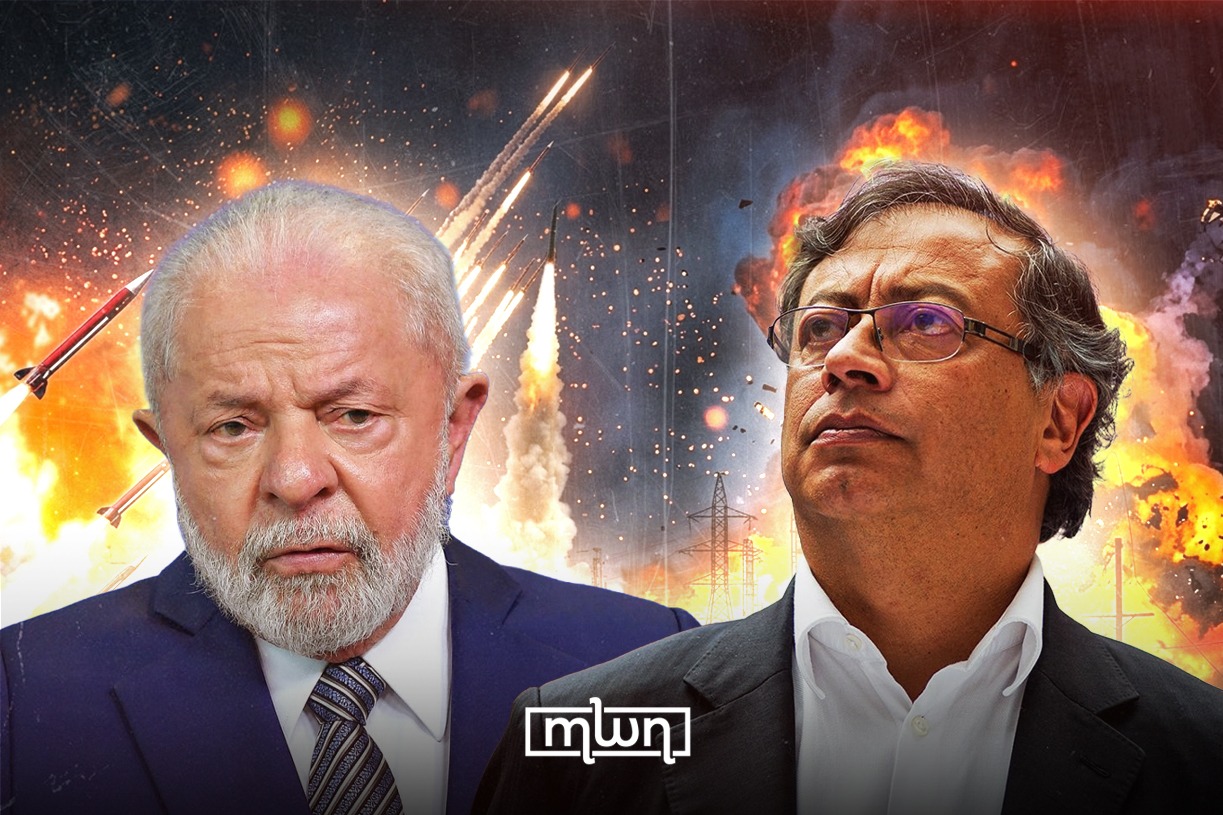
Colombian President Gustavo Petro set the tone early, shifting attention far beyond Latin America. He called for an immediate ceasefire in the Middle East, describing the war as a looming threat to global stability.
“Today humanity needs an immediate ceasefire, so that words may be the only thing capable of matching the power of the missile and the dollar,” Petro said. His phrasing carried a sense of urgency, as he tied the language of war to the mechanics of global finance.
“I believe that if we do not want to extend the Middle East conflict into a global economic catastrophe… and a possible world war… all of humanity must demand… an immediate ceasefire,” he added.
Petro’s warning reflects a growing anxiety among developing economies. For many countries in Latin America, war translates quickly into rising energy prices, disrupted trade routes, and renewed inflation, pressures that weigh heavily on already fragile economic recoveries.
Lula’s sharp rebuke
If Petro spoke with urgency, Brazil’s president Luiz Inácio Lula da Silva spoke with indignation.
“It is impossible for someone to think they own other countries,” Lula said, in remarks that drew a direct line between current tensions and a longer history of foreign intervention in the region.
“Look what they are doing to Cuba. Look what they did to Venezuela. That is not democratic.”
His speech went beyond criticism into a broader rejection of the logic of intervention itself.
“In which paragraph, in which article of the UN Charter does it say that the president of a country can invade another? In which document in the world is it written? Not even the Bible,” he said. “There is nothing that allows this to happen… What they want is to colonize us again.”
Lula’s words resonated with a familiar sentiment across parts of Latin America, where skepticism toward Washington remains shaped by decades of political and economic pressure.
A region wary of global shocks
What emerged from the summit is a region that feels increasingly exposed to decisions made elsewhere. Wars in Ukraine and the Middle East may seem geographically distant, yet their consequences arrive quickly through fuel prices, food supply chains, and financial markets.
Petro made that connection explicit, warning that the trajectory of today’s tensions could converge into something far more destabilizing. His reference to Ukraine signaled concern that multiple crises, if left unchecked, could reinforce one another.
For Latin American governments, the fear is not only military escalation but economic contagion. A prolonged conflict could tighten global liquidity, slow trade, and deepen inequality, conditions that have historically triggered social unrest across the region.
Between rhetoric and reality
CELAC has long positioned itself as a space where Latin American and Caribbean countries can coordinate without US influence. Yet unity remains uneven. Political differences between member states often limit the bloc’s ability to act beyond declarations.
Still, the Bogotá summit suggests a shift in tone. Leaders are no longer content with cautious diplomacy; they are speaking more openly about sovereignty, external pressure, and the need to act collectively in a fractured global order.
The question that lingers is whether this moment of convergence can translate into sustained coordination.
What is clear, however, is that Latin America no longer sees itself as peripheral to global crises. As Petro’s warning suggests, the stakes now feel immediate, and the cost of inaction, increasingly difficult to ignore.
A region on edge as war expands
The backdrop to the Bogotá summit is a rapidly escalating war in the Middle East, led by the US and Israel against Iran, with consequences already spreading far beyond the region.
The war began on February 28, when US and Israeli forces launched large-scale strikes across Iran, targeting military infrastructure, nuclear facilities, and senior leadership. The initial wave of attacks marked a turning point, shifting years of indirect confrontation into open warfare.
Iran responded with missile and drone strikes targeting Israeli cities, US. military bases, and strategic infrastructure across the Gulf. The exchanges have continued in cycles of retaliation, with both sides expanding the scope of attacks and drawing in multiple countries across the region.
The war has also placed the Strait of Hormuz at the center of global concern. As one of the world’s most critical oil routes, any disruption there carries immediate consequences for energy markets. US threats to secure the passage and Iranian warnings of closure have heightened fears of a wider economic shock.
Moreover, the war has already left a heavy toll on civilians and infrastructure. Reports indicate widespread damage to cities, energy facilities, and public services, alongside rising casualties and mass displacement
Despite occasional signals of de-escalation, including temporary pauses in strikes, the situation remains volatile. With both sides maintaining pressure and no clear diplomatic breakthrough, the risk of further escalation, potentially drawing in more actors, continues to grow.
The post Latin American Leaders Call For Immediate Ceasefire Amid Global Tensions appeared first on Morocco World News.