Last day of Tamil Nadu poll campaign: DMK upbeat, Vijay the wildcard, but old certainty missing
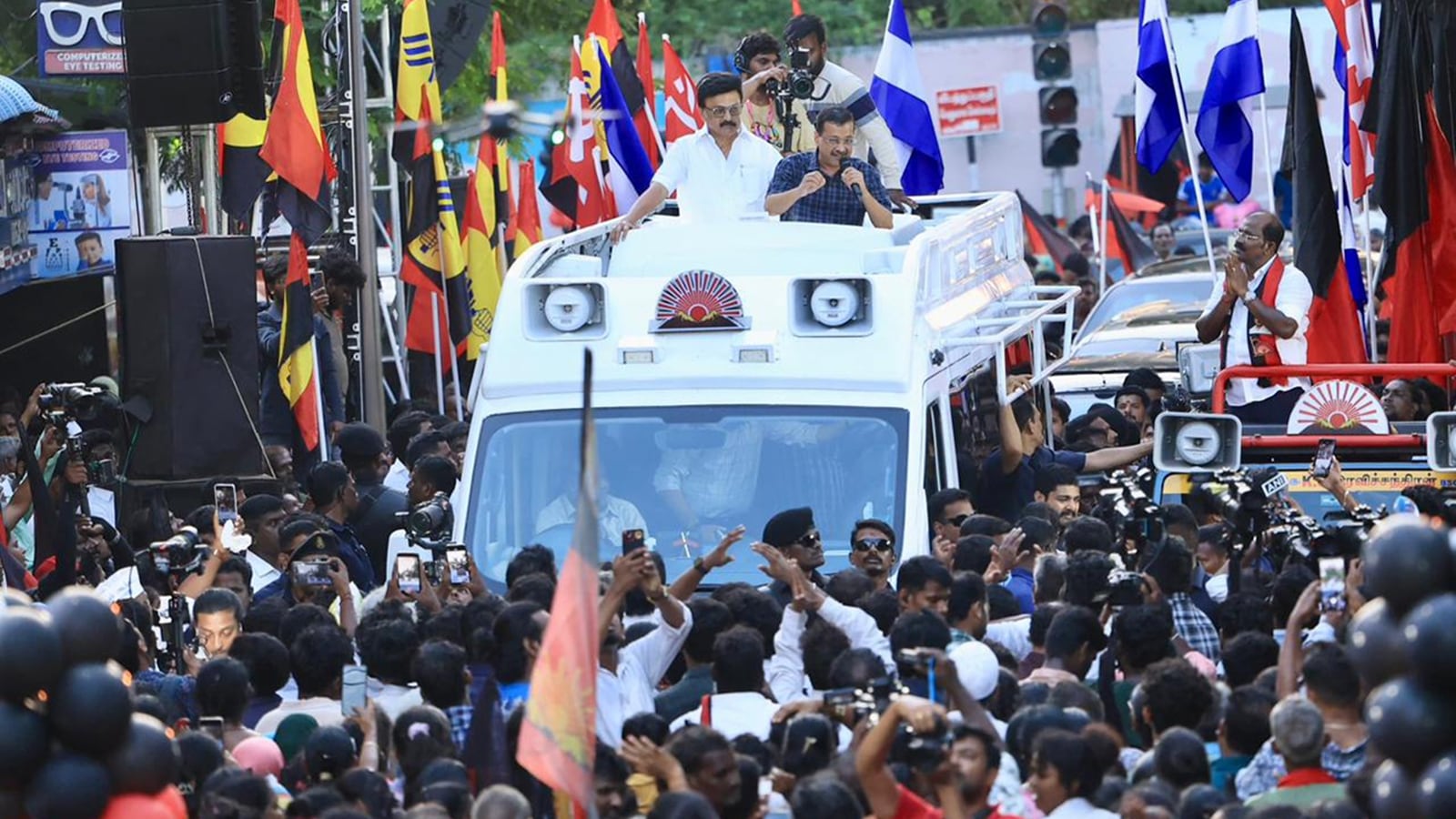
As campaigning enters its final 24 hours before closing on Tuesday, the Assembly election in Tamil Nadu has settled into an unusual shape: the ruling DMK appears to hold a discernible edge, yet no major political camp is speaking with the certainty that once defined Dravidian contests. The reason has a name, a fan base, and a new party symbol. Vijay and his party, TVK, have introduced the one variable neither the DMK nor the AIADMK can comfortably calculate: a large bloc of floating votes spread unevenly across the state, concentrated in urban belts, youth pockets, and select western and southern constituencies. For decades, the state elections often revolved around the two Dravidian majors together commanding close to 80% of the vote. Third fronts existed, but usually as regional forces capable of affecting just 20-30 of the total 234 seats. This time, leaders of both major camps estimate that the spoiler effect could stretch across nearly 100 constituencies. That does not necessarily mean the TVK will win on such a scale. It means many candidates may lose because of it. Multiple party assessments and campaign patterns suggest the DMK-led alliance remains the front-runner in the April 23 polls. Welfare delivery, incumbency advantages, a fragmented Opposition, and an aggressive statewide campaign led by Chief Minister M K Stalin and Deputy CM Udhayanidhi Stalin have helped keep the ruling front in pole position. The DMK’s internal mood, according to leaders familiar with it, remains confident, with some estimates stretching as high as 150 seats. But confidence comes with caveats. Several alliance seats once considered routine are now being viewed as competitive. In parts of the Cauvery delta and Trichy belt, constituencies such as Manapparai, Papanasam, and Nannilam are drawing late concern within the party. Local leaders cite alliance arithmetic, candidate mismatch, resentment over seat-sharing, and weaker transfers from smaller partners. Even so, Trichy East, where Vijay is contesting, is still seen by many insiders as recoverable for the DMK camp, while Lalgudi — where lottery king Santiago Martin’s wife Leema Rose is contesting — has evolved into a three-cornered fight. The larger concern for the ruling party is not whether it leads, but whether its allies can keep pace. Several analysts and party insiders now distinguish between the DMK’s strike rate and that of its allies. In blunt terms: if the DMK performs strongly in the seats it contests, allies may not necessarily mirror that performance. That gap could matter. The Congress, allotted 28 seats (three more than in 2021) entered the election with a larger share but a less convincing campaign. Party leaders privately admit they struggled to identify strong candidates in some places, failed to secure full-throttle local mobilisation, and received limited national reinforcement until the final stretch. Rahul Gandhi appeared only late in the campaign. Priyanka Gandhi Vadra did not campaign in the state. For a party seeking relevance as much as seats, the optics were less than ideal. The VCK, led by Thol Thirumavalavan, is also seen as under pressure. Some within the broader alliance say avoidable public confusion over seat demands and candidate selection weakened momentum. Even optimistic VCK voices now speak of four wins out of eight as a respectable outcome. AIADMK recovers, but can it close? AIADMK general secretary Edappadi K Palaniswami has run a disciplined, high-mileage campaign, often covering multiple districts a day. His alliance with the BJP has restored some organisational depth and given the AIADMK a broader social spread than in 2024. The AIADMK’s working hope is straightforward: if anti-incumbency exists and Vijay’s vote share rises beyond the mid-teen range, the damage will fall disproportionately on the DMK, creating a late opening. The DMK, however, holds a similar view: that every extra vote TVK gains will cut more deeply into the AIADMK’s anti-establishment pool than into the ruling alliance. But that remains the central unanswered question: whom does Vijay hurt more? The AIADMK privately argues that TVK’s urban and younger vote cuts more naturally into the DMK coalition, especially among first-time voters and floating anti-establishment groups. The DMK counters that Vijay is more damaging to the AIADMK because he offers a non-DMK protest option without BJP baggage. Both arguments may hold, depending on the constituency. Nowhere is the uncertainty sharper than in Chennai. The capital and its surrounding belt have produced an unusually strong cluster of triangular contests. Constituencies such as Anna Nagar, Villivakkam, T Nagar, Mylapore, Royapuram, and Velachery are being watched as true three-way battles where margins may collapse and surprises multiply. Perambur has become the most discussed TVK battleground. Leaders across parties privately concede that Vijay’s prospects there appear serious, perhaps stronger than in some constituencies more naturally associated with him. Some insiders even say Perambur may prove a more natural opening for the TVK than Trichy East, the second constituency Vijay is contesting from. Tiruvottiyur and T Nagar are two other Chennai-region seats where parties suspect a late upset may be brewing. R K Nagar, which briefly caused concern for the DMK a week ago, is now viewed as relatively safer in final internal assessments. Beyond Chennai: pockets of volatility The TVK is also believed by rival camps to be polling strongly in Gobichettipalayam, Tiruchengode, Tirunelveli, Nanguneri, and Tirupparankundram. Karaikudi continues to be viewed as a genuine four-cornered contest. In Coimbatore, one high-profile contest involving V Senthil Balaji’s broader political zone is being described by rivals as “50-50”, shorthand for everyone claiming momentum and no one sleeping well. The BJP’s expectations remain modest but not absent. Party leaders believe Nagercoil, Sattur and Avinashi are among the seats where it has credible chances. Internal estimates speak of four wins as a minimum psychological target. That may sound small in a 234-seat House, but symbolism in Tamil Nadu politics often travels faster than arithmetic. The most volatile estimate in this election is the TVK’s vote share. What some rival camps initially modelled at 15-17% is now being discussed closer to 20%. If that proves broadly accurate, Tamil Nadu politics will change even if the TVK wins only a handful of seats. A four-seat tally with 20% vote share will still shake the foundations of both Dravidian majors. It’ll signal a new claimant to the opposition space and a future bargaining force. And that is why, even with the DMK appearing to hold the edge, no one sounds fully relaxed. Tamil Nadu may still produce a familiar winner. But this time, it could also produce an unfamiliar second story, and perhaps that story lasts longer. Arun Janardhanan is an experienced and authoritative Tamil Nadu correspondent for Read Moreالمصدر: Indian Express | Source: Indian Express
ملاحظة تحريرية | Editorial Note: نُشر هذا المقال في الأصل بواسطة Indian Express. خبر (Khabr) هي منصة إعلامية أردنية مرخّصة تعمل بالذكاء الاصطناعي. نضيف قيمة تحريرية من خلال: تحليل ذكي للأخبار، ملخصات تلقائية، رواية صوتية بالذكاء الاصطناعي، ترجمة متعددة اللغات، وتدقيق الحقائق. هدفنا جعل الأخبار أكثر وضوحاً وسهولةً للقارئ العربي.
This article was originally published by Indian Express. Khabr is a licensed Jordanian AI-powered news platform (Registration #82086). We add editorial value through: AI-powered news analysis, automated summaries, AI audio narration, multi-language translation (Arabic, English, French, Turkish), and AI fact-checking. Our mission is to make news more accessible and understandable for Arabic-speaking audiences worldwide.