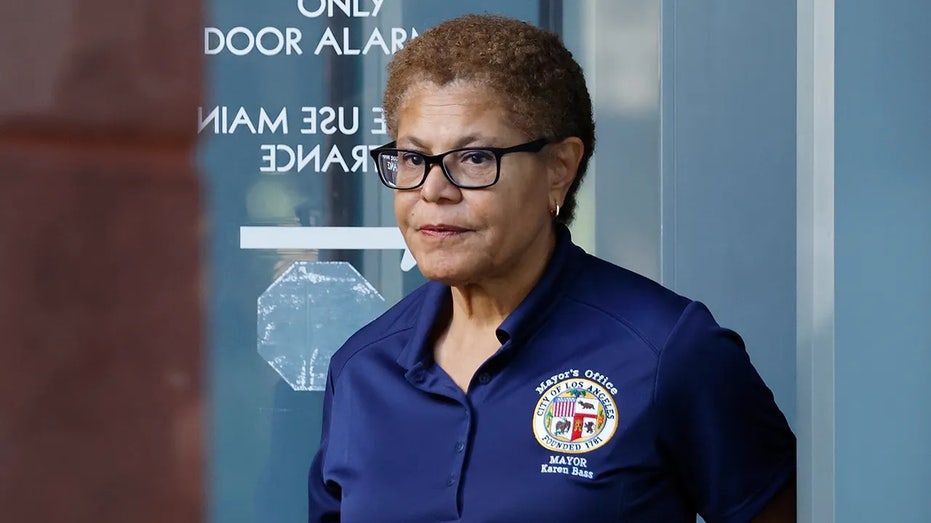
LA hotel leaders warn Mayor Bass' $30 wage mandate is killing business ahead of World Cup, Olympics
المصدر: Fox News | Source: Fox NewsMembers of the Los Angeles hotel industry are "sounding alarm bells" as they struggle over a city-mandated minimum wage hike signed into law by Democratic Mayor Karen Bass. Industry leaders warn the policy could lead to a severe shortage of room availability just as the city prepares to take the world stage.
"We are absolutely sounding alarm bells. If the city doesn't start working with the business community, by 2028, things will be very different in terms of room availability at hotels," President and CEO of American Hotel and Lodging Association (AHLA) Rosanna Maietta told Fox News Digital on Wednesday.
The timing is critical. Los Angeles is set to host a string of high-profile global events, including the 2026 FIFA World Cup matches at SoFi Stadium, the 2026 U.S. Women’s Open Championship, and the 2028 Summer Olympics. Maietta warned that for these events to succeed, hotels must be fully staffed—a task made increasingly difficult by rising labor costs.
CALIFORNIA'S $20 MINIMUM WAGE FOR FAST FOOD WORKERS LED TO 'NEGATIVE OUTCOMES,' RESEARCHERS SAY
"We've already seen that impact. I think about 100 restaurants have closed in the last year. If you think about just 6% of workers who have lost their jobs in less than a year. Times that by four more years of this, it's just going to continue to have a negative ripple effect across the Los Angeles community," she said.
The phased-in mandate requires a massive pay hike for airport and hotel workers. The law, signed by Mayor Bass last year, requires hourly wages to increase by $2.50 annually until they reach $30 per hour by 2028.
A recent AHLA report suggests the mandate has stripped the industry of the flexibility needed to navigate fluctuating market conditions. According to the data, the policy has already led to:
RESTAURANTS WARN TIPPED WAGE CHANGES COULD RAISE PRICES, CUT JOBS, RESHAPE DINING EXPERIENCE
While Mayor Bass did not respond to Fox News Digital’s request for comment, City Councilmember Hugo Soto-Martínez—a staunch supporter of the wage hike—dismissed the AHLA’s findings.
"Billionaire corporations spent millions of dollars trying to avoid paying their workers and providing them healthcare, and they failed," Soto-Martínez told Fox News Digital on Monday. "Now, instead of paying their workers a living wage, they’re pouring even more money into misleading studies, ignoring independent findings that paying workers fairly would provide a massive boost to our economy."
However, the AHLA noted that the study was not merely a private initiative. Under a 2015 ordinance, the city is required to commission an economic study every three years to review the state of the local economy. The city contacted the AHLA to conduct this specific analysis and provided the questions used to gather member responses.
The AHLA is the largest hotel association in America, representing more than 30,000 members from all segments of the industry nationwide. Its methodology stated it was a "member survey of Los Angeles hotel operators and owners" that featured "16 questions in multiple-choice, select-all-that-apply, and ranking formats."
"The city was required to do this analysis, and so we complied," Maietta said, noting the irony of the Councilmember’s criticism. "Our hotel employees in Los Angeles are paid some of the highest wages in the country, and we're proud of that. It’s not just about wages; we provide a pathway to growth and opportunity."
BUSINESS OWNER SAYS 'WE DON’T HAVE MONEY' AS NYC OFFICIALS PROPOSE MINIMUM WAGE HIKE: REPORT
The report found that none of the members believe Los Angeles is a favorable environment to make investments and 80% said that the city is not a good place for long-term hotel investment. Almost all the members surveyed said that rolling back the regulations would make the city’s market more attractive.
The consequences are already being felt by guests and residents alike, Maietta noted.
"People in Los Angeles are seeing what's happening. You’re seeing retail stores and local restaurants that have been staples for years shutting down," Maietta said. "When you go to the hotel bar and have to wait 20 minutes for a drink because there’s only one bartender, that doesn’t lead to a great experience."
She concluded: "People want their communities to thrive. They want good-paying jobs, but they also want local businesses to stay open. That is why the community is so concerned about the direction we're headed."
ملاحظة تحريرية | Editorial Note: نُشر هذا المقال في الأصل بواسطة Fox News. خبر (Khabr) هي منصة إعلامية أردنية مرخّصة تعمل بالذكاء الاصطناعي. نضيف قيمة تحريرية من خلال: تحليل ذكي للأخبار، ملخصات تلقائية، رواية صوتية بالذكاء الاصطناعي، ترجمة متعددة اللغات، وتدقيق الحقائق. هدفنا جعل الأخبار أكثر وضوحاً وسهولةً للقارئ العربي.
This article was originally published by Fox News. Khabr is a licensed Jordanian AI-powered news platform (Registration #82086). We add editorial value through: AI-powered news analysis, automated summaries, AI audio narration, multi-language translation (Arabic, English, French, Turkish), and AI fact-checking. Our mission is to make news more accessible and understandable for Arabic-speaking audiences worldwide.