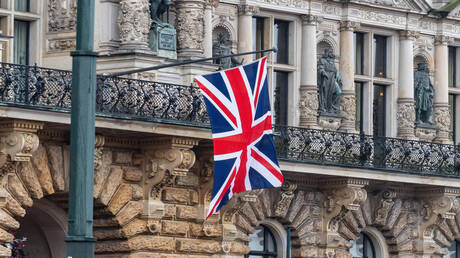
King Charles shows 'doubt' at White House after shooting, claims body language expert
King Charles and Queen Camilla have arrived in Washington DC to kick off a whirlwind four-day state visit, where they were officially welcomed by President Trump and First Lady Melania at the White House. The King and Queen arrived in the US capital on Monday, where Donald and Melania Trump welcomed the couple, as Melania and Camilla shared a warm embrace while Trump and Charles shook hands. While Charles is no stranger to state visits, a body language expert believes the monarch seemed different during the welcome to the US. The state visit has been a point of contention in recent weeks, with controversy reaching a high over the weekend after a shooting occurred at the White House Correspondents dinner, in which Trump was targeted. As a result, body language expert expert Bruce Durham from Huddle Culture believes Charles was more distracted and reserved than he has been in the past, perhaps feeling a level of unease in the wake of the shooting. Bruce told the Mirror : “What’s really interesting here is there’s a deviation in King Charles ’s behaviour. King Charles is ingrained in, conditioned in, and brought up in formal displays of royal behaviour. Protocol, etiquette — call it what you want. It has been King Charles’s full life of how to behave, how to act, when to speak, and when to be silent. “What we see here is that Charles, on a number of occasions, is showing signs of not being fully focused on the task at hand. Just after he arrives, what you see is what we call the tortoise effect. Now, Charles has been in thousands of engagements like this. He knows what to do. He knows where to stand. He would have been briefed by his staff. Yet when Camilla comes across to engage and greet Donald Trump , Charles puts his head down. Bruce continued: “This is the tortoise effect. This is exactly what we do when we have either fear, doubt, or a lack of self-confidence. There is no reason for Charles to put his head down. He has been in this engagement many times before. "What this is, is an activation of what we call the sympathetic nervous system—the amygdala, the fight-or-flight response firing. In that particular moment, Charles is physically present, but his mind is absent somewhere else.” According to the expert, this instinctive act “could genuinely be due to the recent shooting at the Whitehouse correspondents address.” Bruce explained that Charles performed a subconscious ritual during the meeting, in an attempt to calm his mind and re-centre his thoughts and actions, by quelling potentially intrusive thoughts. He said: “Shortly after this, you see Charles perform a self-soothe with his left hand on his thigh. That is to tell himself that he’s OK. Whatever is going on in his mind, he is telling himself it’s OK, it will be fine, calm down—you’re OK right now. That’s when you then see the self-soothe with his left hand, and then immediately he puts both hands behind his back, as if he has remembered what to do. “Then, when they are just about to turn and walk into the White House, you see Charles start to become more like the King Charles that we know and are familiar with. What this is, is an activation of the parasympathetic nervous system.” Bruce explained that the recent shooting was likely at the front of the King’s mind, especially given how high profile his appearance at the White House was, regardless of how unlikely it might seem that the monarch might be targeted by a gunman. “Charles may be aware of a threat,” Bruce said. “He may be uncomfortable, perhaps thinking - logically - that there could be a shooter in the crowd. But we all behave in this way, because after a certain time, even if we perceive a threat, that threat could be many things in daily life. It could be an email from a boss, someone standing next to you, or being in the sea and thinking you see a shark - whatever it may be. “After a while, if that threat does not materialise or act in the way your subconscious anticipates, the parasympathetic nervous system starts to take over. We begin to breathe easier, reduce our heart rate, and adapt to the perceived threat. “That is why you see Charles start to return to the King Charles we recognise, with the protocol, the gregariousness, and sometimes humour. His normal baseline behaviour returns.” “While we can’t say for sure what Charles is focusing on, his mind does appear to be elsewhere while his body is physically present. That is unusual for him. We could logically assume that his mind, given recent events, may be on a potential threat. Eventually, he adapts.” The body language expert said that this jittery and uncertain behaviour is unusual from the King, but given the divisive nature of the state visit, it is no wonder why Charles might be hyper aware of a possible threat. Bruce said: “That’s what we’re seeing from King Charles, which is why you get a baseline behaviour that is noticeably different at the start, transforming into the King Charles we recognise once he has been there for a period of time. “For sure, he displays a behaviour in my world where we say ‘his mind is not where his feet are’ but this - at the start, without doubt, he is physically present, but mentally he is thinking of something else. It would be logical to think of the recent shooting. His base line behaviour had changed. Charles has done this thousands of times, so the the change? The answer could be fear.”المصدر: Mirror | Source: Mirror
ملاحظة تحريرية | Editorial Note: نُشر هذا المقال في الأصل بواسطة Mirror. خبر (Khabr) هي منصة إعلامية أردنية مرخّصة تعمل بالذكاء الاصطناعي. نضيف قيمة تحريرية من خلال: تحليل ذكي للأخبار، ملخصات تلقائية، رواية صوتية بالذكاء الاصطناعي، ترجمة متعددة اللغات، وتدقيق الحقائق. هدفنا جعل الأخبار أكثر وضوحاً وسهولةً للقارئ العربي.
This article was originally published by Mirror. Khabr is a licensed Jordanian AI-powered news platform (Registration #82086). We add editorial value through: AI-powered news analysis, automated summaries, AI audio narration, multi-language translation (Arabic, English, French, Turkish), and AI fact-checking. Our mission is to make news more accessible and understandable for Arabic-speaking audiences worldwide.