It's the Dublin-based 'Christian movement' some call a cult, accused of breaking young people away from their families and controlling their lives - and it's led by an English man who claims he's the second coming of St Patrick...
•Published: 21:51, 1 May 2026 | Updated: 21:51, 1 May 2026 It begins with something so small and so ordinary that it barely registers.
•A tap on a shoulder in a busy shop, a compliment about a pair of boots, a warm, easy conversation with a friendly young woman who wants to know where you study, how you’re finding Dublin, and whether...
•There is no mention of God, no mention of church or Bible study.
هذا الخبر من Daily Mail. خبر يقدم أدوات ذكاء اصطناعي للتلخيص والترجمة والاستماع.
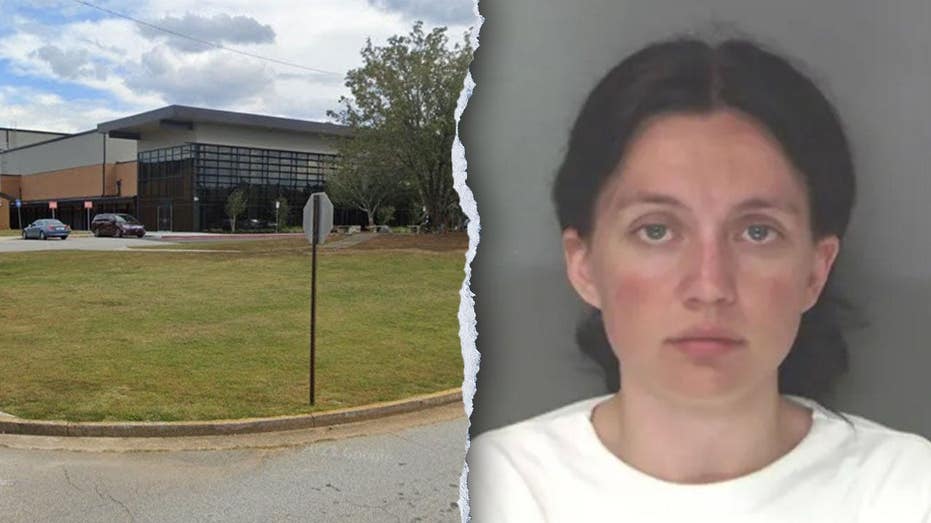
Published: 21:51, 1 May 2026 | Updated: 21:51, 1 May 2026 It begins with something so small and so ordinary that it barely registers. A tap on a shoulder in a busy shop, a compliment about a pair of boots, a warm, easy conversation with a friendly young woman who wants to know where you study, how you’re finding Dublin, and whether you’d like to come for coffee with some like-minded people. There is no mention of God, no mention of church or Bible study. No mention of what it might eventually cost you to say yes to that cup of coffee – in time, in money, in the slow severing of the ties that connect you to everyone you knew before. This is how the Dublin branch of the International Christian Church finds its members. But according to parents, former members and cult researchers, that seemingly harmless street conversation is only the surface of something far more structured – and far more alarming. As one source who has monitored the group closely puts it: ‘You will be waving goodbye to your friends and family, your income and everything you hold dear.’ Ella Kate was picking out nail polish in Penneys on O’Connell Street on a Tuesday afternoon in March 2025. AirPods in, still dazed from a long morning of lectures at Trinity College Dublin, she felt a tap on her shoulder. She was 20 years old, a first‑year midwifery student, new enough to Dublin to still be finding her feet. The young woman behind her was smiling warmly and told her she had lovely Doc Martens. ‘I told her the name of them and said they were so comfortable – even coming into the city centre for college, they never caused me any pain,’ Ella recalls. ‘She began to ask where I went to college, I told her Trinity, she asked what I studied.’ The woman asked about Ella’s course, mentioned a friend who was pregnant, spoke warmly about the city. She introduced herself as Nicola. At no point did she mention God or church. Before they parted, she took Ella’s phone and followed herself from Ella’s own Instagram account. A message arrived almost immediately, with a time and a date. Ella, uneasy in a way she couldn’t quite name, left it unanswered. That evening, scrolling through the woman’s Instagram profile, the picture sharpened into something genuinely unsettling. Francesca Snow attends a 'baptism' at the Garden Of Remembrance in Dublin The account was full of videos captioned from darkness to light: a former version of the same woman with short dyed hair, heavy eyeliner, piercings, smoking; a new self with long hair, minimal make-up, Bible readings and baptism photographs. In one older image, barely visible, she was laughing at something off‑camera – the easy, unguarded laugh of someone who had not yet been saved from anything. The transformation was total, the imagery glossy, curated and polished. ‘It felt carefully constructed rather than spontaneous,’ Ella says. When she mentioned the encounter to her boyfriend, he remembered something almost identical on the same stretch of O’Connell Street the previous April – a man who had asked for directions, drifted naturally into conversation and extended an invitation to a nearby café. A pattern, Ella realised, was already there. She simply hadn’t known to look for it. The street approach is only one method. The group was active on the campuses of Trinity College Dublin and University College Dublin until both institutions issued formal warnings. Since then, it has moved its recruitment online, with members posing on social media as student mentors and drawing young people towards social evenings that give no indication of their true purpose. Luke Snow is the leader of the Dublin branch of the International Christian Church It is a pattern repeated across the world. According to researchers who have studied the movement, the International Christian Church is simultaneously the number one group recruiting on university campuses globally and the number one group to have been banned from them. When members are eventually baptised into the group, the ceremony does not take place in a church. The ICC does not recognise prior baptisms – whatever your faith before, it does not count here. You begin again, on their terms. Luke Snow (centre) at a 'baptism' in the Garden Of Remembrance According to sources, that beginning takes place in the reflecting pool of the Garden of Remembrance on Parnell Square – a national monument commemorating those who died for Irish freedom, whose waters are apparently also used for the re‑baptism of Dublin students into a movement run from a south Dublin apartment by a man from England. This leader of the Dublin branch of the ICC is Luke Snow, who arrived in Ireland in 2023 with his wife Francesca, a baby, a YouTube channel and ambitions that are, by any measure, staggeringly large for a man running a congregation from a rented apartment. Luke and Francesca – who goes by Frankie – live there with their children. The church’s registered address is listed as North Great George’s Street in Dublin city centre. His payment links – PayPal and Revolut – sit openly in his social media biography. Luke and Francesca Snow with their child Snow is not a figure who trades in ambiguity. A former primary school teacher, he is 29 years old and leads his congregation with a directness his supporters describe as conviction and his critics as something closer to megalomania, dressed in the language of religion. His sermons, posted publicly to YouTube, are remarkable documents. He has spoken from the pulpit about wanting thousands of disciples across every county in Ireland. In one sermon, delivered when he was in his mid‑20s, he told his congregation that 1,000 years ago, God looked for a faithful Irish man and could not find one. ‘So he sent a Brit, St Patrick. Now 1,000 years later, God has found no true Christian man in the whole island, so he has sent another Brit, and that man is me.’ The congregation applauded. That claim of divine appointment is no isolated flourish. It is the theological foundation on which Snow has built his authority in Dublin. From that same pulpit, he has told his followers to repent of their Irishness – their culture, their identity, their sense of who they are, all of it obstacles to be overcome. Ireland itself, he has declared without qualification, is beyond redemption in its current form. ‘Ireland is no longer a Christian country,’ he told his congregation. ‘This is a pagan nation.’ The country that took him in, he has concluded, requires saving – by him. The self-mythology extends to Snow’s account of his own past. In sermons freely available on YouTube, he has described a former life of striking chaos. ‘I was taking cocaine, smoking weed, dropping ecstasy, taking mushrooms, MDMA, ketamine, a lot of it,’ he said. ‘I was getting drunk three times a week. I was sleeping around, catching STDs.’ This was all before his conversion transformed him into the man now standing in judgment over the spiritual lives of Dublin’s students. The dramatic arc is deliberate, the message is clear – he has been to the darkest places and returned enlightened. Who are you to question him? Those who do question him are dealt with in terms that leave little room for ambiguity. Anyone who socialises with a drink is not merely making a lifestyle choice, they are, in Snow’s words, worshipping at ‘the synagogue of Satan’. Those who lack sufficient zeal are told plainly: ‘You are not a disciple. You are not a Christian.’ The authority to determine who is and is not saved, in Snow’s church, belongs to Snow. Critics, journalists, worried parents, university welfare teams – all are folded into the same category from the pulpit. ‘Those who oppose us,’ Snow has told his followers, ‘will only find themselves fighting against God. I’m afraid for those who choose to fight against God.’ It is a formulation of considerable elegance – to raise a concern about the church is, by definition, to place yourself in opposition to the Almighty. Perhaps most striking of all is the way Snow has embraced – even celebrated – the accusation that his church is a cult. ‘In the Holy Bible, the first century church was called a cult,’ he told his congregation. ‘And if they call us a cult, so be it.’ He has invited his followers to search his name online and read the results. ‘You’re going to say “cult leader, cult leader, fundamentalist preacher, cult leader”,’ he told them. ‘Do it if you want. And if it scares you, don’t come back.’ The DICC did not respond to calls, text messages or detailed questions submitted by this newspaper before publication. Snow operates within the wider structure of the ICC, a movement founded by American preacher Kip McKean, who built it from a congregation of 25 in Portland, Oregon, in 2007 into a worldwide network of around 160 churches. McKean stepped down from ICC leadership in April 2024, but the shadow he casts over that network is long and deeply troubling. A series of civil lawsuits filed in California accuse the organisation of enabling and covering up the systematic sexual abuse of minors – describing, in one filing, a church elder telling a mother whose young daughters had been assaulted on church grounds that ‘most girls have been molested by the time they reach 18’. The organisation denies it is a cult. They deny the charges but the lawsuits continue. Michele Roland spent 18 years inside that network. She now works with lawyers on those active lawsuits and has described the Dublin operation with the clarity of someone who knows exactly how it works. ‘Kip trained Michael. Michael trained Luke,’ she says. ‘It is a pyramid scheme of abuse.’ The Michael she mentions is Michael Williamson, part of the ICC’s European leadership, with whom Snow works closely. Based in London, he pays Snow and his wife a wage from funds sourced from Dublin members. Williamson’s name has surfaced in deeply troubling circumstances. He is named in California court records from a sexual abuse case involving the LA church as having referred to a 15‑year‑old girl as a ‘temptress’. That is the network Luke Snow belongs to. Francesca Snow's teachings on the role of women are striking in their directness Francesca Snow’s teachings on the role of women are, if anything, more striking in their directness. In a session posted publicly to YouTube, she told female members that one of her greatest passions is making women into wives, and that the sister households should be, in her own words, ‘wife factories – just, like, making wives, producing wives’. In other sessions, she has taught that a woman’s path lies in submission, respect and childbearing, that her purpose, in short, is to become a good wife within the structures of the church. Men lead. Men decide. For young women being drawn in – many of them students away from home for the first time, still working out who they are – the question of what kind of woman they will become has, in this world, already been answered. Former members say relationships are effectively arranged by the leadership. Sources say that in at least one case, a husband was selected for a female member by Snow himself, presented as a divine blessing – God’s reward for her obedience. The choice, sources say, was his alone to make. What critics are alleging is that what Snow has built in Dublin follows a playbook that cult experts, former members and university safeguarding teams now say they recognise with grim familiarity. New recruits are disarmed with warmth, music, laughter and an almost overwhelming sense of welcome – what those familiar with high‑control groups call love‑bombing. Foreign students are particularly targeted, arriving in a new country without the family or friends who might otherwise raise an alarm. Members are expected to give 10 per cent of their gross income to the church. During what the group calls special missions periods, sources say that pressure intensifies dramatically – members are encouraged to give ten times their normal amount, and sources describe people selling personal possessions to meet the expectation. That money, sources say, flows not to any Dublin account but directly to London. Then comes the isolation. Members are encouraged to live communally in brother or sister households, physically separated from their original families and friends. Luke appoints a head to each household. With five or six people living together, sources say, there is little that escapes the leadership’s notice. Those who eventually try to leave are labelled ‘fall‑aways’ and shunned. There is one further mechanism of control that is particularly striking. New members are required to compile what sources call a sin list – a written record of every transgression they have ever committed – and hand it to their discipleship leader. Should a member later consider leaving, that list stays behind. Carol is a warm woman in her mid‑50s who had a loving, close relationship with her daughter Nicola before the church entered their lives. Nicola was creative, affectionate and funny, a girl who made beautiful cards as a child, who always said ‘I love you’ before she walked out the door. She had spent three years doing a musical theatre degree in Spain, and came home to Dublin in 2023 after a difficult break-up, lonely and looking for community. She was 22 and the world was wide open. ‘She was working in restaurants, coming home late,’ Carol recalls. ‘She told us she’d made these lovely friends and was going to Bible study. We’re not a religious family, but we thought, whatever makes her happy. She was going bowling, going to the pictures. It all seemed fine.’ The first red flag arrived with a phone call. Nicola rang her mother, excited. The church were going to pay for her to go to Chicago. ‘I knew then,’ Carol says. ‘They’re not paying for you because they see great potential in you as a person. They see potential in what they can extract from you.’ Visits home became less frequent. Nicola moved into a sister household. Then one day she arrived at her parents’ house and said something Carol will never forget – that she loved her very much, that she was living her life for Jesus through the Bible – and then she walked out the door. ‘She was a different person,’ Carol says. ‘Disconnected. Disembodied. She wasn’t my daughter any more.’ Nicola is now married to a member of the church in Dublin. Carol and her husband were invited to the wedding but chose not to attend. She had hoped, at least, that her daughter’s father might be there to give her away. He was not. An 18‑year‑old boy from the church performed that role instead. ‘I made the wedding cake,’ Carol says quietly. ‘I made it and I sent it, and I wished her all the best. What else could I do?’ The family has endured two Christmases without Nicola. Last December, Carol texted her daughter and asked if she would come over for mince pies and gifts. Nicola said she would love to. Weeks later, a message arrived: she could not come, because the last time she had visited, Carol had been ‘too emotional’. On Christmas Day, a brief text arrived telling Carol she was a wonderful woman who had raised her children with such kindness. ‘And I thought, where are we?’ Carol says. ‘This is like a hostage note.’ Carol has watched videos of her daughter online. In one, posted publicly by the church, Nicola is visible in the audience as Francesca speaks from a stage. Nicola turns toward the camera and shouts: ‘That’s my mum! That’s my mum!’ She is pointing at Francesca. ‘That is one of the most painful things I have ever witnessed,’ Carol tells this newspaper. ‘Luke Snow has told my daughter that he is her father now. He has said it to her. He has taken that from us.’ Carol went to the gardaí. She was told her daughter was an adult and that nothing could be done unless Nicola came forward herself. Nicola is now living in a converted garage in Dublin on minimum wage, with every spare euro going to the church, according to her mother. She had been accepted on to a college administration course before she joined – plans, a future she had chosen for herself. The church told her not to do it, Carol says. ‘Luke Snow’s sole mission,’ Carol says, ‘is to get those young people separated from their families, into sister houses or brother houses. He uses the Bible to justify it. He has created an artificial, violent wedge between my daughter and everyone who loves her. I never experienced evil until I came across this group. That is evil. I don’t have another word for it.’ If she could speak to Nicola directly through the pages of this article, Carol knows exactly what she would say. ‘Wake up. Look around you. We love you. We will always be there for you. Whatever has happened, however long it takes, we are here.’ What is happening to families like Carol’s is not new in Ireland, and it is not – in the most devastating sense – without precedent. The Dublin ICC is not an unknown quantity on these shores. It was here before, and its presence ended in tragedy. In the late 1990s and early 2000s, the same Kip McKean‑linked network operated in Dublin as the International Church of Christ. Cult-monitoring organisation Dialogue Ireland documented it extensively at the time. Its records describe a group that was particularly active on university campuses, that subjected members to extraordinary pressure to gain new recruits and funding, and whose favoured recruiting technique was a bland invitation to a Christian service or Bible study, usually without mentioning which religion they represented. Members were targeted at UCD and Trinity. Leaders lived in a plush city centre apartment on Castle Street while young members gave 10 per cent of their gross income, including student grants and social welfare payments. The tactics are identical to what students describe today. The structure is identical. Even the language is identical. In 2006, Niall MacMahon, a 40‑year‑old Dublin man, died after being struck by a train at Harmonstown Dart station. At the inquest into his death, his brother Declan told Dublin City Coroner’s Court that Niall had been a member of the group and that, in his view, its teachings had contributed to his death. Niall had been taught to believe that by having an operation to treat his epilepsy, he had blasphemed the Holy Spirit and lost all chance of salvation. ‘I felt from day one the Church had an undue influence on his life,’ Declan told the court. ‘As time went on, I felt it had more and more control over him. He couldn’t think for himself. He said, “life has been a living hell”.’ The Dublin branch eventually collapsed. They changed the name but nothing else changed. Mike Garde, director of Dialogue Ireland, who monitored the original Dublin Church of Christ nearly 30 years ago and worked with families trying to retrieve children from the group, is in no doubt about what he is looking at. ‘This new ICC is a clone of the ICC of 30 years ago,’ he says. ‘The first was the International Church of Christ, which is now the International Christian Church. It is like the Provisional IRA becoming the Real IRA and the Continuity IRA. The name changes, the organisation does not.’ Garde recalls interventions with students from Trinity College Dublin – some of which succeeded, some did not. ‘One involved travel to the south-east, a train and a ferry,’ he says. ‘It was over in minutes and the person was out. But others regarded me as a kind of spiritual kidnapper.’ He notes one significant difference between the group of 30 years ago and today’s incarnation. ‘The original church was very much Irish – Protestant and Catholic converts,’ he says. ‘Now there is massive growth among African and Brazilian members.’ Ronan O’Grady is a Dublin man and a committed Christian who encountered the group by chance on O’Connell Bridge in 2025, walking back from Sunday church, when he noticed members approaching passers‑by. Over the following weeks he attended events billed as Bible studies – none of which involved any sustained engagement with scripture. ‘He might have read one verse from the Bible,’ Ronan recalls. ‘Then he was asking really personal questions. It felt like they were prying information from us.’ At a subsequent meeting, Ronan arrived to find Luke Snow already waiting in the corner of the café. What followed was an attempt, Ronan says, to convince him he was not a real Christian. He left – but not before understanding what he had walked into. ‘The biggest danger is the isolation,’ he says. ‘If anyone – your parents, your friends – expresses concern that you might be in a cult, you are taught that they are being used by the devil. You are told that is persecution. It is how they cut people off from everyone who loves them.’ Ronan also describes the sin list practice that goes beyond financial pressure or communal living. New members, he says, are encouraged to compile a written list of every sin they have ever committed and hand it to their discipleship leader. The stated purpose is spiritual growth. The practical effect, he says, is leverage. ‘If you ever try to leave, they have something on you,’ he says. ‘I have heard Luke talk in sermons about people who left and describe what they went back to. Once you have given them that list, it does not belong to you any more.’ Irish institutions are taking the threat seriously. Trinity College Dublin has confirmed that its Secretary wrote formally to the Dublin ICC instructing it not to solicit students on campus, with warnings now delivered to every incoming cohort at orientation. ‘Trinity is aware of reports of the re‑emergence of this group, which is not welcome on campus,’ a spokesperson confirmed. Technological University Dublin issued similar alerts in November 2024. The group has since shifted its methods, with members now reportedly approaching young people online, posing as student mentors. The church has also been reported as active in Greystones, Co Wicklow, where community warnings have circulated about approaches to teenagers. Snow addresses the scrutiny from the pulpit – and does so, characteristically, without apology. ‘We sing one song about Jesus at Trinity College, post it on our Instagram, and within the next two days we’re already in the newspapers,’ he told his congregation. ‘There’s a religious cult resurgence on – we never left.’ For those inside the church who might wonder whether the outside world has a point, Snow has a ready answer: any doubt, any concern raised by a parent or a friend, is not a human response to something troubling. It is, he tells them, persecution. And persecution, in Snow’s theology, is simply proof that God is on your side. Back home in Dublin, Carol thinks about Nicola every day. She thinks about every carefully timed text. Every Christmas that comes and goes without her. ‘She feels she was saved by this church,’ Carol says. ‘Unbelievable. It shows you the power of the brainwashing. That is what breaks your heart.’ On any given afternoon, somewhere in Dublin, a student is being tapped on the shoulder and told they have lovely shoes. Or receiving a message on Instagram from someone posing as a mentor, offering friendship, community, a sense of belonging. The conversation that follows – whether on a street or a screen – will be warm and easy and entirely ordinary, and it will not mention, at any point, where it is intended to lead. ‘If I’d been having a worse day,’ Ella says, ‘I might have gone. If I’d needed it more.’ She pauses. ‘I think that’s exactly the point.’ Sorry we are not currently accepting comments on this article.المصدر: Daily Mail | Source: Daily Mail
ملاحظة تحريرية | Editorial Note: نُشر هذا المقال في الأصل بواسطة Daily Mail. خبر (Khabr) هي منصة إعلامية أردنية مرخّصة تعمل بالذكاء الاصطناعي. نضيف قيمة تحريرية من خلال: تحليل ذكي للأخبار، ملخصات تلقائية، رواية صوتية بالذكاء الاصطناعي، ترجمة متعددة اللغات، وتدقيق الحقائق. هدفنا جعل الأخبار أكثر وضوحاً وسهولةً للقارئ العربي.
This article was originally published by Daily Mail. Khabr is a licensed Jordanian AI-powered news platform (Registration #82086). We add editorial value through: AI-powered news analysis, automated summaries, AI audio narration, multi-language translation (Arabic, English, French, Turkish), and AI fact-checking. Our mission is to make news more accessible and understandable for Arabic-speaking audiences worldwide.