Israel is moving to isolate some villages in Quneitra governorate, southern Syria, through the closure of several main and secondary roads in different areas, continuing the tightening measures it has imposed in villages inside the buffer zone.
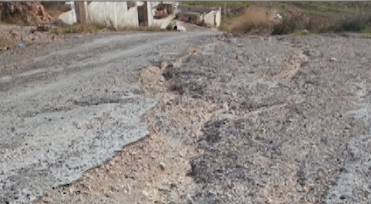
Enab Baladi’s correspondent in Quneitra said the Israeli army closed the road linking the villages of al-Asbah and Kudna in the southern Quneitra countryside. At the same time, it closed the Ruwayhina road leading to farmland west of the village, as well as the Umm al-Azam al-Shouli road in western Quneitra with earth berms.
Qutaiba al-Tahan, from the village of Kudna, told Enab Baladi that Israeli forces closed the main road between Kudna and al-Asbah in the southwestern countryside of Quneitra. Anyone trying to move between the two villages now has to travel an additional 10 kilometers and is forced to pass through the town of Rafid.
On Friday, April 3, the Israeli army also directly shelled a young man near Tal al-Daraiyat in the al-Zaaroura area, which belongs to the town of Rafid in southern Quneitra, killing him instantly.
Qutaiba added that Israeli forces also closed the Mazraat al-Fityan road between Kudna and al-Asbah, and cut off the two villages from nearby farmland.
In the central countryside, several residents told Enab Baladi that anyone wanting to travel from Rasem al-Shouli to the villages of Umm al-Azam and al-Qahtaniyah now has to cover 15 kilometers, although the actual distance is only one kilometer.
Israeli forces have also closed secondary agricultural roads to tighten restrictions on residents’ movement and limit their mobility, especially given the presence of Israeli military bases around the village of Umm al-Azam.
Israeli forces had previously cut roads and erected fortifications at the same time as mobilization campaigns spread across social media in southern Syria in rejection of a law passed by the Israeli Knesset allowing the execution of Palestinian prisoners.
Enab Baladi monitored demonstrations in several Syrian cities since the law was approved. Protesters carried signs calling for support for Palestinians, standing with them, and stopping the law. They also condemned what they described as “unjust decisions and ongoing violations” against prisoners.
On March 30, members of the Israeli Knesset voted by a majority of 62 to 47 to adopt execution by hanging as a default punishment for West Bank residents convicted by military courts of committing what the law describes as “deadly terrorist acts.”
On another front, the Quneitra Media Directorate denied that rockets had been launched from the Syrian side toward the occupied Golan, stressing that these were “baseless allegations.”
The directorate called on media outlets to “adhere to professional standards” in verifying information before publication and to rely on official sources, to avoid what it described as “spreading rumors or causing confusion.”
Lebanon’s al-Mayadeen channel, which is close to Hezbollah and Iran, had quoted Israeli media as reporting that rockets were fired from Syria toward the Golan.
Enab Baladi had not observed any claim of responsibility for rocket fire toward the Golan by the time this report was published.
Israel has continued near-daily incursions into Syrian territory, claiming to protect its national security, since the first hours after the fall of the former Syrian regime on December 8, 2024.
Meanwhile, the Syrian government continues to demand the withdrawal of Israeli forces from its territory and a return to the 1974 disengagement agreement signed between the two sides.
Collapse of Earth Berms
Earth berms built by the Israeli army while constructing a military road known as “Sufa 53” collapsed as a result of heavy rainfall in the area.
The collapse, which took place on March 30, led to flash floods that threatened farmland around Jubata al-Khashab in the northern countryside of Quneitra.
Floodwaters submerged some farmland and homes around the villages of Ofania, Ain al-Bayda, and Jubata al-Khashab in northern Quneitra.
According to Enab Baladi’s correspondent, the damage affected fields planted with wheat, fava beans, and barley, in addition to flooding some homes near the flood channels.
The flowing water is originally part of the governorate’s water share, but the occupation authorities had previously blocked it from reaching the area because of the earth berms built there.
Although the flooding did not affect wide areas, farmers expressed concern about crop damage before the harvest season and about soil erosion.
“Sufa 53” Road
About six months before the fall of the former regime, Israeli occupation forces built trenches and earth berms along the barbed-wire line from north to south on the western side, within the buffer zone, to establish a military road to serve their movements in the area.
The Israeli army gave the new military road inside Syrian territory the name “Sufa 53.”
The project is part of a military expansion along the border strip with the occupied Golan Heights and aims to facilitate the movement of military vehicles inside Syrian territory near the border.
Work on the road began in mid-2022, when an Israeli military force entered Syrian territory with six Merkava tanks and two military bulldozers, accompanied by several soldiers monitoring the border and the machinery, according to local correspondents in Quneitra governorate.
The work extends at least 100 meters into Syrian territory, while in some areas it reaches a depth of one kilometer, with bulldozers carving the road and clearing land along the route.
The post Israeli Army Closes Roads, Isolates Villages in Quneitra appeared first on Enab Baladi.