Iranian President says Tehran won't enter 'imposed negotiations' under blockade
المصدر: Khaleej Times | Source: Khaleej TimesNo signs of breakthrough in talks
Iranian Foreign Minister Abbas Araqchi earlier left the Pakistani capital without any sign of a breakthrough in talks with Pakistani Prime Minister Shehbaz Sharif and other senior officials.
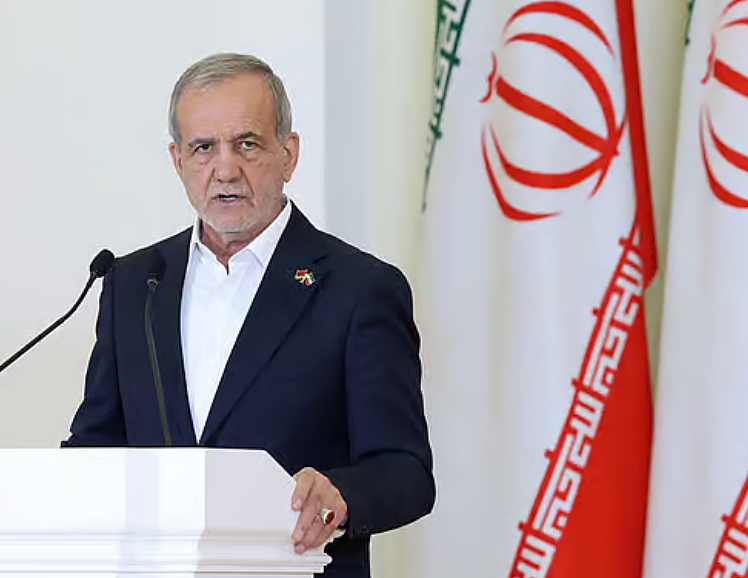
Although Araqchi described his visit to Pakistan as "very fruitful", Iranian President Masoud Pezeshkian told Sharif in a phone call that Tehran would not enter "imposed negotiations" under threats or blockade, according to a statement from the Iranian government.
'We have all the cards, they have none'
In a social media post, Trump also wrote there was "tremendous infighting and confusion" within Iran's leadership.
"Nobody knows who is in charge, including them. Also, we have all the cards; they have none! If they want to talk, all they have to do is call!!!" he posted on Truth Social.
What is Iran saying?
Iranian President Masoud Pezeshkian told Pakistani Prime Minister Shehbaz Sharif by phone that Tehran would not enter "imposed negotiations" under threats or blockade, according to a statement from the Iranian government.
Pezeshkian also said the US should first remove "operational obstacles", including its blockade on Iranian ports, to be able to create groundwork to resolve issues.
Reasons behind Trump calling off Islamabad delegation
Trump told reporters in Florida that he decided to call off the planned visit by US envoys Steve Witkoff and Jared Kushner because the talks in Islamabad involved too much travel and expense, and Iran's latest peace offer was not good enough for him.
Before boarding Air Force One on Saturday for a return flight to Washington, Trump said Iran had improved an offer to resolve the conflict after he cancelled the visit, "but not enough".
Day 19 of ceasefire
US President Donald Trump cancelled a trip by two US envoys to Iran's war mediator Pakistan on Saturday, dealing a new setback to peace prospects after Iran's foreign minister departed Islamabad after speaking only to Pakistani officials.
The standoff keeps the world’s largest economy and a major oil producer in conflict, pushing energy prices higher and weighing on global growth.
ملاحظة تحريرية | Editorial Note: نُشر هذا المقال في الأصل بواسطة Khaleej Times. خبر (Khabr) هي منصة إعلامية أردنية مرخّصة تعمل بالذكاء الاصطناعي. نضيف قيمة تحريرية من خلال: تحليل ذكي للأخبار، ملخصات تلقائية، رواية صوتية بالذكاء الاصطناعي، ترجمة متعددة اللغات، وتدقيق الحقائق. هدفنا جعل الأخبار أكثر وضوحاً وسهولةً للقارئ العربي.
This article was originally published by Khaleej Times. Khabr is a licensed Jordanian AI-powered news platform (Registration #82086). We add editorial value through: AI-powered news analysis, automated summaries, AI audio narration, multi-language translation (Arabic, English, French, Turkish), and AI fact-checking. Our mission is to make news more accessible and understandable for Arabic-speaking audiences worldwide.