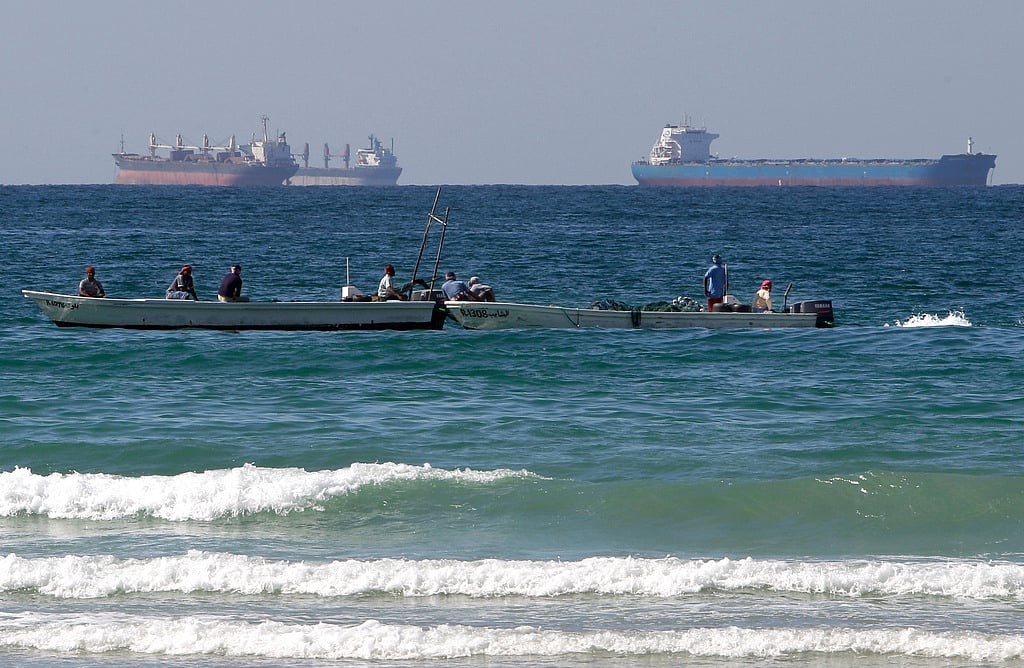
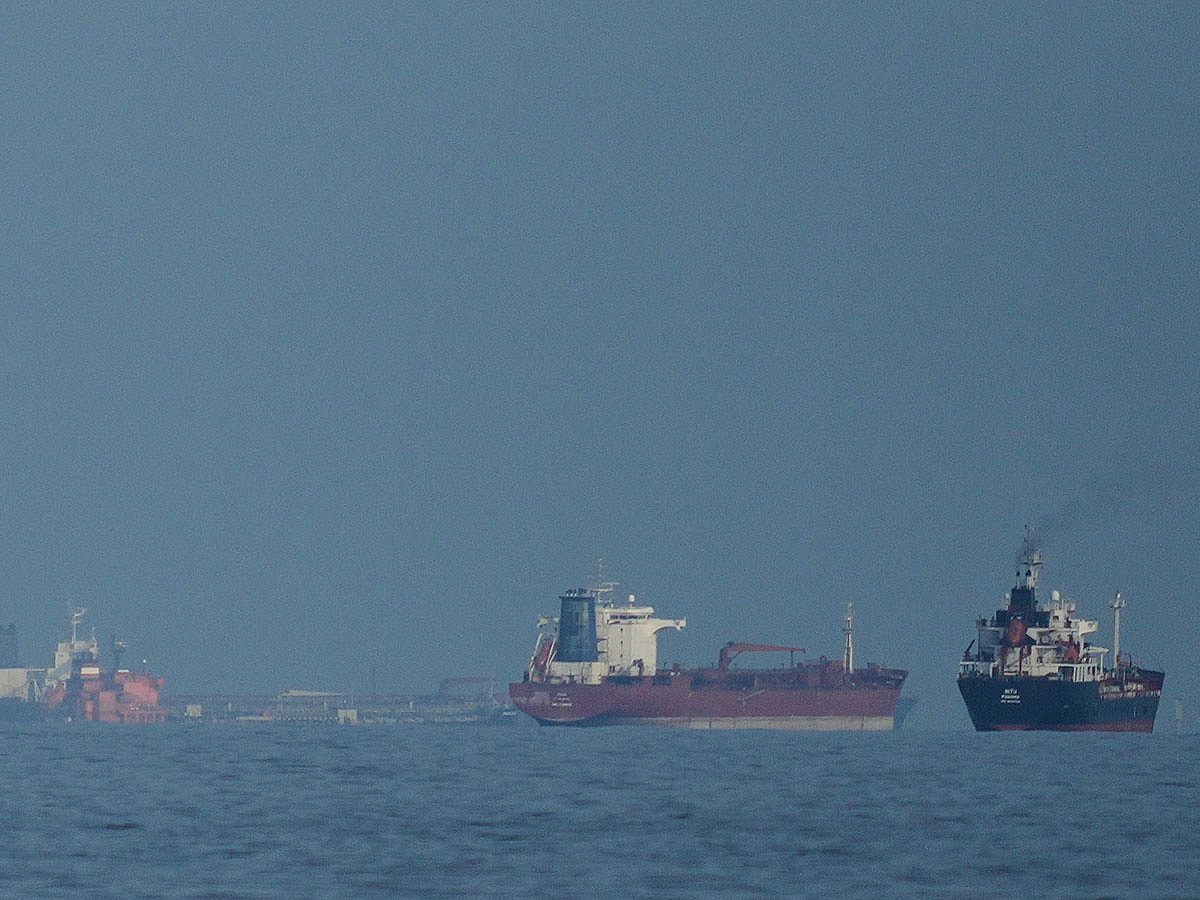
The disruption of crude oil tanker and cargo traffic through the Strait of Hormuz did more than send oil prices sharply higher.
It exposed a hard truth: the global economy — for all its digital sophistication, financial complexity, space and tech progress — still rests on physical corridors, pipes, ports, and sea lanes that can be blocked.
What followed was not a typical supply shock: Oil did not vanish underground, refineries did not disappear.
Instead, movement stopped. Insurance evaporated. Risk overwhelmed routine.
And despite advances in satellites, AI, high-frequency trading and algorithms, the foundation of the global economy remains:
Oil fields in specific geographies
LNG terminals in specific ports
Massive tankers moving at the speed of a bicycle through specific sea lanes
Pipelines with fixed capacities
Storage tanks that can fill up
This is not the energy profile of a civilisation that has mastered planetary energy.
It is the profile of one still dependent on linear, fragile supply chains.
The International Energy Agency (IEA)’s March 2026 Oil Market Report calls the event “the largest supply disruption in the history of the oil market.”
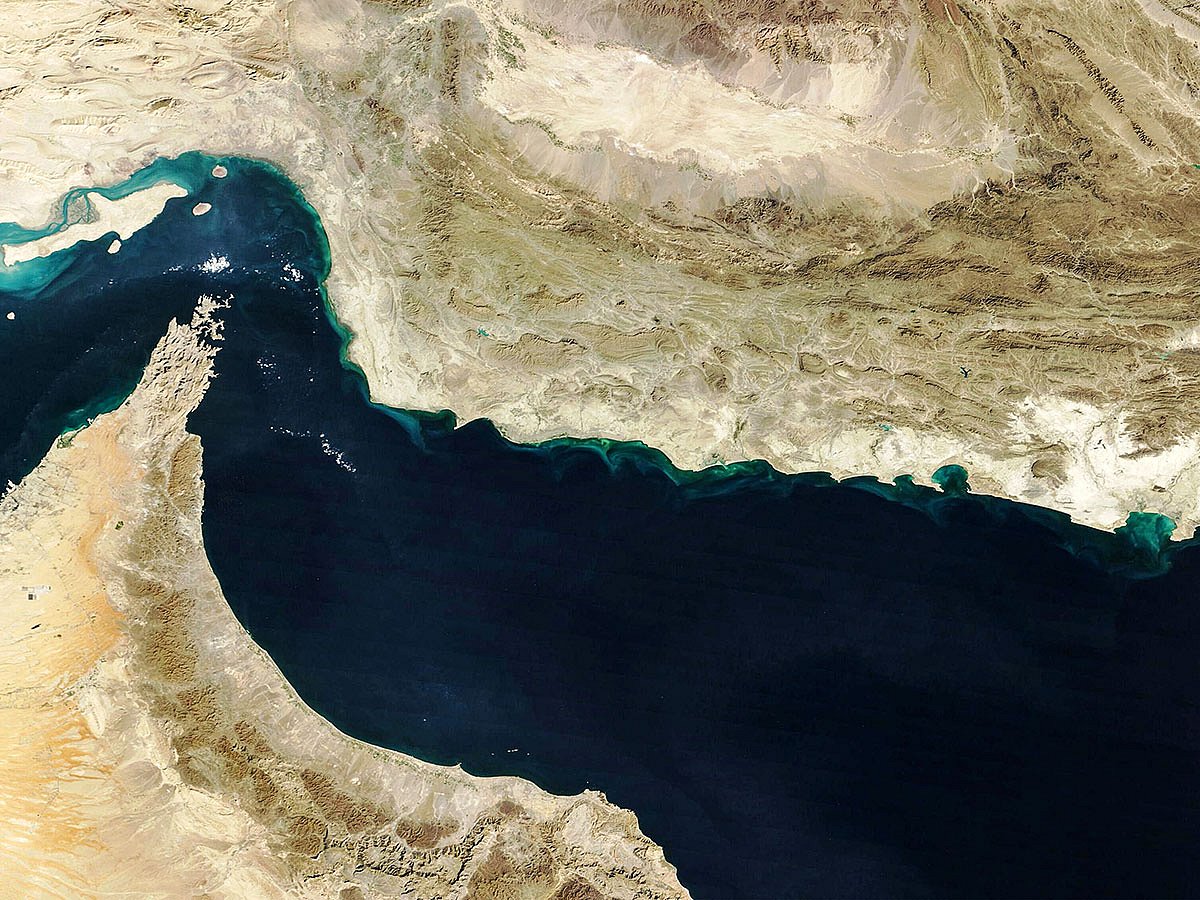
Weaponised geography
For decades, the Hormuz tanker squeeze was a scenario that existed only in the minds of geopolitical strategy wonks.
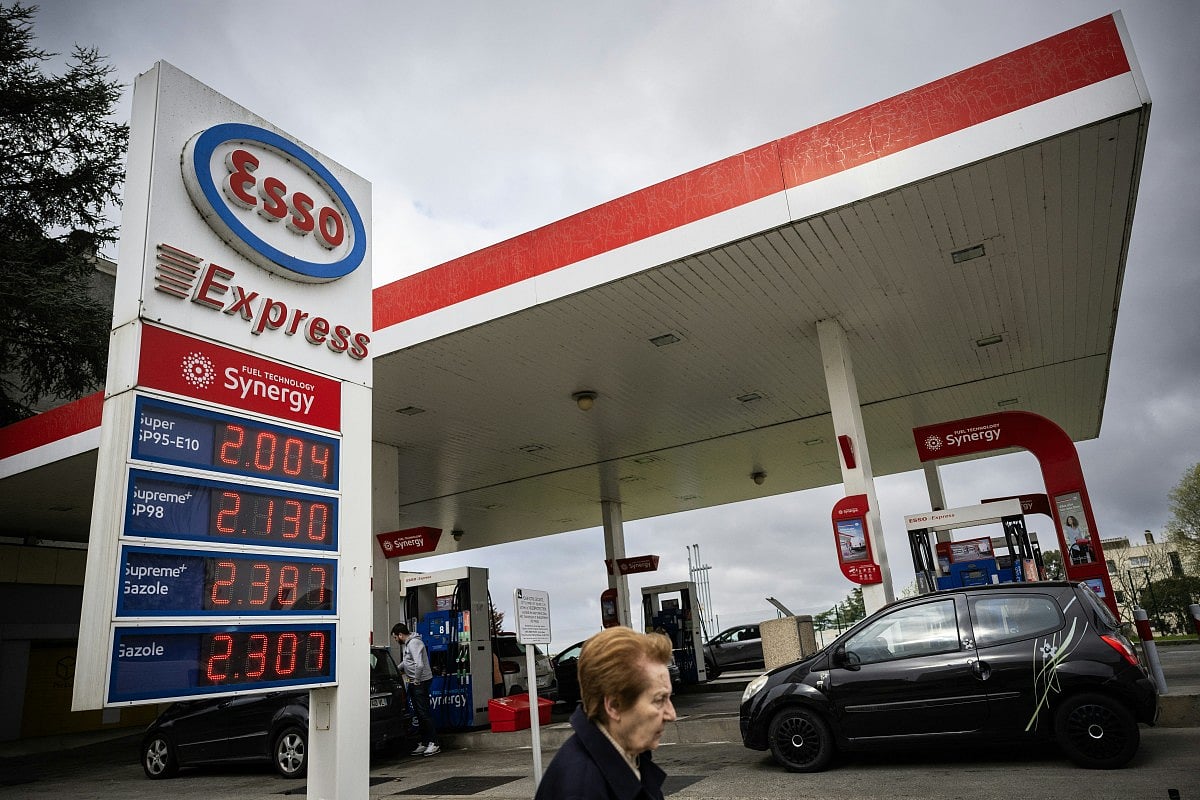
Consumers never expected getting a shock of a lifetime, at the fuel pumps.
And it's not due to lack of oil. The system seized not because resources were gone, but because geography had been weaponised.
The US Energy Information Administration (EIA) notes that oil flows through Hormuz averaged about ~20 million barrels per day (mb/d) of oil (and a large share of LNG) in 2024, equivalent to roughly 20% of global petroleum‑liquids consumption.
With Hormuz flows collapsing to a “trickle,” Gulf producers were forced to cut crude and exports as storage fills.
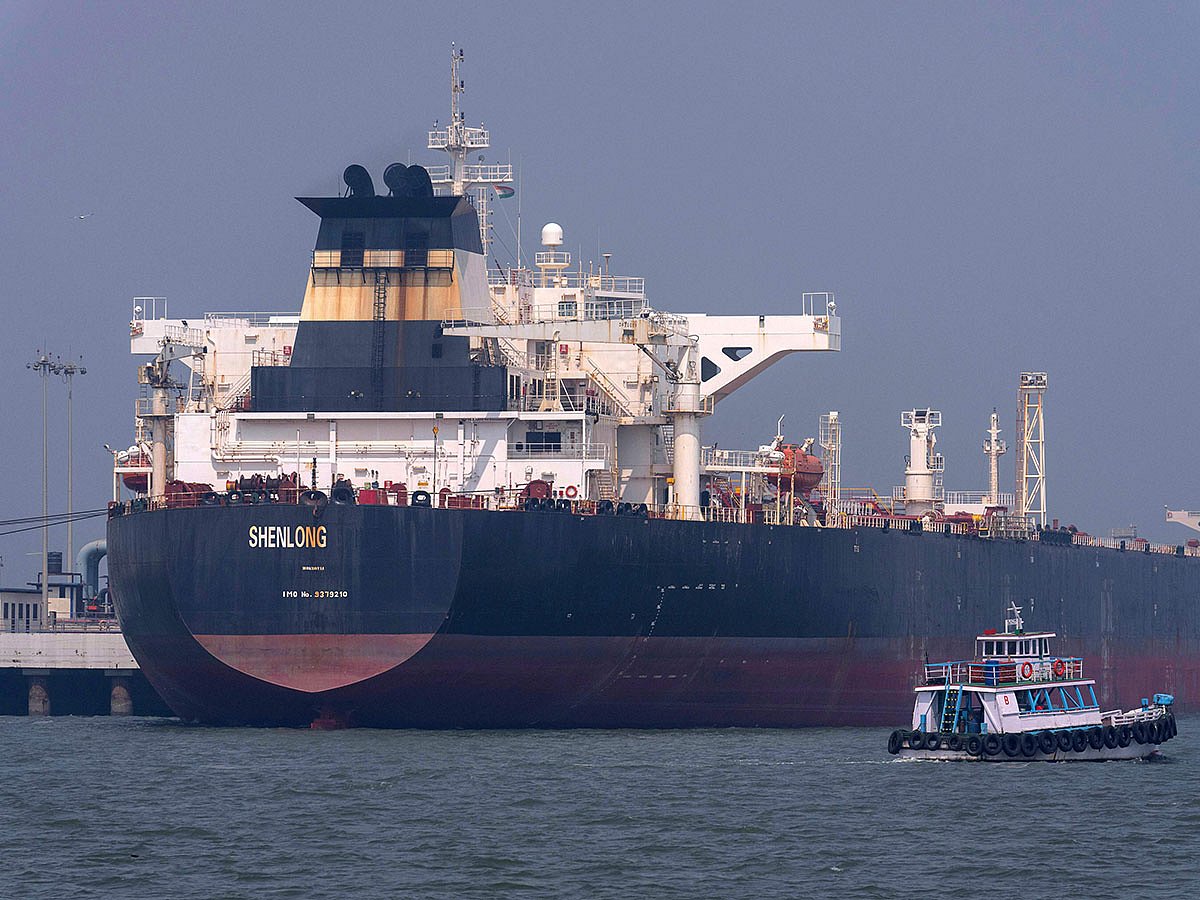
The "closure" has drained the world’s main spare‑capacity buffer, and forced record releases from emergency reserves, such as the 400 million barrels announced by the International Energy Agency (IEA)‑led group.
The Arab Centre DC highlights a key fact: Iran’s 2026 closure of Hormuz has shattered the 1945‑style US‑Gulf “oil for security” bargain.
The US cannot guarantee Gulf security without pulling partners into the war, while oil exports are stalled because a key route is blocked.
Deal — or no deal — by Tuesday night, what happens then?
Potentially, it's more of the same, but it's hard to predict, given the many unknowns in the current calculus.
It may take a few months for a "window" to open before short-term workarounds give way to long-term solutions or consequences.
It is the period in which emergency responses either restore confidence — or harden into a new operating reality.
For a glimpse into where the energy sector is going, industry experts offer roughly three scenarios:
Scenario #1: Rapid de-escalation / partial recovery
This is the best-case scenario. That is, if diplomatic and security conditions improve quickly:
Tanker traffic resumes cautiously.
Insurance coverage returns at higher premiums.
Backlogged cargoes begin to clear.
Prices retreat from extremes but remain elevated by a new risk premium.
Even in this best-case path, behaviour changes. Insurers reprice maritime risk. Energy traders diversify routes.
Governments revisit strategic reserves and contingency playbooks. The lesson lingers: a single chokepoint can paralyse a global system. This scenario restores flows — but not complacency.
Scenario #2: Prolonged disruption, forced adaptation
If the disruption persists without escalating into wider conflict, the system adapts under constraint:
Overland pipelines and alternative ports run at maximum capacity.
Importers compete aggressively for Atlantic Basin, African, and American barrels.
That means, producers outside the Gulf (North Sea, Russia, Venezuela, US, Canada, Brazil, as well Nigeria and Angola, and Mexico) gain "leverage".
“Demand destruction” appears as industries cut output and consumers reduce usage.
This is where structural change begins.
Energy-intensive manufacturing shifts locations. Long-term contracts are renegotiated. Investment accelerates into redundancy: more storage, more routes, more suppliers.
What starts as crisis management becomes supply-chain redesign.
Scenario #3: Escalation and multi-chokepoint stress
If instability spreads to other critical routes, the question stops being price and becomes availability.
Rationing of fuel may stay.
Essential sectors receive priority access.
International coordination replaces market allocation.
Recession risks rise sharply as energy becomes a binding constraint on economic activity.
Here, the global system confronts its lack of redundancy.
Decades of optimisation for efficiency reveal how little slack exists when multiple arteries are strained.
What the oil shock reveals about the global economy
The World Economic Forum (WEF)’s March 2026 report on the “global price tag of war in the Middle East” stresses that the Hormuz shock is "layering" on top of pre‑existing risks: tariffs, post‑pandemic debt, and only‑partially‑quelled inflation.
WEF warns that each additional week of disruption hardens the shock, making recovery slower and more expensive.
The war also underscores a fundamental tension: For decades, energy and trade systems were optimised for lowest cost and highest throughput under stable conditions.
That delivered something of a dependecy, and a certain consumption pattern: cheaper goods and faster growth — but reduced buffers.
When disruption hits, highly efficient systems struggle because they lack spare capacity.
Even tech advances operate within these physical limits.
Algorithms cannot move physical oil if ships stay moored. Capital cannot bypass a blocked strait. Policy cannot conjure infrastructure (i.e. EV charging network) that does not exist or gets destroyed in a bombing campaign.
Geography still sets the rules.
Effects on markets
Markets respond instantly to physical disruption because they price expectations of scarcity, delay, and risk.
In the March 2026 war, markets have shown:
Sharp volatility in crude benchmarks and shipping rates.
Rising insurance and freight premiums embedded into commodity prices.
Currency pressure on fuel-importing nations.
Equity weakness in transport, aviation, chemicals, and heavy industry.
Gains for producers, shippers, and storage operators outside the affected zone.
More subtly, risk models are being rewritten, according to an industry analysis.
Thomson Reuters’ corporate‑risk analysis highlights that the Iran‑US‑Israel war has upended conventional risk models that treated Gulf energy flows and shipping as “basically stable”.
This has forced firms to urgently audit supply chains, elevate cyber‑risk scores, and reprice war‑risk premiums for shipping and logistics.
Maritime chokepoints, once treated as "tail risks", are now central variables in pricing energy, freight, and sovereign exposure.
Now, JP Morgan's CEO Jamie Dimon predicts that the Iran war could also reignite inflation, and keep Fed rate increases for longer.
Meanwhile, investors are reassessing:
Exposure to energy-intensive sectors
Geographic concentration of supply chains
The value of infrastructure redundancy
The strategic role of energy security in national stability
Markets are beginning to price resilience, not just efficiency.
Policy, infrastructure responses
From here out, state policies will determine whether this episode is remembered as a severe-but-temporary rupture — or the start of a structural rethink of how energy, trade, and risk are managed worldwide.
Governments and companies are likely to accelerate decisions that would otherwise take years:
Expanding and repositioning strategic petroleum reserves
Investing in pipeline, port, and storage redundancy
Securing diversified long-term supply contracts
Fast-tracking renewables, storage, and grid upgrades as strategic assets
Deepening international coordination on energy security, not purely for climate goals — but for geopolitical resilience.
The next 90 days
These months will not determine whether oil flows resume. They will reveal whether the world interprets this as:
A temporary geopolitical disruption
or
Evidence that our energy architecture is fundamentally misaligned with our technological ambitions.
For roughly 80 years since the end of World War II, global markets operated under the assumption that the flow of oil — the lifeblood of industrial economies — would remain broadly stable and dependable.
This belief was shaped by long periods of post-war reconstruction and growth in which supply, transportation, and market mechanisms generally adapted to demand.
Interruptions or foundational challenges?
Historically, deviations from that pattern were treated as interruptions, not foundational challenges to the system:
Now, if the oil trade choke stays, enabled by the primacy of geography, then humanity has to collectively find a "workaround".
March 2026 demonstrated that the global economy’s most advanced systems still depend on narrow physical pathways.
When those pathways are threatened, the ripple effects reach from oil terminals to stock exchanges, from factory floors to household budgets.
The next 90 days will decide whether the world returns to familiar patterns with higher caution — or begins a deeper transformation toward redundancy, diversification, and resilience.
The lesson will endure: a hyper-connected world is only as stable as the physical routes that keep it moving.