Iran says one of its ships returned despite US blockade; maritime firm identifies it as tanker that delivered oil to India
•Weather ePaper Today’s Paper Journalism of Courage Home ePaper Politics Explained Opinion India Business Premium Cities UPSC Entertainment Sports World Lifestyle Tech Subscribe Sign In TrendingUPSC Of...
•Written by: Sukalp Sharma4 min readUpdated: Apr 21, 2026 09:24 PM IST According to vessel tracking data from ship-tracking intelligence platform MarineTraffic, as of over three days ago, Felicity was...
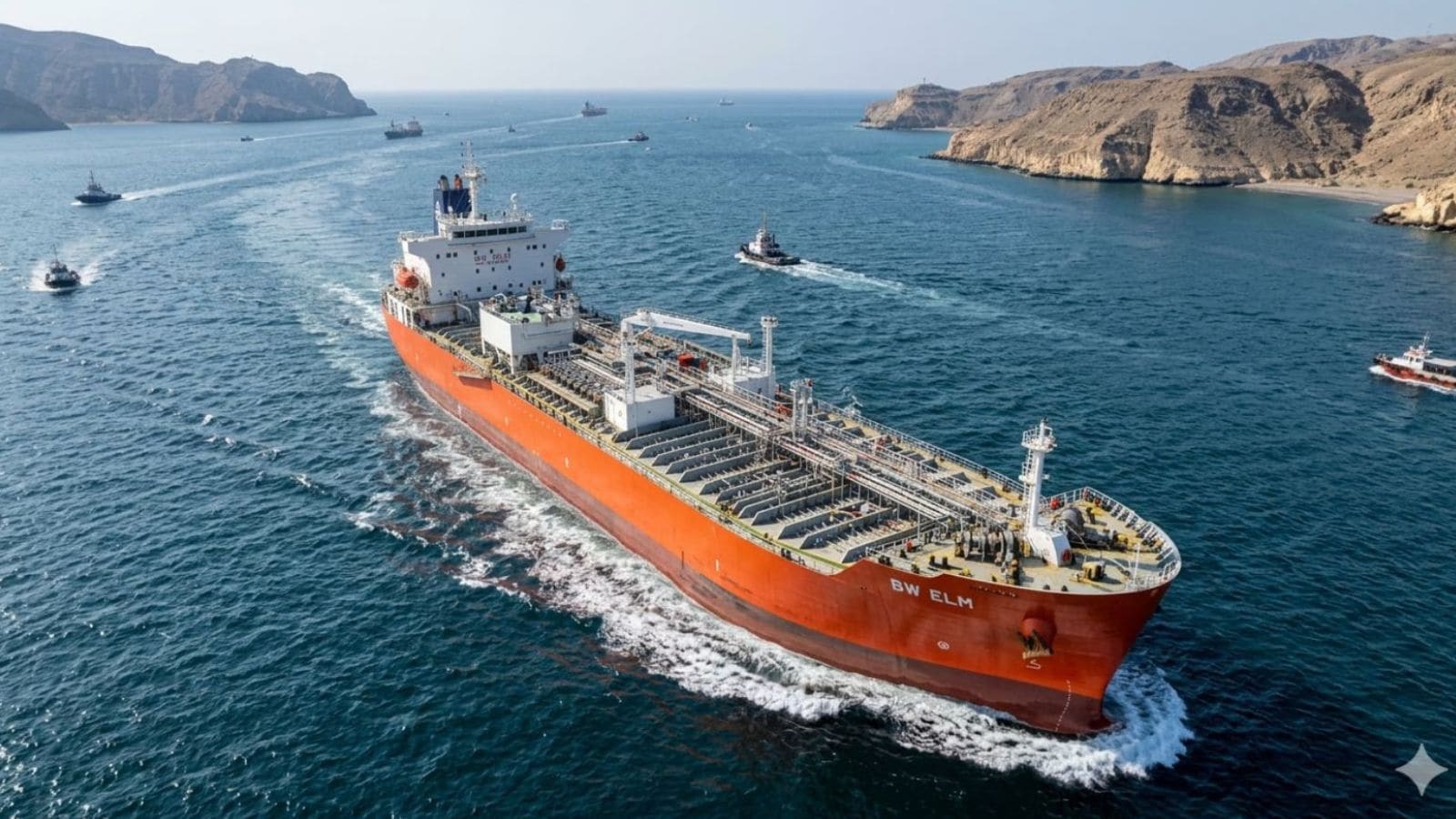
•(Photo generated using AI) Make us preferred source on Google Whatsapp twitter Facebook Reddit PRINT An Iranian oil tanker that recently discharged Iranian crude at an Indian port appears to have reac...
هذا الخبر من Indian Express. خبر يقدم أدوات ذكاء اصطناعي للتلخيص والترجمة والاستماع.
Weather ePaper Today’s Paper Journalism of Courage Home ePaper Politics Explained Opinion India Business Premium Cities UPSC Entertainment Sports World Lifestyle Tech Subscribe Sign In TrendingUPSC OfferIPL 2026US NewsPuzzles & GamesLegal NewsFresh TakeHealthResearch🎙️ Podcast Advertisement function checkAndLoadWindowSizeScript() { if (window.jQuery) { // jQuery is loaded, include your script jQuery(document).ready(function($) { // Your existing script for checking window width if (window.innerWidth) var page_w = window.innerWidth; else if (document.all) var page_w = document.body.clientWidth; if (page_w > 1024) { $(".add-left, .add-right").show(); } else { $(".add-left, .add-right").hide(); } }); } else { // jQuery is not loaded, check again after 0.2 seconds setTimeout(checkAndLoadWindowSizeScript, 200); } } // Initial call to the function checkAndLoadWindowSizeScript(); NewsBusinessIran says tanker defied US blockade; Maritime data links it to India Iran says tanker defied US blockade; Maritime data links it to India Curiously though, there is no oil tanker named “Sili City”, as per international shipping databases, and the actual identity of the tanker could have been lost in translation. Written by: Sukalp Sharma4 min readUpdated: Apr 21, 2026 09:24 PM IST According to vessel tracking data from ship-tracking intelligence platform MarineTraffic, as of over three days ago, Felicity was headed west—in the general direction of the Persian Gulf—from India after leaving the Sikka port. (Photo generated using AI) Make us preferred source on Google Whatsapp twitter Facebook Reddit PRINT An Iranian oil tanker that recently discharged Iranian crude at an Indian port appears to have reached Iran despite the US blockade of the Islamic Republic’s ports. Quoting an Iranian army statement, Iran’s Islamic Republic News Agency (IRNA) reported on Tuesday that an oil tanker—“Sili City”—entered the country’s territorial waters from the Arabian Sea under “the operational protection of the Navy”, despite “repeated warnings and threats from US naval forces”. Curiously though, there is no oil tanker named “Sili City”, as per international shipping databases, and the actual identity of the tanker could have been lost in translation. The tanker in question, according to maritime intelligence firm TankerTrackers.com, is Felicity—an Iran-flagged supertanker that discharged crude at Gujarat’s Sikka port for Reliance Industries (RIL) last week. According to vessel tracking data from ship-tracking intelligence platform MarineTraffic, as of over three days ago, Felicity was headed west—in the general direction of the Persian Gulf—from India after leaving the Sikka port. The vessel’s Automatic Identification System (AIS) transponder appears to have been off for over three days. Switching off the AIS transponder is referred to as “going dark” in shipping parlance, and is usually done by vessels in a bid to avoid detection. TankerTrackers.com confirmed to The Indian Express that the tanker quoted in the IRNA report was indeed Felicity. Felicity was among the few tankers that brought Iranian crude to Indian refineries after nearly seven years, following the sanctions waiver announced by the US last month. But before it could go back into Iranian waters, the US announced a blockade of Iran’s ports as Washington and Tehran continued trading barbs on the status of vessel movements through the critical maritime chokepoint of the Strait of Hormuz that connects the Persian Gulf with Gulf of Oman and the Arabian Sea. Ship movements through the narrow waterway have ground to a trickle since early March amid the West Asia war. Iran on Friday announced the complete opening of the Strait, but reversed the decision on Saturday after the US said that it still won’t end its blockade of Iranian ports. As part of the blockade, the US has forced over 25 ships—trying to enter or exit Iranian ports—to turn back, according to the US Central Command. Additionally, US forces physically boarded and seized at least two tankers. Felicity, a very large crude carrier (VLCC) sanctioned by the US, dropped anchor off Sikka port late night on April 12, according to vessel tracking data. The tanker sails under the Iranian flag and is operated by the National Iranian Tanker Company (NITC), as per shipping databases. Trade sources indicated that Felicity discharged about 2 million barrels of Iranian oil meant for private sector refining giant RIL. Felicity lifted crude from Iran’s main oil export facility of Kharg Island sometime in the middle of March, according to trade sources. Amid the West Asia war, the US on March 21 suspended for a month the sanctions on Iranian crude already loaded on tankers in a bid to allow as many barrels of oil as possible to flow into the international market to improve the global oil supply situation and curb spiralling crude oil prices. The waiver from Washington, which expired on March 19, was similar to the one issued for Russian oil earlier in March; India’s Russian oil imports have surged since the war began. India hasn’t imported Iranian crude since May 2019 due to reimposition of US sanctions on Tehran by the first Trump administration. Vessel movements through the Strait of Hormuz were effectively halted due to the conflict that began on February 28; Iranian oil shipments largely continued unabated though. The Strait accounted for one-fifth of global oil and liquefied natural gas (LNG) flows. Around 2.5–2.7 million bpd of India’s crude imports—around half of the overall oil imports—have transited the Strait in recent months, while the longer-term average is around 40%. India depends on imports to meet over 88% of its requirement of crude oil. Sukalp Sharma is a Deputy Associate Editor with The Indian Express and writes on a host of subjects and sectors, notably energy and aviation. He has over 16 years of experience in journalism with a body of work spanning areas like politics, development, equity markets, corporates, trade, and economic policy. He considers himself an above-average photographer, which goes well with his love for travel. ... Read Moreالمصدر: Indian Express | Source: Indian Express
ملاحظة تحريرية | Editorial Note: نُشر هذا المقال في الأصل بواسطة Indian Express. خبر (Khabr) هي منصة إعلامية أردنية مرخّصة تعمل بالذكاء الاصطناعي. نضيف قيمة تحريرية من خلال: تحليل ذكي للأخبار، ملخصات تلقائية، رواية صوتية بالذكاء الاصطناعي، ترجمة متعددة اللغات، وتدقيق الحقائق. هدفنا جعل الأخبار أكثر وضوحاً وسهولةً للقارئ العربي.
This article was originally published by Indian Express. Khabr is a licensed Jordanian AI-powered news platform (Registration #82086). We add editorial value through: AI-powered news analysis, automated summaries, AI audio narration, multi-language translation (Arabic, English, French, Turkish), and AI fact-checking. Our mission is to make news more accessible and understandable for Arabic-speaking audiences worldwide.