⚡ عاجل: كريستيانو رونالدو يُتوّج كأفضل لاعب كرة قدم في العالم●⚡ أخبار عاجلة تتابعونها لحظة بلحظة على خبر●⚡ تابعوا آخر المستجدات والأحداث من حول العالم●
AI اقتراحات ذكية
AI مباشر|--مشاهد مباشر
931,623مقال401مصدر نشط228قناة مباشرة4,883خبر اليوم
آخر تحديث:منذ ثانيتين
Inside Dubai’s underground Fish Hospital: How a team of experts keeps 65,000 marine animals alive
•Dubai: Beneath one of the world's most recognisable luxury resorts, past the glittering lobbies and pools, something far more extraordinary is happening, shark eggs are incubating, jellyfish are being...
•Atlantis, The Palm is home to over 65,000 marine animals from more than 285 species, and the responsibility of keeping every single one of them alive, healthy, and thriving falls to the resort’s anima...
•But what's perhaps most remarkable is that the vast majority of them never had to travel far at all, they were born on the premises.“Almost 90 per cent of the animals in our aquariums are native to th...
هذا الخبر من Gulf News. خبر يقدم أدوات ذكاء اصطناعي للتلخيص والترجمة والاستماع.
Dubai: Beneath one of the world's most recognisable luxury resorts, past the glittering lobbies and pools, something far more extraordinary is happening, shark eggs are incubating, jellyfish are being bred, and a team of marine specialists are preparing the next generation of ocean life for the Arabian Gulf.
This is the Fish Hospital at Atlantis, The Palm in Dubai and most guests never know it exists.
Buried in the basement of the iconic Palm Jumeirah resort, the facility is the operational heartbeat behind one of the region's most ambitious marine programmes.
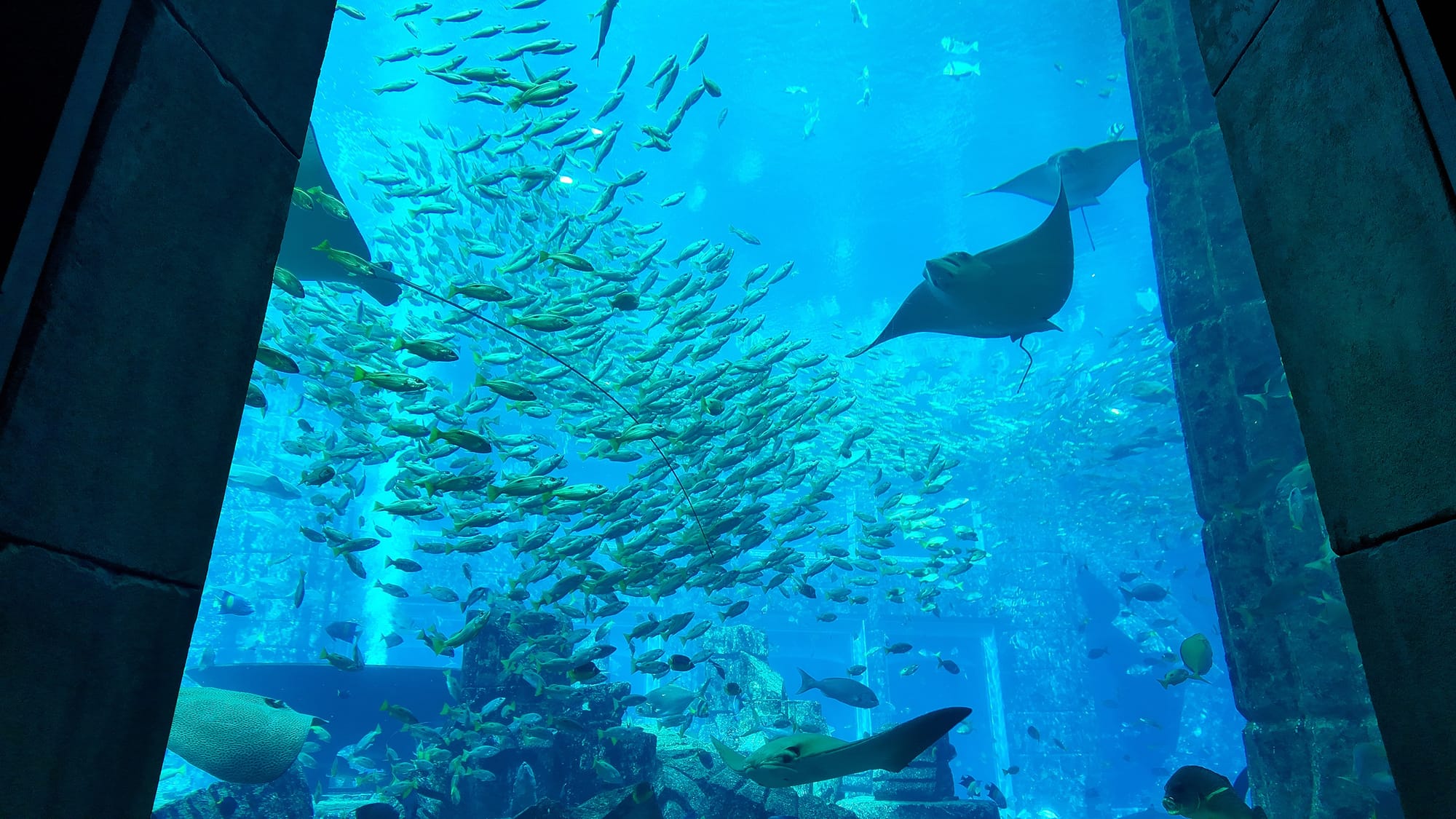
Atlantis, The Palm is home to over 65,000 marine animals from more than 285 species, and the responsibility of keeping every single one of them alive, healthy, and thriving falls to the resort’s animal care team and their in-house veterinary unit.
Every coral, every shark, every stingray and sea jelly visible in the hotel's sprawling aquarium began its journey here. But what's perhaps most remarkable is that the vast majority of them never had to travel far at all, they were born on the premises.
“Almost 90 per cent of the animals in our aquariums are native to the Arabian Gulf, and the majority are bred right here at the Fish Hospital,” said Kelly Timmins, Executive Director of Marine Animal Operations and Sustainability at Atlantis Dubai.
“When you look at our aquariums, you're seeing a reflection of the region’s natural population. Many species, including sharks, rays, and sea jellies, are successfully bred under human care.” The breeding programme, part of the resort's wider Atlantis Atlas conservation project, is designed not only to populate the aquarium but to eventually reintroduce animals back into the wild.
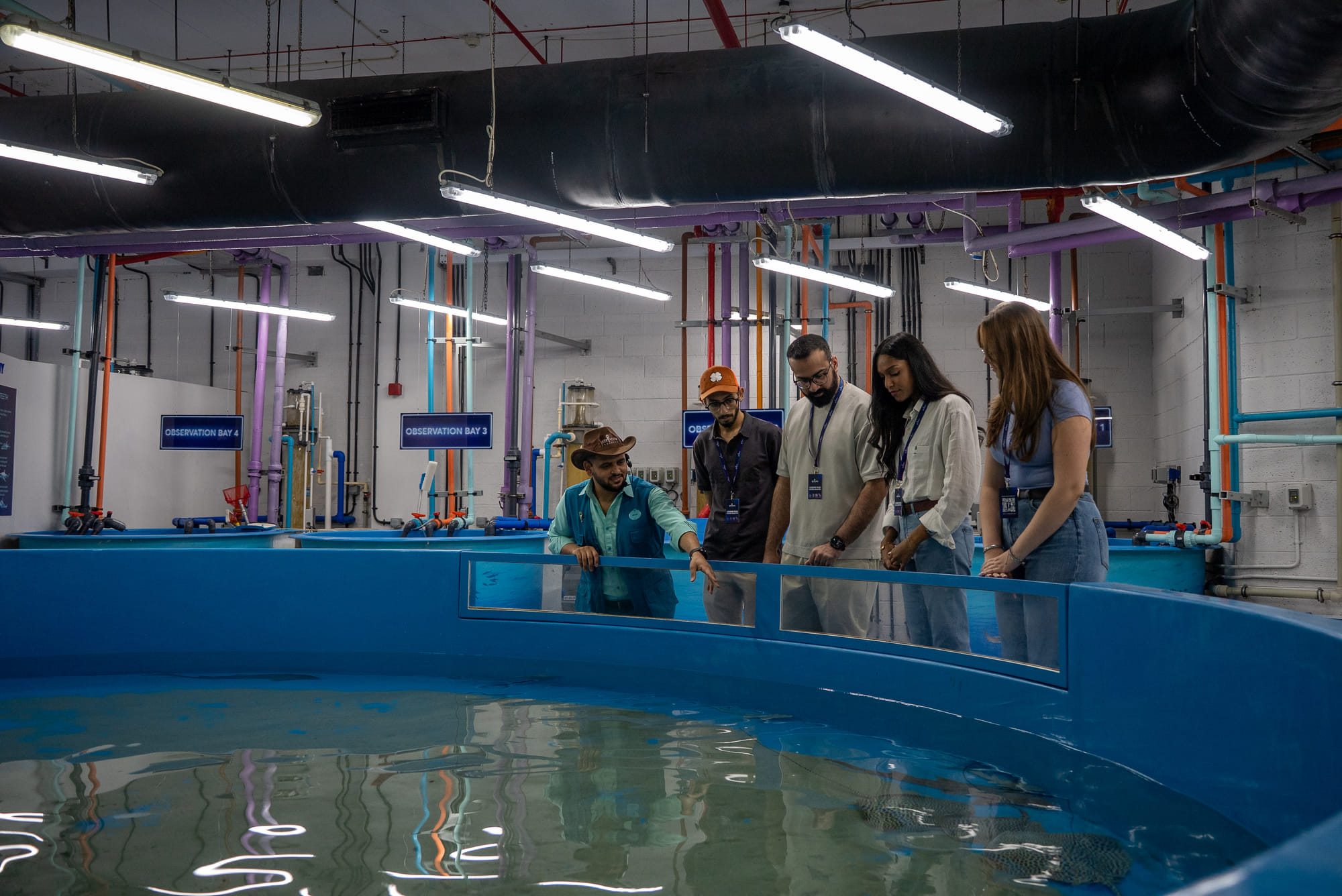
Step inside the facility itself and the contrast with the hotel above is striking. A labyrinth of tanks in every size, multicoloured pipes, valves, and vessels gives it an almost industrial feel, closer to a research institute than anything you would expect to find beneath a five-star hotel. This is where new arrivals are received, assessed, and quarantined, where breeding takes place and where the quiet, unglamorous work of caring for the lives of thousands marine animals happens every single day.
Atlantis Dubai has over 65,000 marine animals from over 285 species and is home to a wide variety of marine animals including dolphins, jellyfish, sharks, sealions, rays, eels and corals.
Inside the breeding programme: From egg to ocean
Peer into one of the large tanks at the Fish Hospital and you might spot an Arabian carpet shark gliding alongside a stingray. It's a striking sight but what makes it even more remarkable is that this shark was likely born in the very room you're standing in.
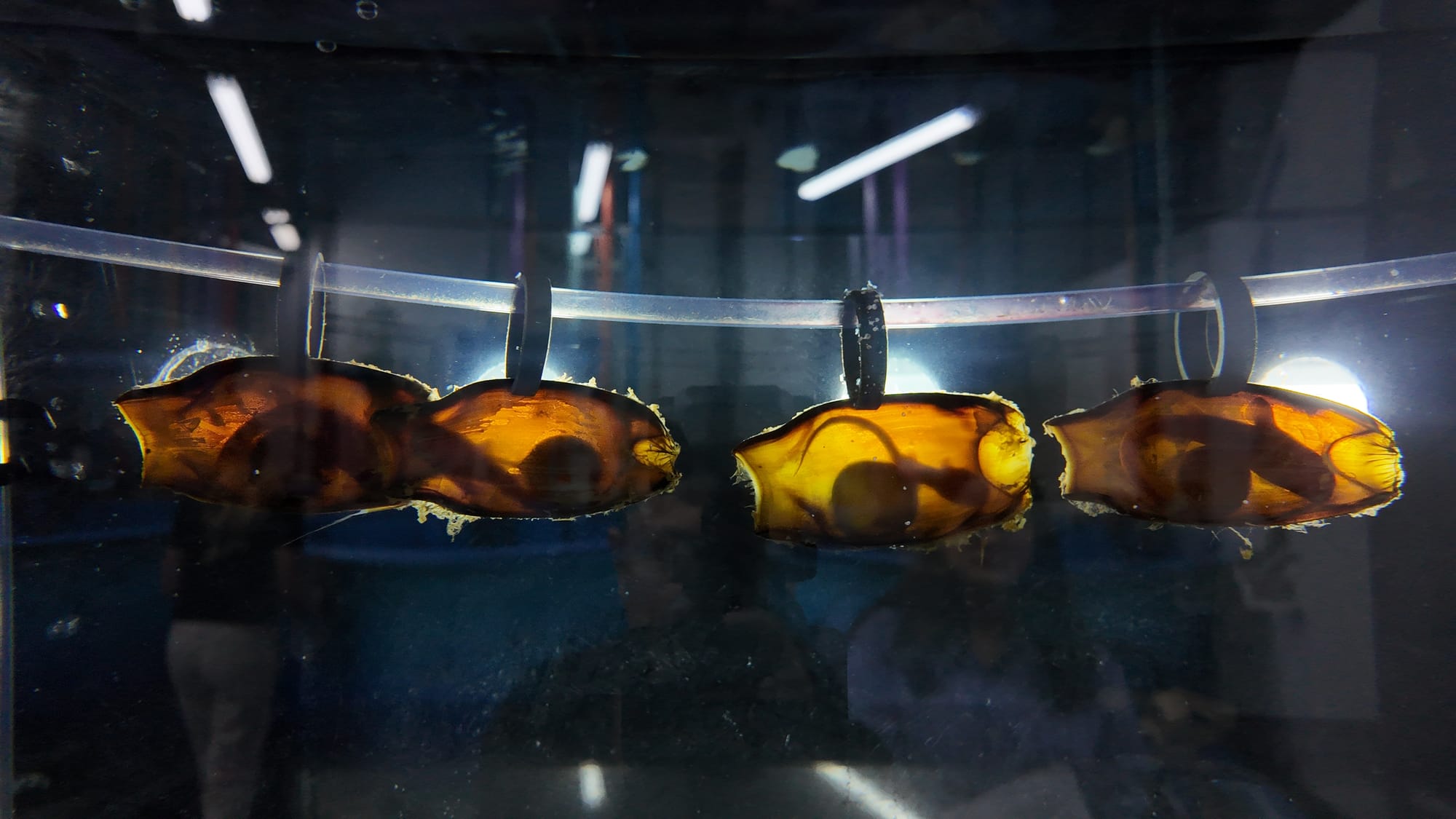
The Arabian carpet shark is one of the facility's flagship breeding species. Eggs are carefully incubated in smaller glass tanks, where each developing shark draws nutrients from its yolk sac to grow.
“Once they're ready, they hatch and our specialist team collects them and moves them into a separate habitat to be monitored and carefully fed,” explained Timmins, who brings more than 13 years of international experience in zoological and sustainability management to the role.
“When they're strong enough, they're introduced to a larger open tank with other species, essentially to replicate a natural environment, so they learn how to interact with different animals before they're released into the wild.”
Since 2019, Atlantis has partnered with Dubai Municipality's environmental agency to release 73 Arabian carpet sharks into the Jebel Ali Wildlife Sanctuary, a protected stretch of beach and coastline where the species is native.
Arabian carpet shark embryos spend up to 12 months in their eggs, feeding off the yolk sac, before hatching fully independent and ready to fend for themselves.
The facility's most recent milestone, however, belongs to a different shark entirely. Earlier this year, three blacktip reef shark pups were born at the Fish Hospital, the first successful birth of this species at Atlantis Dubai. Throughout the process, the veterinary team worked in close partnership with the animal care team to support both the mother and her newborns.
“When the pups were born, we carried out visual health checks and began monitoring them closely every day, tracking their behaviour and overall condition,” said Dr Marina Caveney, Manager of Veterinary Services at Atlantis Dubai, who has over 12 years of experience in animal care and wellbeing.
“We created a tailored feeding plan, starting with small amounts of food and gradually increasing portions as they grew. The veterinary team also measures the pups at regular intervals to track their development.” It is, in every sense, a neonatal ward, just for sharks.
Sharks aren't the only species being cultivated behind the scenes. The Fish Hospital also grows its own coral, which is used across the resort's aquarium exhibits, sting rays, and breeds jellyfish, including the moon jellies that drift ethereally through one of Atlantis's most popular tanks.
“Moon jellies have a relatively short lifespan, so breeding them here allows us to sustainably and continuously populate our exhibits,” said Timmins.
It's a process that mirrors nature closely, moon jellyfish alternate between sexual reproduction as free-swimming adults and asexual cloning as bottom-dwelling polyps, a life cycle the team has learned to manage and replicate within the facility's controlled environment.
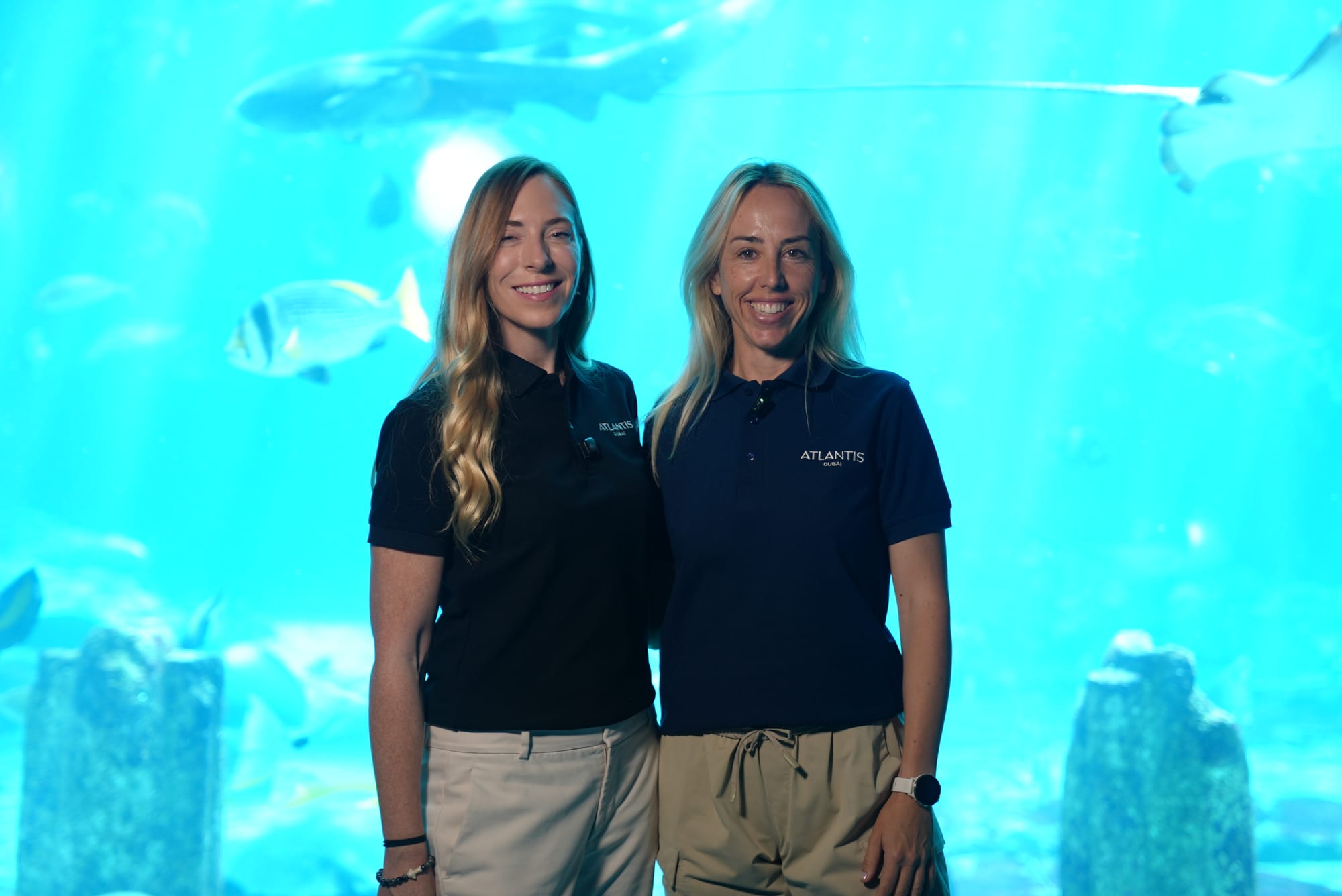
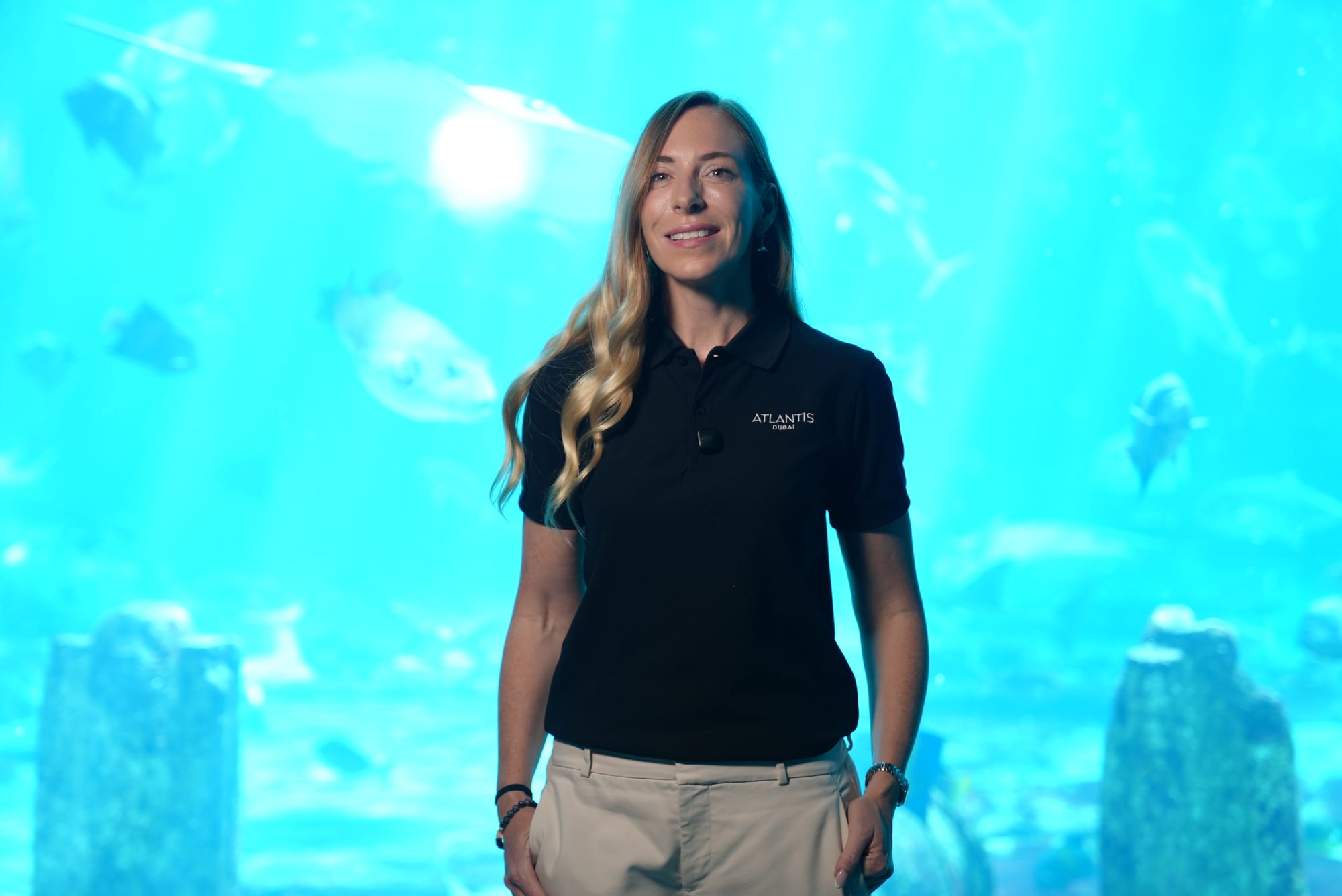
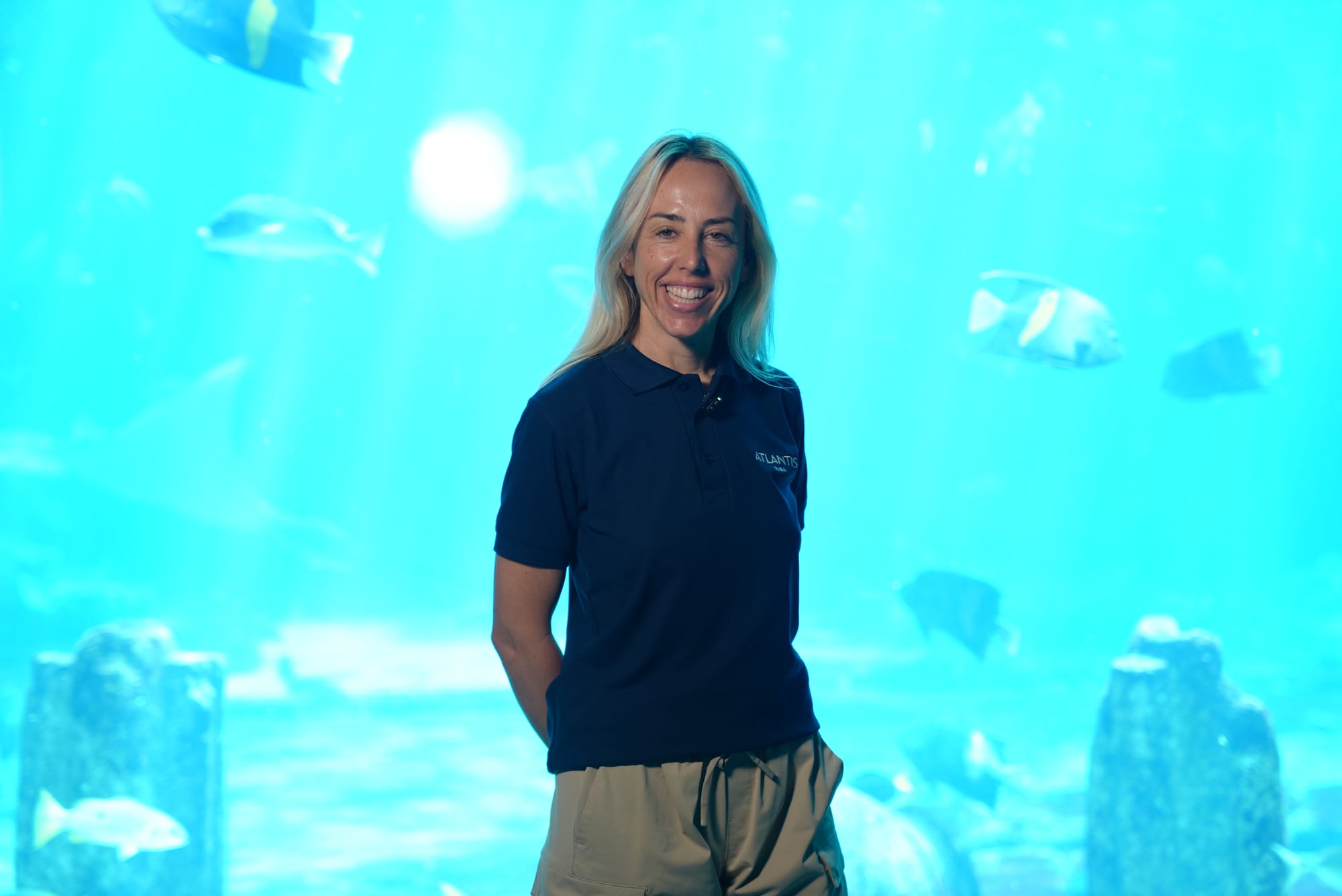
Kelly Timmins Executive Director, Marine Animal Operations and Sustainability (left) and Dr Marina Caveney
Manager, Veterinary Services (right)
Feeding 65,000 animals and keeping them mentally stimulated
Feeding tens of thousands of marine animals every day is, in itself, a full-time operation. An entire dedicated unit manages the nutrition of the resort's collection and with over 285 species under one roof, there is no such thing as a one-size-fits-all meal plan.
“We have a nutrition programme designed to give every animal a high-quality, balanced diet," said Dr Caveney. “With so many species, the dietary requirements vary enormously, from a primarily fish-based diet for our dolphins, to vegetables like lettuce and cucumber for our herbivorous fish.”
Depending on the species, carefully prepared meals may include responsibly sourced fish, squid, shrimp, lobster, and fresh produce, each portioned and prepared to meet the specific nutritional needs of that animal.
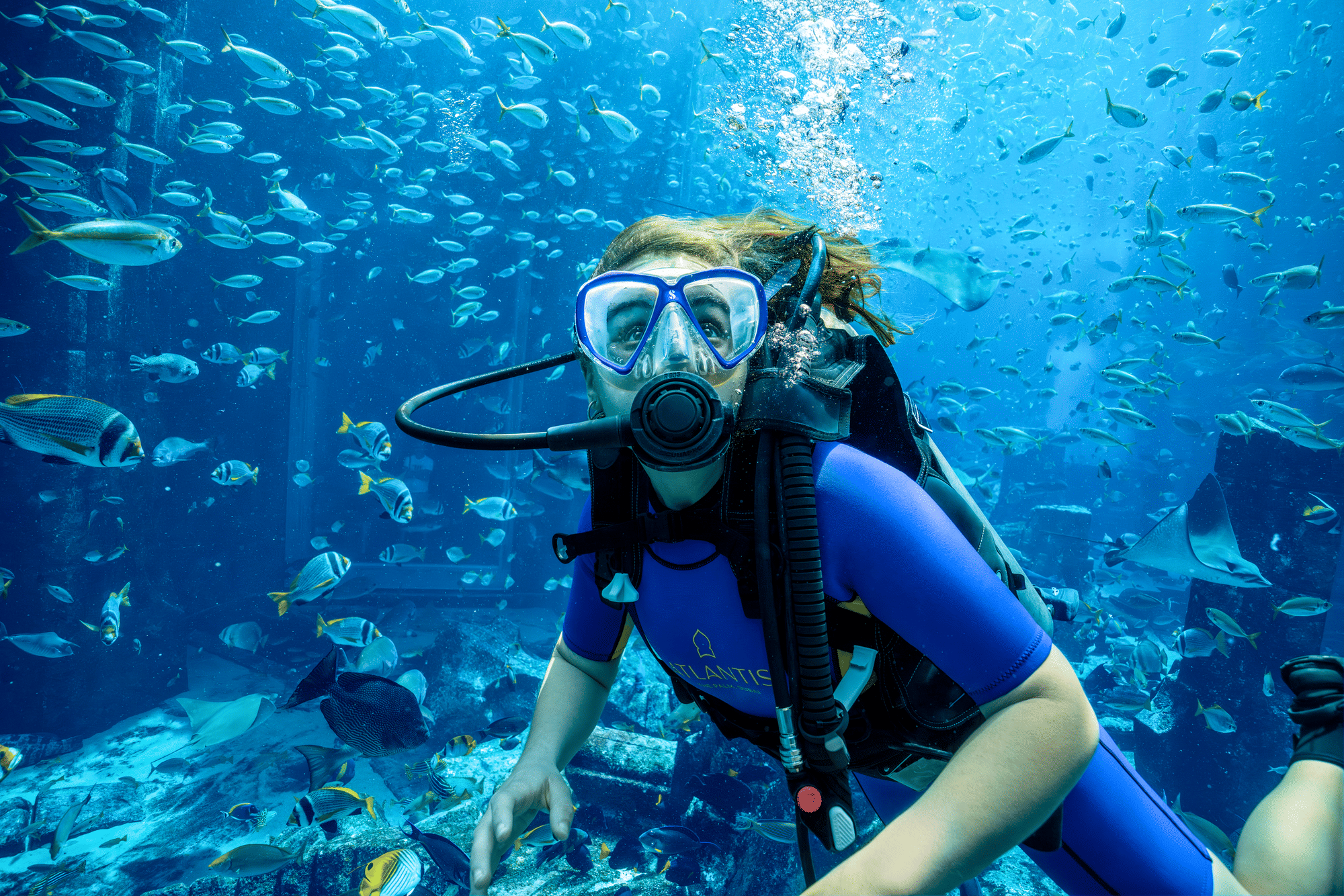
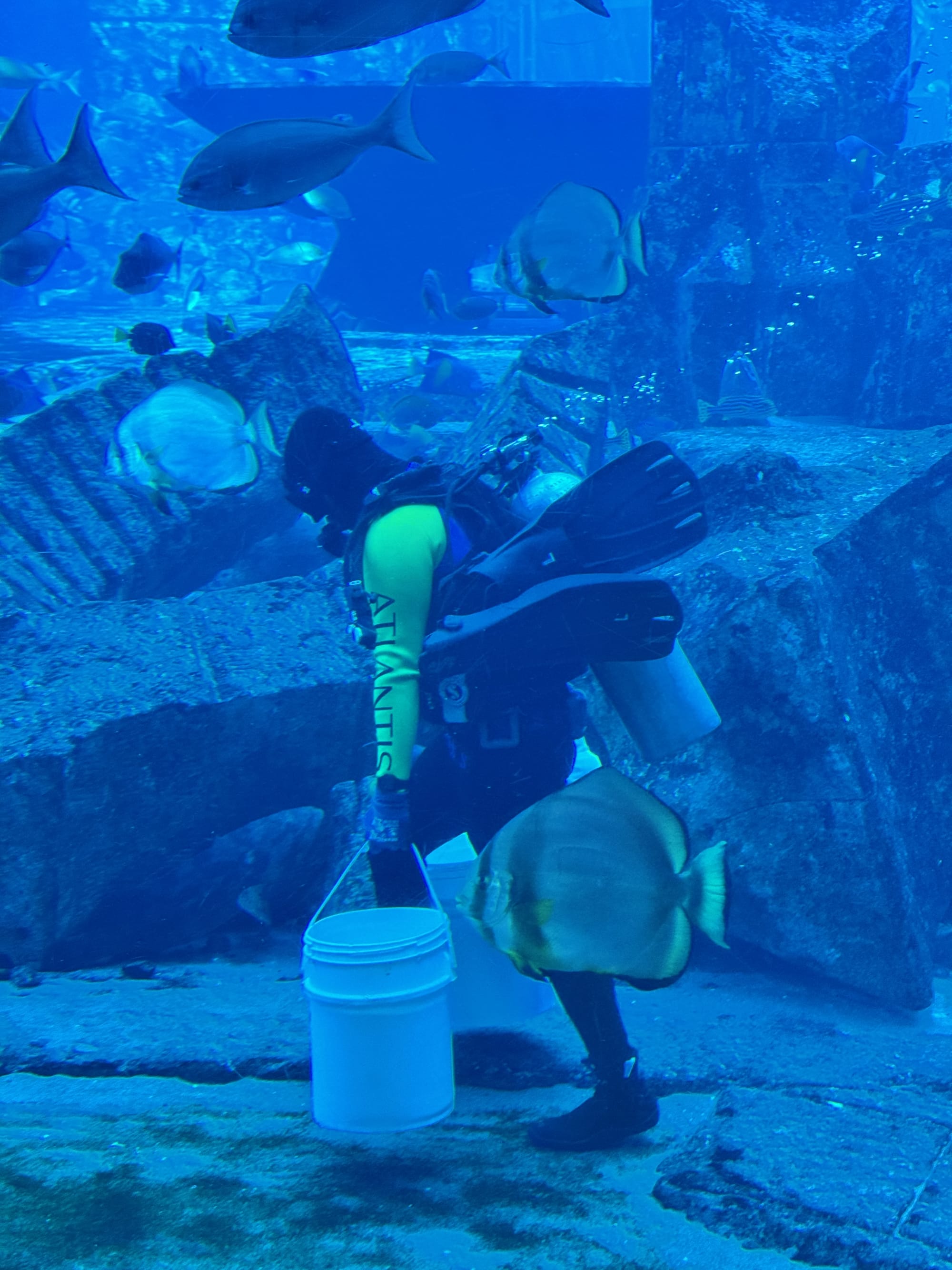
Professional divers are an essential part of the animal care team, responsible not only for feeding but also for keeping each habitat clean and managing seemingly minor yet important details, such as regularly adding extra sand.
“We have a lot of bottom dwellers, and in the wild they would typically have large amounts of sand to sift through and it’s important to replicate that natural texture and behaviour,” said Timmins.
Water quality is monitored with similar rigour. Technicians test the water in every animal habitat twice daily, checking temperature, pH, oxygen levels, and nitrates to ensure conditions remain within the precise parameters each species requires.
Physical health is only part of the picture. The team is equally focused on mental wellbeing because marine animals, like all animals, need more than just clean water and regular meals to truly thrive.
"We enrich their environment by adding structures, plants, bubbles, lighting, and water flow," explained Timmins. “We also use enrichment devices, essentially toys to encourage natural behaviour.”
One example is feeding puzzles loaded with fish, used with the resort's sea lions to stimulate natural foraging and exploratory instincts. Even the composition of the aquarium exhibits is considered, housing multiple species together is a deliberate choice. “It's enriching for the animals,” said Timmins, “because they're able to exhibit social behaviours, just as they would in the wild.”
Inside the 24/7 veterinary lab at Atlantis, Dubai
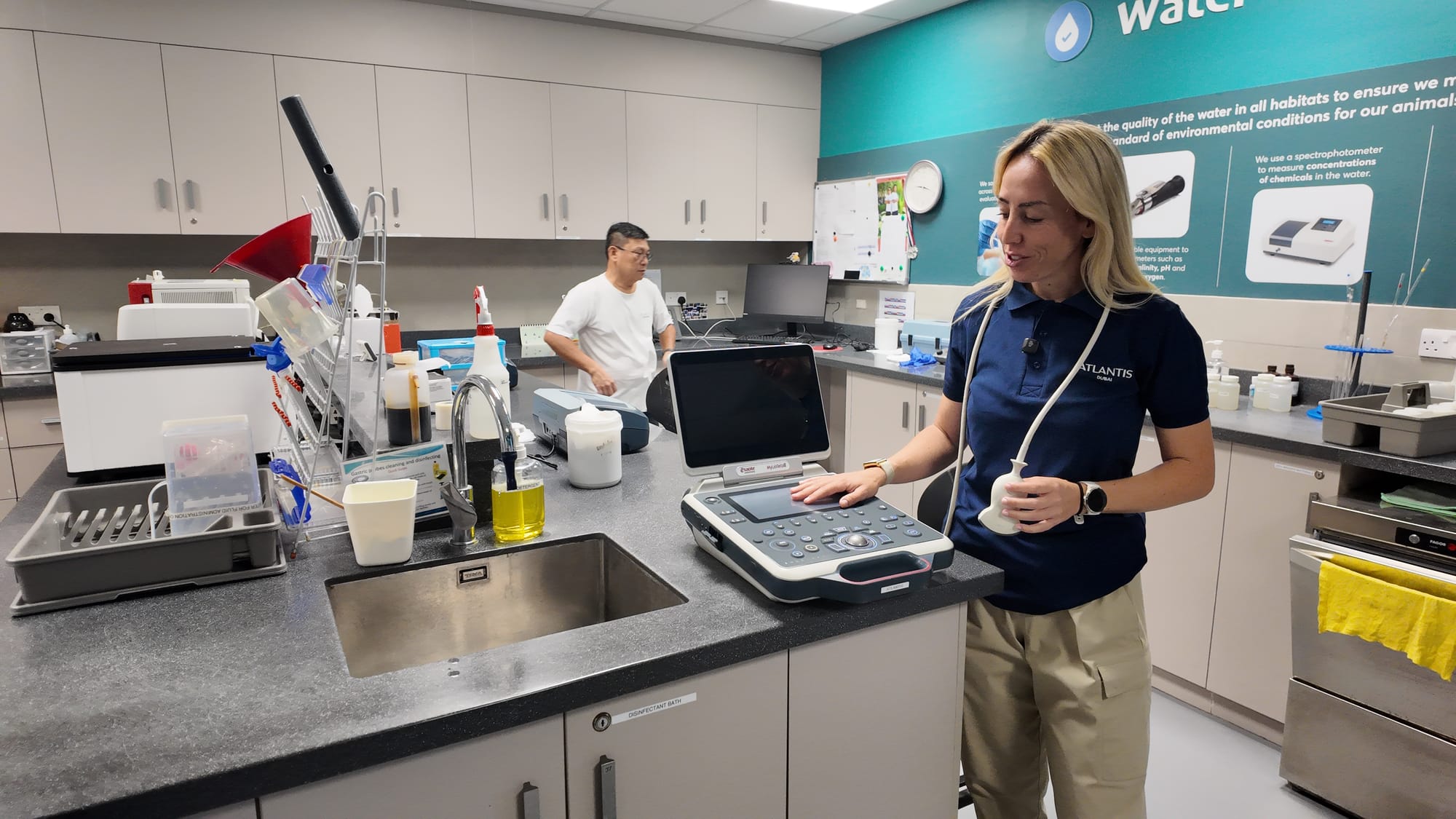
Alongside the breeding and animal care operations, the Fish Hospital runs a fully equipped, 24-hour in-house veterinary unit, complete with diagnostic equipment, a pharmacy, and a dedicated water testing area.
“Each species has very different needs, so no two days are the same for our veterinary team,” said Dr Caveney.
Mornings begin early, with voluntary health checks for the dolphins and sea lions, a process that is as much about trust as it is about medicine. Through months of trained behaviours, these animals actively participate in their own examinations, allowing vets to assess their eyes, teeth, fins, and overall condition without the need for restraint. “It requires real collaboration between the marine mammal trainers and the veterinary team," Dr Caveney explained.
For the veterinary team, preventative care includes routine ultrasounds and sample collection, which are analysed onsite to monitor health and identify any issues early.
Preventative care is continuous. Blood samples, ultrasounds, and routine lab work are all analysed on-site, allowing the team to monitor health trends and catch potential issues before they escalate.
When an animal does show signs of illness, it is moved into the Fish Hospital for closer observation, medicated if necessary, and only returned to its exhibit once fully recovered. New arrivals and newborns from the breeding programme also pass through the veterinary team first, receiving initial health checks and preventative treatment before joining their tank-mates.
Of all the procedures Dr Caveney oversees, one stands out as particularly unusual. “One thing people may not know is that dolphins breathe through their blowhole, not their mouth,” she said. "One of the preventative samples we collect is a blowhole sample. A trainer asks the dolphin to exhale while we hold a microscope slide above the blowhole.”
For those who raise questions about marine animals living in controlled environments, Timmins is candid. “What you're looking at here is exceptional water quality, free from pollutants, free from rubbish. A safe environment, free from major predators and free from human impacts like fishing and dredging," she says. "The animals in our care are looked after with the utmost attention, in conditions that, in many ways, are far more stable and predictable than the wild."
Bringing it all backstage
The Fish Hospital isn't entirely off-limits. Atlantis offers backstage tours that bring visitors into the facility, past the tanks, the incubation units, the veterinary lab to see the operation as it actually is, rather than the polished version visible from the aquarium glass.
The aquarium holds accreditation from the Association of Zoos and Aquariums (AZA), a recognition reserved for facilities that meet the highest standards of animal care and conservation.
The Atlantis Atlas Project has successfully bred 5 species of ray, and 4 species of sharks. 6 of these species are threatened in the wild.
The Atlantis Atlas Project extends that mission further, partnering with local universities and running marine education programmes for schools because the expertise built inside this facility, the team believes, is only valuable if it reaches beyond it.
Because ultimately, what happens in the basement of a luxury hotel on the Palm Jumeirah is about something much bigger than the hotel itself.
ملاحظة تحريرية | Editorial Note:
نُشر هذا المقال في الأصل بواسطة Gulf News.
خبر (Khabr) هي منصة إعلامية أردنية مرخّصة تعمل بالذكاء الاصطناعي.
نضيف قيمة تحريرية من خلال: تحليل ذكي للأخبار، ملخصات تلقائية، رواية صوتية بالذكاء الاصطناعي، ترجمة متعددة اللغات، وتدقيق الحقائق.
هدفنا جعل الأخبار أكثر وضوحاً وسهولةً للقارئ العربي.
This article was originally published by Gulf News.
Khabr is a licensed Jordanian AI-powered news platform (Registration #82086).
We add editorial value through: AI-powered news analysis, automated summaries, AI audio narration, multi-language translation (Arabic, English, French, Turkish), and AI fact-checking.
Our mission is to make news more accessible and understandable for Arabic-speaking audiences worldwide.
هذا الخبر ضمن تغطية خبر لقسم حيوانات.
نقدّم لك تحليلات ذكية وملخصات يومية لأهم الأخبار من مصادر موثوقة متعددة.
المصدر: Gulf News.
يوجد 6 مقالات مرتبطة بهذا الموضوع.
This article is part of Khabr's coverage of Animals.
We provide AI-powered analysis, summaries, and multi-source aggregation to keep you informed.
Source: Gulf News.
Tags: marine life, hospital, Dubai.
🍪 نستخدم ملفات تعريف الارتباط لتحسين تجربتك وعرض الإعلانات المخصصة. باستخدامك للموقع، فإنك توافق على سياسة ملفات تعريف الارتباط وسياسة الخصوصية.
We use cookies to enhance your experience and show personalized ads. By using this site, you agree to our Cookie Policy and Privacy Policy.
🔍
FREEFree 1GB Internet + Free International Calls
$1 trial — eSIM in 190+ countries — No roaming charges