⚡ عاجل: كريستيانو رونالدو يُتوّج كأفضل لاعب كرة قدم في العالم●⚡ أخبار عاجلة تتابعونها لحظة بلحظة على خبر●⚡ تابعوا آخر المستجدات والأحداث من حول العالم●
AI اقتراحات ذكية
AI مباشر|--مشاهد مباشر
1,037,070مقال401مصدر نشط228قناة مباشرة3,481خبر اليوم
آخر تحديث:منذ 3 ثواني
Ink and rubble: The systematic assault on Iran’s intellectual soul
•Last year, my plans to celebrate Eid in Iran were dismantled by the sudden escalation of regional aggression.
•What was meant to be a personal pilgrimage became a casualty of geopolitics.
•Yet, in a twist of fate this past September, I found myself touching down at Tehran’s IKA Airport, not for a holiday, but as an invitee to the “Nobel of the Muslim World” or the Mustafa (PBUH) Prize g...
هذا الخبر من Dawn. خبر يقدم أدوات ذكاء اصطناعي للتلخيص والترجمة والاستماع.
Last year, my plans to celebrate Eid in Iran were dismantled by the sudden escalation of regional aggression. What was meant to be a personal pilgrimage became a casualty of geopolitics.
Yet, in a twist of fate this past September, I found myself touching down at Tehran’s IKA Airport, not for a holiday, but as an invitee to the “Nobel of the Muslim World” or the Mustafa (PBUH) Prize granted to top science and technology researchers from the Organisation of Islamic Cooperation member states. The September 6 to 10, 2025, award week is organised by the Mustafa (PBUH) Science and Technology Foundation, which stands as a testament to the enduring power of human inquiry.
I had expected it to be a sombre affair.
The mystics of Qom
I was keen to visit the holy city of Qom before the events kicked off and so the organisers assigned me guides, two cheerful women, who led me through its striking salt ranges and mineral-dense rainbow rocks.
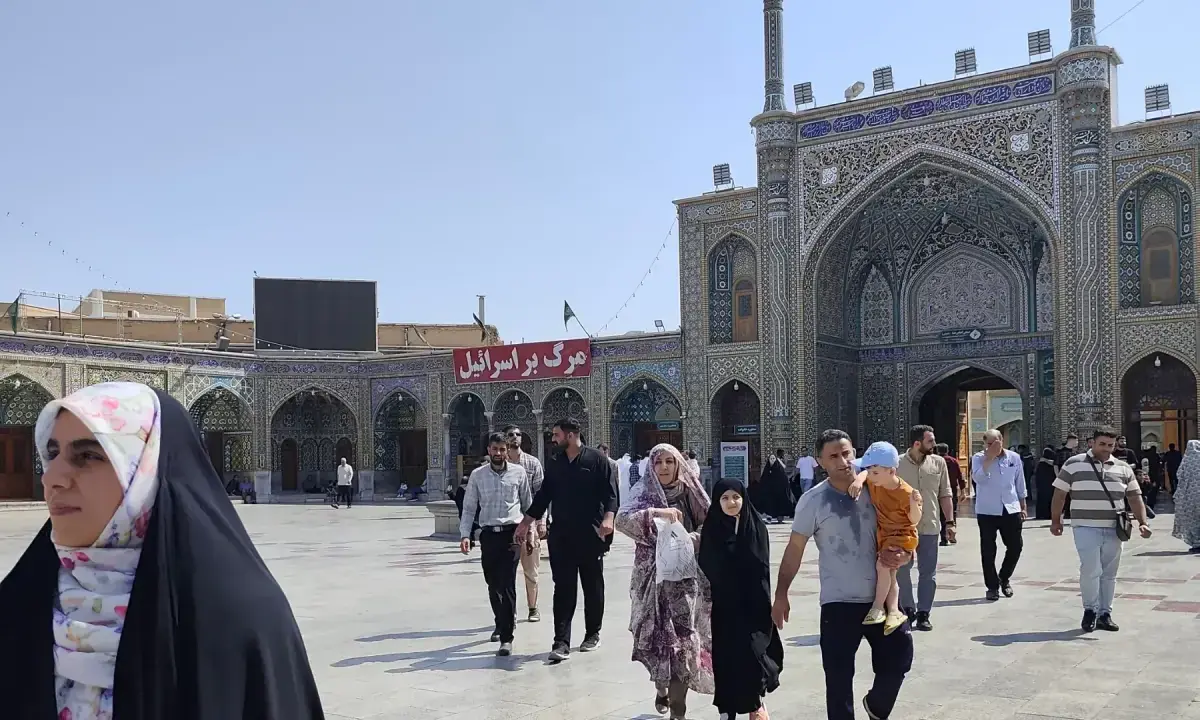
Qom greets you with pristine air and radiance. It was a Friday so the city was moving at an unbothered grace. Roads filled for prayers, yet nothing felt strained. As we walked through garden-lined streets toward Bibi Masuma’s shrine, the resting place of the 27-year-old sister of Imam Ali Reza (AS), the eighth Shia imam, I understood why Qom is called the land of mystics.
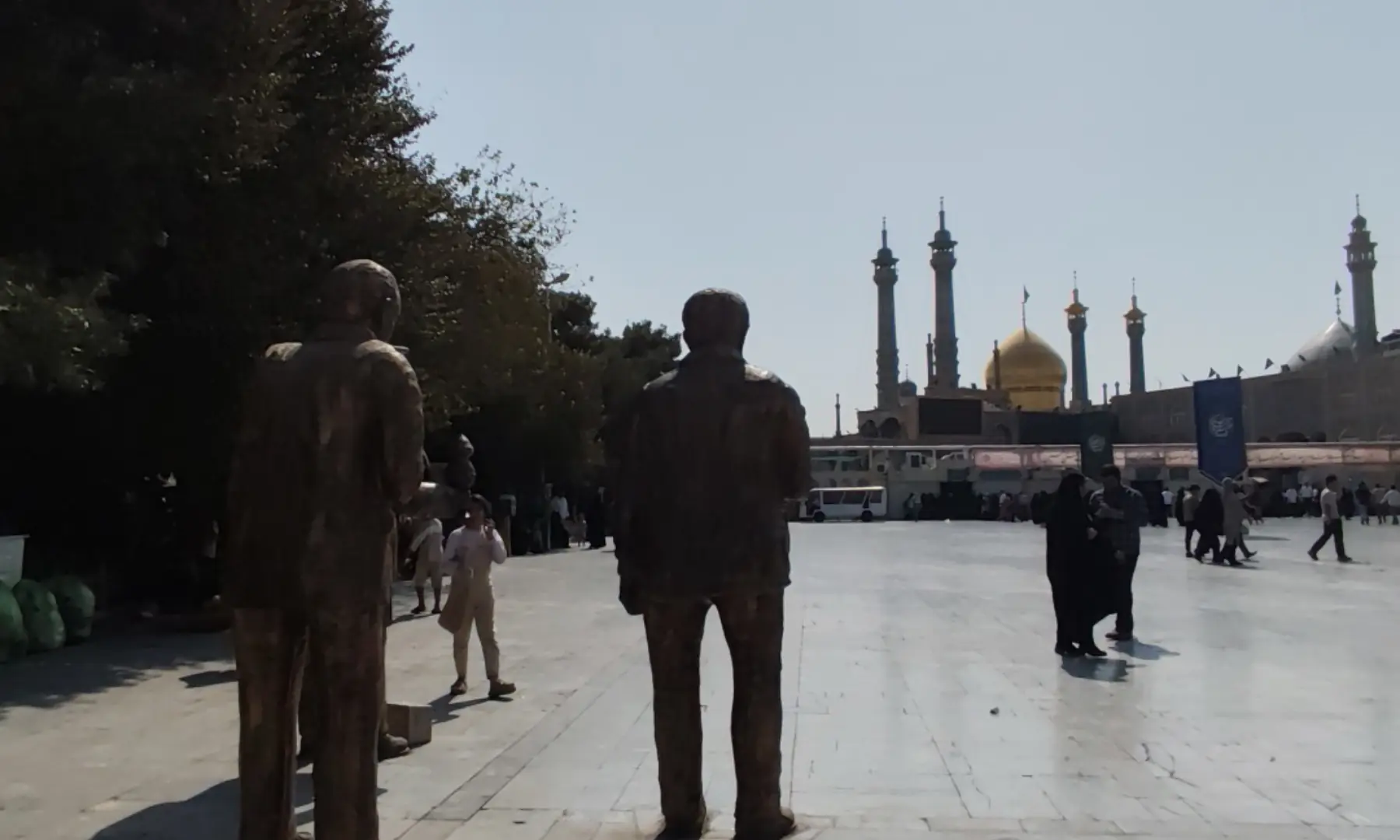
A monument facing the Holy Shrine of Bibi Ma’sooma in Qom, dedicated to an Afghan family who tragically perished in heavy snow while on pilgrimage to Mashhad. — photo by author
Lady Masuma remains one of the most revered women in Shia Islam, and her presence has transformed the city into a centre of spirituality and learning, much like Najaf, the resting place of Imam Ali (AS).
Yet, Qom resists a singular definition.
From across the shrine, Bollywood movie posters stared back at me from the window of an Indian store. Next to it, scholarly bookstores and quiet cafes welcomed visitors and tourists.
On my previous visit to Iran, I watched a Mission Impossible movie dubbed in Farsi on a bus from Qom to Kashan. I bought the dubbed Jodhaa Akbar, a version that felt more historically grounded, given that Farsi was the language of Mughal Emperor Akbar’s court.
This is what continues to inspire me about Iran. It is a civilisation deeply intertwined with South Asia, its language, aesthetics, and traditions shaping our region long before colonial interruptions.
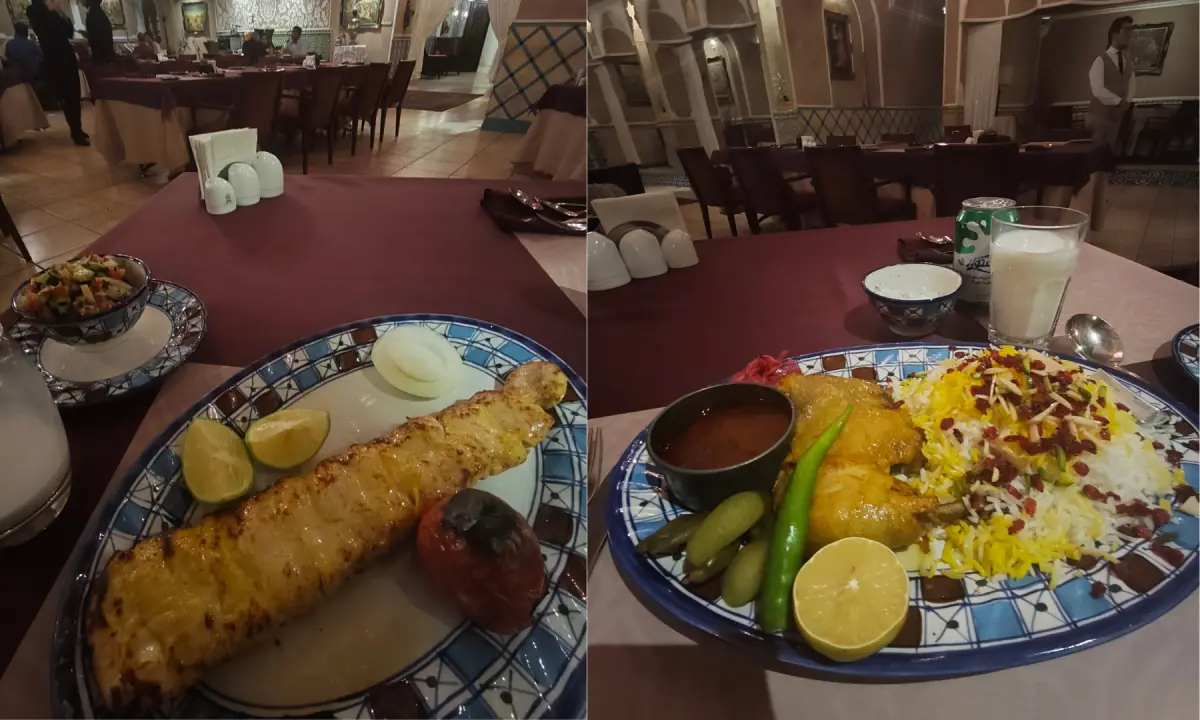
Before visiting the Jamkaran Mosque, a must-see ziarat in Qom, we stopped for lunch near the mountains, where charred kebabs, grilled tomatoes and saffron rice awaited us. Located on the outskirts of Qom, the sprawling complex of the mosque, its courtyards, and bookstores offered a space for reflection in contrast to the “war-torn” image of Iran so often projected by the Western media.
But what stayed with me the most was the seamlessness of life, where spirituality, well-being, and urban design were not separate spheres but part of a coherent whole. The city was green, walkable, and alive with gossipy families, cheery children, and talkative couples strolling about without their heads bent over screens.
A traditional dinner in Tehran featuring saffron-infused Chelo Kebab, grilled tomatoes, Zereshk Polo (barberry rice) and Joojah (chicken) kebab. — photos by author
It was the ordinary moments of a scholar dressed in an amama (ready-to-wear turban), another eating pizza with his family that felt unimaginable given the dominant portrayals of Iran. Years of rigid narratives have obscured these realities, making it difficult to envision progress, prosperity, and spirituality coexisting. But Qom unsettled that fragmentation.
Here, mysticism does not retreat from the world but shapes it. Men and women are encouraged to exercise, pursue education, wake for salat al-layl, and see environmental stewardship as a moral duty. Poetry and heritage are not preserved relics, but living forces woven into everyday life.
Decolonising the aesthetic
Back in Tehran, the traffic, which doubled the otherwise two-hour journey to the capital, served as a grumbling reminder of a city very much alive.
The Mustafa (PBUH) Prize Week commenced with a reception that felt more like a homecoming. Mahdi Amini, the director of the International Cooperation Department at MSTF, greeted me with a sentiment that captured the spirit of the week: “I love Imam Hussain (AS); I had no worries that you would reach here safely.”
This theme followed me everywhere. In my room, a stereo lithographic 3D-printed pen sat in an elegant box, accompanied by the Quranic verse: “Nun. By the pen and what they inscribe.”
Alongside it was a message: “By the pen and all that it sets down… Bind knowledge by writing it.”
The pen, shaped like a beam of light, conveyed the semantics very well; it was meant to be the light in one’s hand.
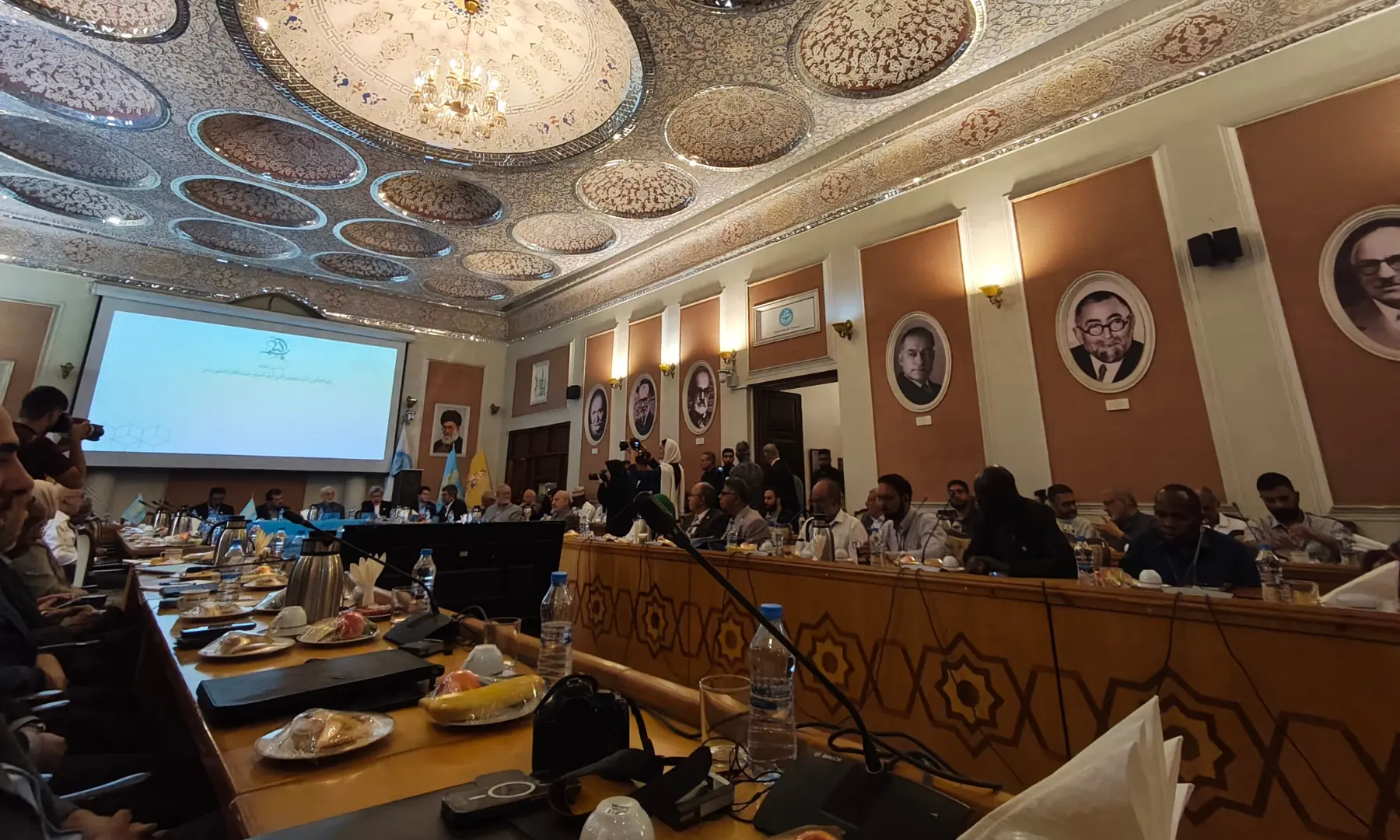
Science and technology meeting at the University of Tehran’s cultural centre within Negarestan Garden. — photo by author
This philosophy seemed to permeate every corner of the event, even at dinner late that night. After tea with saffron-coated sugar and pistachios, we headed out for the last meal of the day.
At the restaurant, paisley table covers, intricate wall paintings, and live musicians left no room for any “colonial hangover”. The space refused to inherit its aesthetic from elsewhere.
A smart city rooted in nature
The next morning, Muslim scientists from around the world gathered, and the week began in earnest. The sessions took us from the halls of Amir Kabir University of Technology to the heights of the Pardis Technology Park.
As a sustainability expert, I found myself admiring Tehran, its long green belts dense with trees, its people moving around with ease, and its smart city model that prioritised human connection over concrete.
What also struck me was the presence of women scientists during policy-making roundtables. These were women who were not just participating in the discussions but leading them. Case in point: Dr Buse Cevatemre, a 2025 Young Scientist Medal winner whose work on cancer biology and epigenetic targeting has served as a beacon for the next generation, was in attendance.
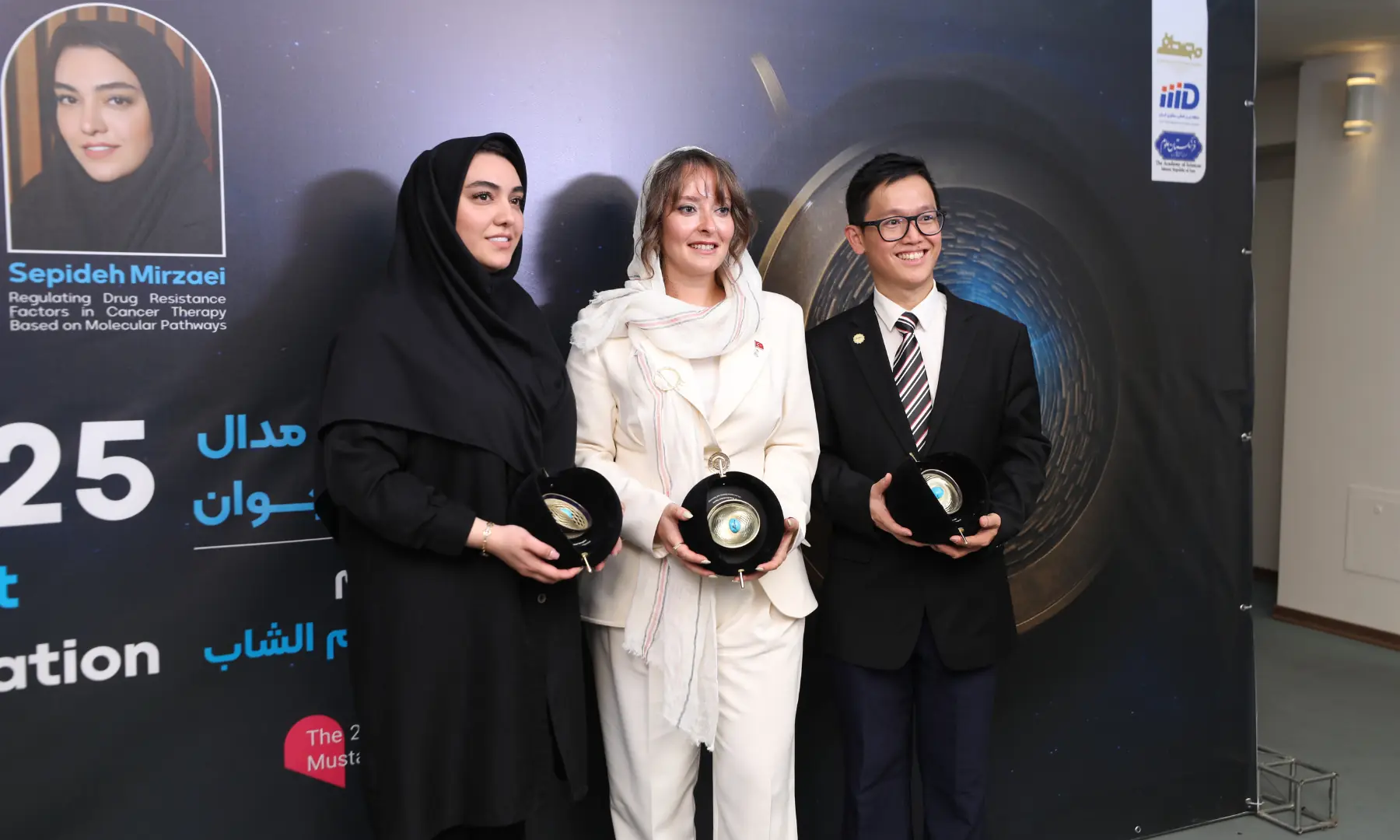
Recipients of the Young Scientist Award: Sepideh Mirzaei (Cancer therapy drug resistance), Buse Cevatemre (Epigenetic adaptations in chemotherapy), and Show Pau Loke (Algal technology for food and aquatic industries). — photo by MSTF, Iran
Two of the many women scientists at the event, a local and the other from Turkiye, along with one man from Malaysia, were awarded for their research. The ceremony was held at the Tehran Book Garden, an architectural marvel with cascading gardens of rosemary and lavender. Watching them felt like a powerful rebuttal to the narrative of a region in decline.
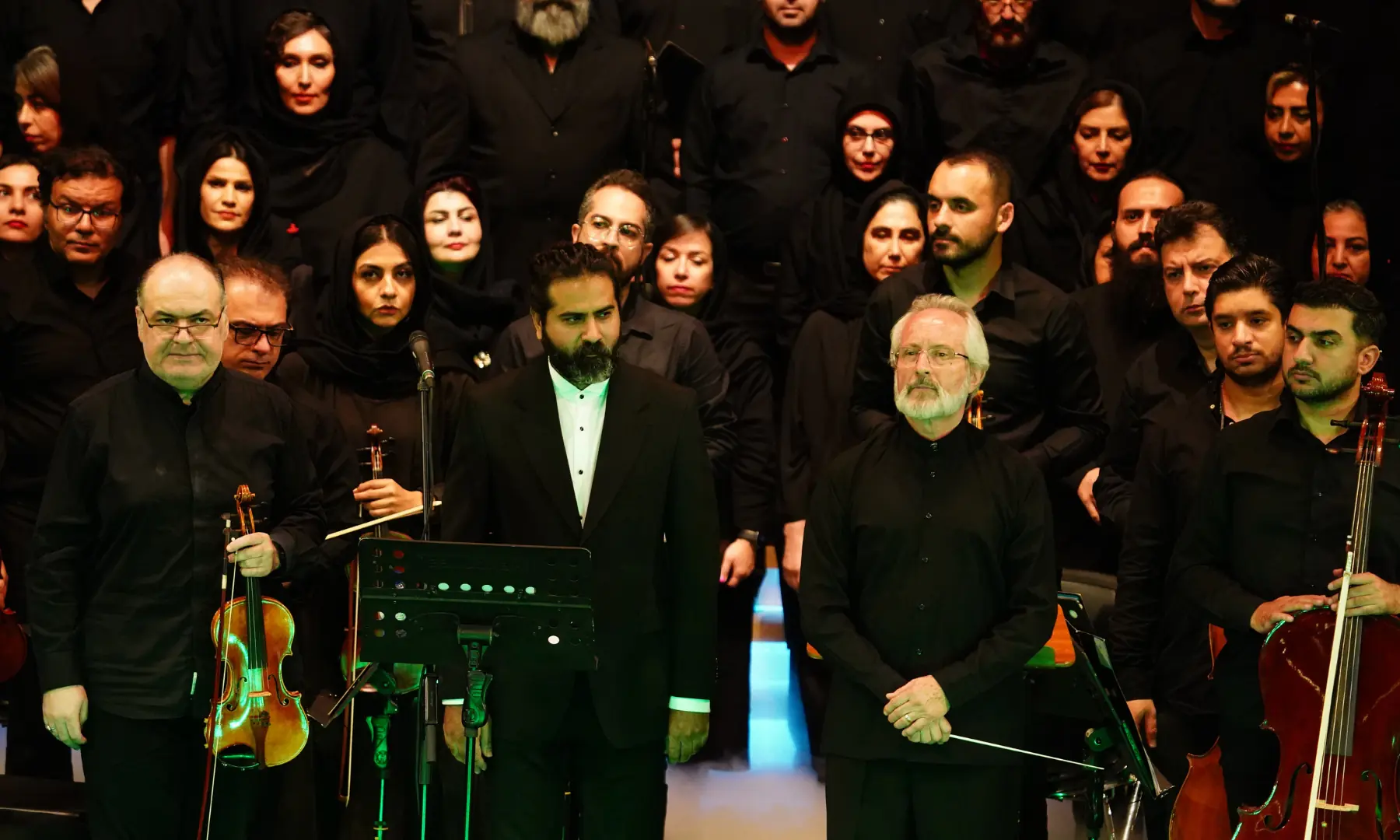
But what stood out about the ceremony for me, a Shia Muslim from Pakistan, was the musical setting within the venue, even as photos of Ayatollah Khamenei and Ayatollah Khomeini faded in and out in the background, showcasing the rare intersection of religion, culture and science.
In Pakistan, there is little space for music within religious or scholarly gatherings, or for religious figures to be present within cultural or scientific spaces. Here, however, these worlds coexisted seamlessly, suggesting a more integrated and, in many ways, sustainable way of being.
A portrait of the men and women musicians of the orchestra following their powerful performance at the Mustafa Prize closing ceremony. — photo by MSTF, Iran
One evening, under a blood moon eclipse, we toured high-tech laboratories at Pardis. Amid the language of innovation, I found myself drawn to an arched structure nestled among ornamental grasses. Beneath it lay the graves of two martyrs who had died protecting their country.
In Iran, the sacred and the scientific are never far apart. The martyrs, as they say, are “living among the walking”.
Later, at an environmental roundtable, I collaborated with researchers and academics from across the globe — from Saudi Arabia to Australia. Many of us signed MoUs to co-author research papers, building networks that extended far beyond the week itself.
The green blueprint
This theme followed us in Mashhad, too, a city that stands as a masterclass in self-sustaining urbanism.
At the Mashhad University of Medical Sciences, I saw how healthcare is treated as a community right. Every neighbourhood has its own health centre, offering services ranging from nutrition support to mental health counselling. Every couple, before marriage, undergoes compulsory counselling and essential medical tests to ensure long-term health outcomes for future generations.
I found myself wondering how such healthcare networks had been developed and sustained despite decades of sanctions.
Yet it was the city’s environmental foresight that moved me most. I toured urban agriculture projects where unused spaces were transformed into productive orchards of pistachio, pomegranate, and apricot. These are not merely gardens but part of a sophisticated green energy ecosystem.
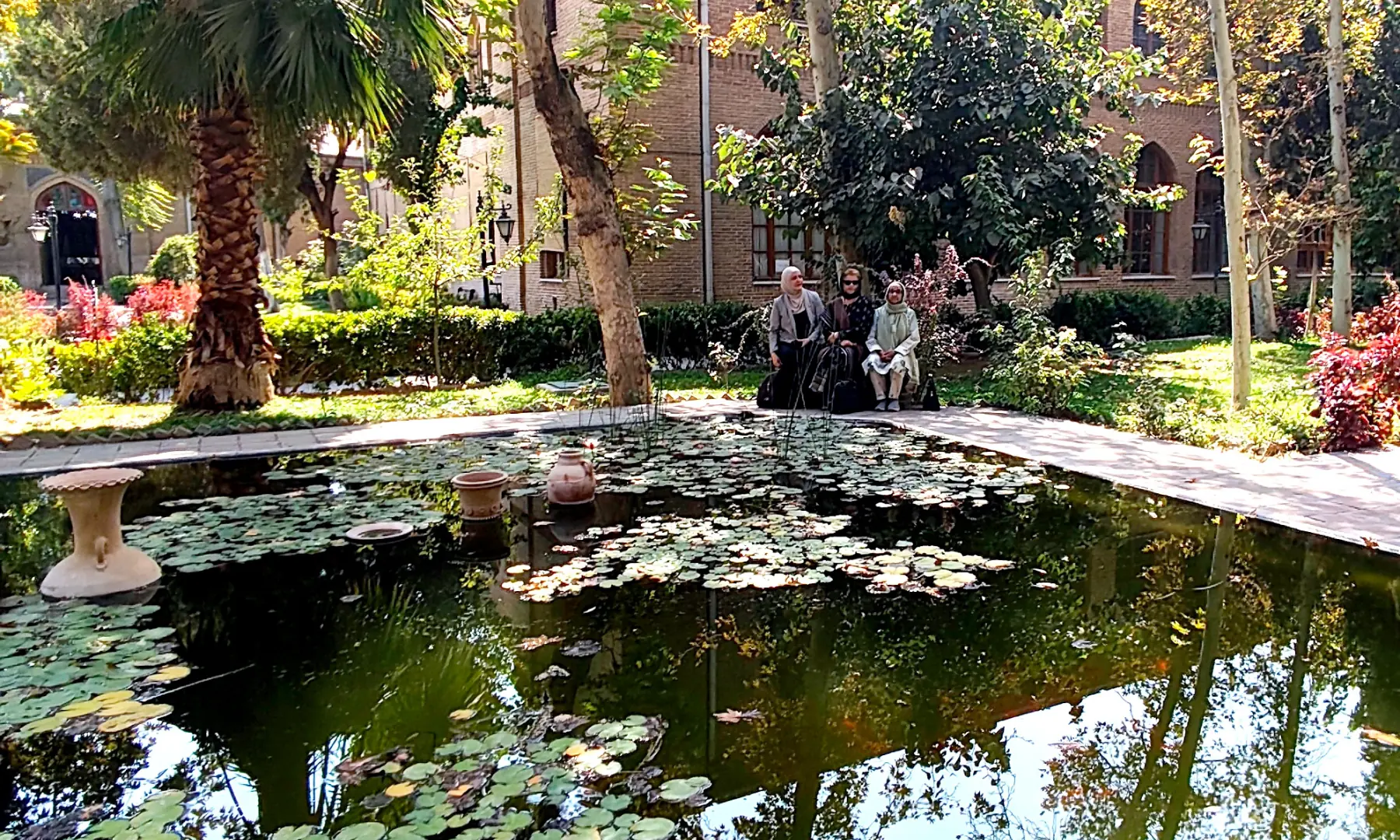
Negarestan Garden, built in 1802 as a summer palace for Fath-Ali Shah Qajar, remains one of Tehran’s most poetic green spaces. — photo by author
Institutions such as the Sun & Air Research Institute (SARI) are developing 100kW wind turbines to power the very landscapes they cultivate. Here, women lead both laboratories and orchards, reinforcing the idea that sustainability, in this context, is deeply inclusive and inherently decolonial.
Inside these labs, I met a Lebanese stem cell scientist whose life embodied a stark duality. In one moment, they spoke of cellular regeneration; in the next, they described the destruction of their family home in southern Lebanon.
They spoke of gardens turned into craters and the harrowing reality of recovering the bodies of loved ones before being forced to flee to Beirut. For those of us at The Green Pilgrim, this felt deeply personal. One of our volunteers, a 23-year-old data scientist, was among those seeking refuge in Beirut as bombs fell. In the absence of stable work, she spent her days rescuing neighbours from the rubble.
The anatomy of a knowledge war
I share these memories because the framing of the war dangerously sanitises reality. What we are witnessing is a systematic assault on the very foundations of a society, its children, its scholars, and its healers.
The Minab school attack that killed at least 175 people, most of them schoolgirls, was a grave violation of international law.
The targeting of academic institutions was another calculated attempt to fracture a nation’s intellectual future. The strike on the Sharif University of Technology (also referred to as Iran’s MIT), the bombing of the Iran University of Science and Technology (known for STEM research), and the targeting of the Shahid Beheshti University (where scientific research related to the development of nuclear weapons is carried out) are all attacks on Iran’s soul.
But perhaps the most devastating is the targeting of pharmaceutical facilities such as Tofiq Daru, which produces critical cancer treatments.
And then came March 14, when a US-Israeli strike landed near the UNESCO-listed Chehl Sotoun. The 17th-century pavilion and garden in Isfahan was not just architecture; it was life in motion. Targeting it was meant to cut into something deeply valuable to Iran.
It was a business hub for Iranian artists who carried memories of centuries of craftsmanship. On April 10, Iran’s Minister for Cultural Heritage, Syed Reza Salehi-Amiri, confirmed that at least 131 historical sites across 20 provinces were hit by US and Israeli attacks.
The persistence of the ink
When I look back at the Prize Week, I think of the celebration of knowledge as a shared pursuit, I think of the women in positions of leadership, I think of the powerful assertion of intellectual independence free from the “white complex” that continues to shape much of South Asian academia.
Iran’s intellectual legacy stretches back centuries. During the Islamic Golden Age (8th–13th centuries), Persian scholars were central to preserving and expanding human knowledge. Figures such as al-Khwarizmi, the father of algebra, and Avicenna (Ibn Sina), whose medical encyclopedias guided practice worldwide, share this heritage.
Today, that unity and legacy are being tested by a reality that targets the student at her desk and the patient in her bed.
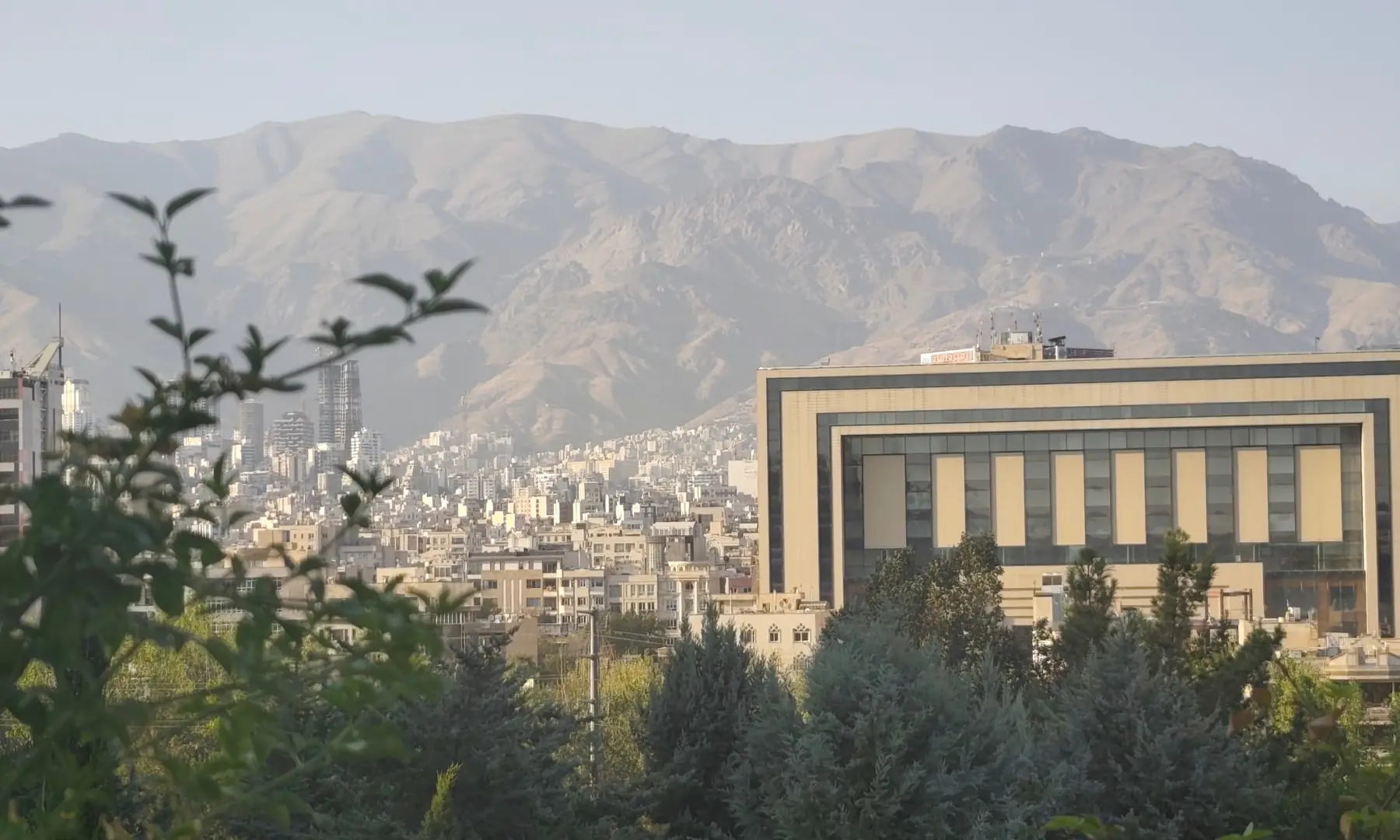
The view of the Tehran skyline from the Book Garden. — photo by author
To my colleagues, the students who welcomed me so warmly, and the scientists I shared tea with: I hold you in my prayers. If we remain silent while these centres of learning are dismantled, we risk becoming complicit in the erasure of a thriving, gender-balanced culture.
We must remember: if the ink of the scholar is truly sacred, then its destruction is a loss the entire world will eventually feel. I write this so history remembers not just the “targets”, but the brilliant minds and vibrant lives they represent.
What we are witnessing today is not merely conflict; it is a struggle over who is allowed to produce knowledge, preserve culture, and imagine the future. The narrative has also shifted in dangerous ways. Genocides are openly announced on X; what began as “regime change” has now escalated into apocalyptic warnings of the “end of civilisation”.
Having worked extensively in conflict zones, I have seen how this erasure extends to environmental knowledge. Data for these regions is sparse or absent from global dashboards. While we debate future climate tipping points, the war-torn countries are already crossing them. The destruction of scientific infrastructure is not merely a humanitarian crisis, it is a climate data blackout. Rich biodiversity, indigenous practices, and centuries of environmental knowledge are reduced to ashes.
The global scientific community must confront this reality. It is no longer acceptable to operate in isolated cycles of data while the East burns. Protecting knowledge, archives, and ecological systems is a shared responsibility: without it, the loss of culture, science, and heritage becomes a tragedy not just for Iran, but for humanity.
Header image:Families arriving at the Holy Shrine of Bibi Ma’sooma in Qom, seeking spiritual solace following recent regional tensions. — photo by author
ملاحظة تحريرية | Editorial Note:
نُشر هذا المقال في الأصل بواسطة Dawn.
خبر (Khabr) هي منصة إعلامية أردنية مرخّصة تعمل بالذكاء الاصطناعي.
نضيف قيمة تحريرية من خلال: تحليل ذكي للأخبار، ملخصات تلقائية، رواية صوتية بالذكاء الاصطناعي، ترجمة متعددة اللغات، وتدقيق الحقائق.
هدفنا جعل الأخبار أكثر وضوحاً وسهولةً للقارئ العربي.
This article was originally published by Dawn.
Khabr is a licensed Jordanian AI-powered news platform (Registration #82086).
We add editorial value through: AI-powered news analysis, automated summaries, AI audio narration, multi-language translation (Arabic, English, French, Turkish), and AI fact-checking.
Our mission is to make news more accessible and understandable for Arabic-speaking audiences worldwide.
هذا الخبر ضمن تغطية خبر لقسم معرفة وثقافة.
نقدّم لك تحليلات ذكية وملخصات يومية لأهم الأخبار من مصادر موثوقة متعددة.
المصدر: Dawn.
يوجد 6 مقالات مرتبطة بهذا الموضوع.
This article is part of Khabr's coverage of Knowledge.
We provide AI-powered analysis, summaries, and multi-source aggregation to keep you informed.
Source: Dawn.
Tags: culture, intellectualism, Iran.
🍪 نستخدم ملفات تعريف الارتباط لتحسين تجربتك وعرض الإعلانات المخصصة. باستخدامك للموقع، فإنك توافق على سياسة ملفات تعريف الارتباط وسياسة الخصوصية.
We use cookies to enhance your experience and show personalized ads. By using this site, you agree to our Cookie Policy and Privacy Policy.
🔍
FREEFree 1GB Internet + Free International Calls
$1 trial — eSIM in 190+ countries — No roaming charges