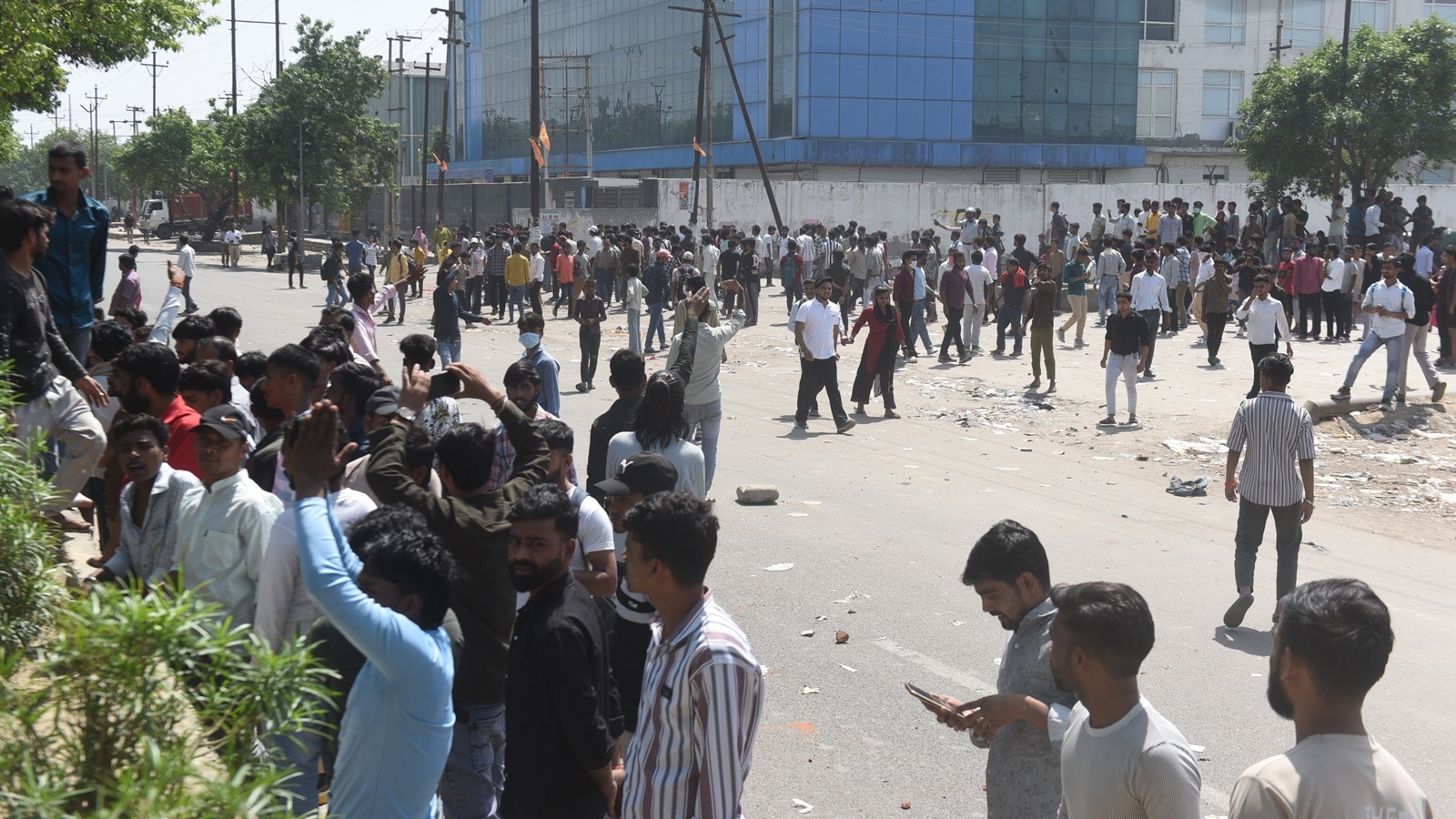
In workers’ protests in Noida and beyond, a test of labour reforms
The recent strike by gig workers and the protest by factory workers in UP against low wages and poor working conditions underlie the operational challenges of labour reforms in the country. The four labour codes — Code on Wages, Code on Social Security, Industrial Relations Code, and Occupational Safety, Health and Working Conditions Code — represent a major attempt to rationalise India’s complex labour regulatory framework. Their impact on employment and wages is expected to be incremental, with outcomes that are heterogeneous across sectors, firm sizes, and worker categories. While the employment effects will be largely compositional through shifts in type and quality of employment, the productivity effects are likely to be moderately positive, depending critically on implementation quality. Against this backdrop, the policy implications become central to realising the potential gains of these reforms. Specifically, the Code on Wages may correct wage suppression and reduce wage inequality at the lower end of the wage distribution. However, its effectiveness depends on where the national floor wage is set, relative to the current market wage. In terms of labour productivity, the codes create enabling conditions for improvement through better worker protection, reduced compliance, and more efficient labour allocation. Large firms are likely to benefit most, as they can absorb compliance costs while gaining from reduced worker turnover, improved health outcomes, and better workforce stability. In contrast, SMEs may face disproportionate compliance burdens, which can offset any labour productivity gains. Given these dynamics, the policy implications are crucial for ensuring that the labour codes translate into meaningful improvements in work conditions, wages and labour productivity. First, strengthening enforcement mechanisms is the critical priority. A persistent challenge in India’s labour market is the weak enforcement of regulations, especially in the informal sector where the majority of workers are employed. Without credible enforcement, minimum wages remain non-binding, social security provisions fail to reach intended beneficiaries, and safety regulations are not adhered to. The government must invest in digital compliance systems, including mandatory digital wage payments, electronic maintenance of employment records, and data-driven inspection systems. Targeted inspections based on risk profiling can improve efficiency while reducing opportunities for rent-seeking. Building administrative capacity at both central and state levels is essential to ensure consistent and credible enforcement. Second, careful calibration of wage policy is necessary. The national floor wage should be set at a level that is binding yet sustainable, taking into account regional variations in cost of living and sectoral differences in productivity. Periodic revisions, ideally linked to inflation and productivity growth, can prevent the erosion of real wages while avoiding sudden shocks to employers. A poorly calibrated wage floor — either too low or too high — can undermine the objectives of the Code on Wages. Third, there is a strong need to support small and medium enterprises, which form the backbone of India’s employment structure but are also the most vulnerable to regulatory costs. Compliance subsidies, tax incentives, and simplified reporting requirements can help ease the transition to formalisation. Providing access to affordable credit and technology can further enable SMEs to improve productivity and absorb higher labour costs. Without such support, the labour codes risk having regressive effects, benefiting large firms while burdening smaller ones. Fourth, expanding and deepening social security coverage is essential. Thresholds for schemes such as EPF and ESIC have eroded in real terms and exclude a large share of the workforce. They should be revised upward and indexed to inflation to maintain their relevance. Equally important is the operationalisation of provisions for gig and platform workers, including the establishment of a functional Social Security Fund, notification of contribution rates, and design of tangible benefit schemes. Bridging the coverage gap for informal workers requires proactive policy action rather than reliance on gradual formalisation. Fifth, policymakers must address threshold-based distortions that discourage firms from scaling up. Regulatory thresholds continue to create incentives for firms to stay small or fragment operations to avoid compliance. Smoother, graduated frameworks can encourage firm growth. Sixth, labour reforms should be complemented by skill development and human capital investment. Higher wages and better working conditions must be supported by corresponding improvements in worker productivity. This requires expanding access to vocational training, strengthening industry-academia linkages, and promoting continuous skill upgrading. Seventh, there is a need for policy coordination across sectors. Labour reforms alone cannot drive employment growth unless supported by broader economic policies, including industrial policy, trade liberalisation, infrastructure development, and investment promotion. This ensures that productivity improvements translate into expanded economic activity and job creation rather than merely cost savings for firms. Eighth, improving administrative coordination and institutional integration is vital. Moving toward a true single-window system for compliance and benefit delivery can reduce transaction costs and improve user experience. Greater coordination between central and state governments is also necessary to avoid regulatory fragmentation and ensure uniform implementation. Finally, leveraging the digital architecture of the labour codes can create long-term gains. The development of integrated labour databases, real-time compliance monitoring systems, and publicly available data on workplace safety and employment conditions can enhance transparency, accountability, and evidence-based policymaking. The new labour codes represent an important step toward modernising India’s labour regulatory framework, with the potential to improve efficiency, formalisation, and productivity at the margins. However, their success depends not on legislative design alone but on effective enforcement, supportive policies, and institutional capacity. The writer is professor of Economics, ISI (Delhi), and visiting professor, NCAERالمصدر: Indian Express | Source: Indian Express
ملاحظة تحريرية | Editorial Note: نُشر هذا المقال في الأصل بواسطة Indian Express. خبر (Khabr) هي منصة إعلامية أردنية مرخّصة تعمل بالذكاء الاصطناعي. نضيف قيمة تحريرية من خلال: تحليل ذكي للأخبار، ملخصات تلقائية، رواية صوتية بالذكاء الاصطناعي، ترجمة متعددة اللغات، وتدقيق الحقائق. هدفنا جعل الأخبار أكثر وضوحاً وسهولةً للقارئ العربي.
This article was originally published by Indian Express. Khabr is a licensed Jordanian AI-powered news platform (Registration #82086). We add editorial value through: AI-powered news analysis, automated summaries, AI audio narration, multi-language translation (Arabic, English, French, Turkish), and AI fact-checking. Our mission is to make news more accessible and understandable for Arabic-speaking audiences worldwide.