⚡ عاجل: كريستيانو رونالدو يُتوّج كأفضل لاعب كرة قدم في العالم●⚡ أخبار عاجلة تتابعونها لحظة بلحظة على خبر●⚡ تابعوا آخر المستجدات والأحداث من حول العالم●
AI اقتراحات ذكية
AI مباشر|--مشاهد مباشر
845,007مقال403مصدر نشط224قناة مباشرة4,858خبر اليوم
آخر تحديث:منذ ثانيتين
‘I thought the oil would be much higher’: Trump’s rosy Iran war spin risks sending traders the wrong message
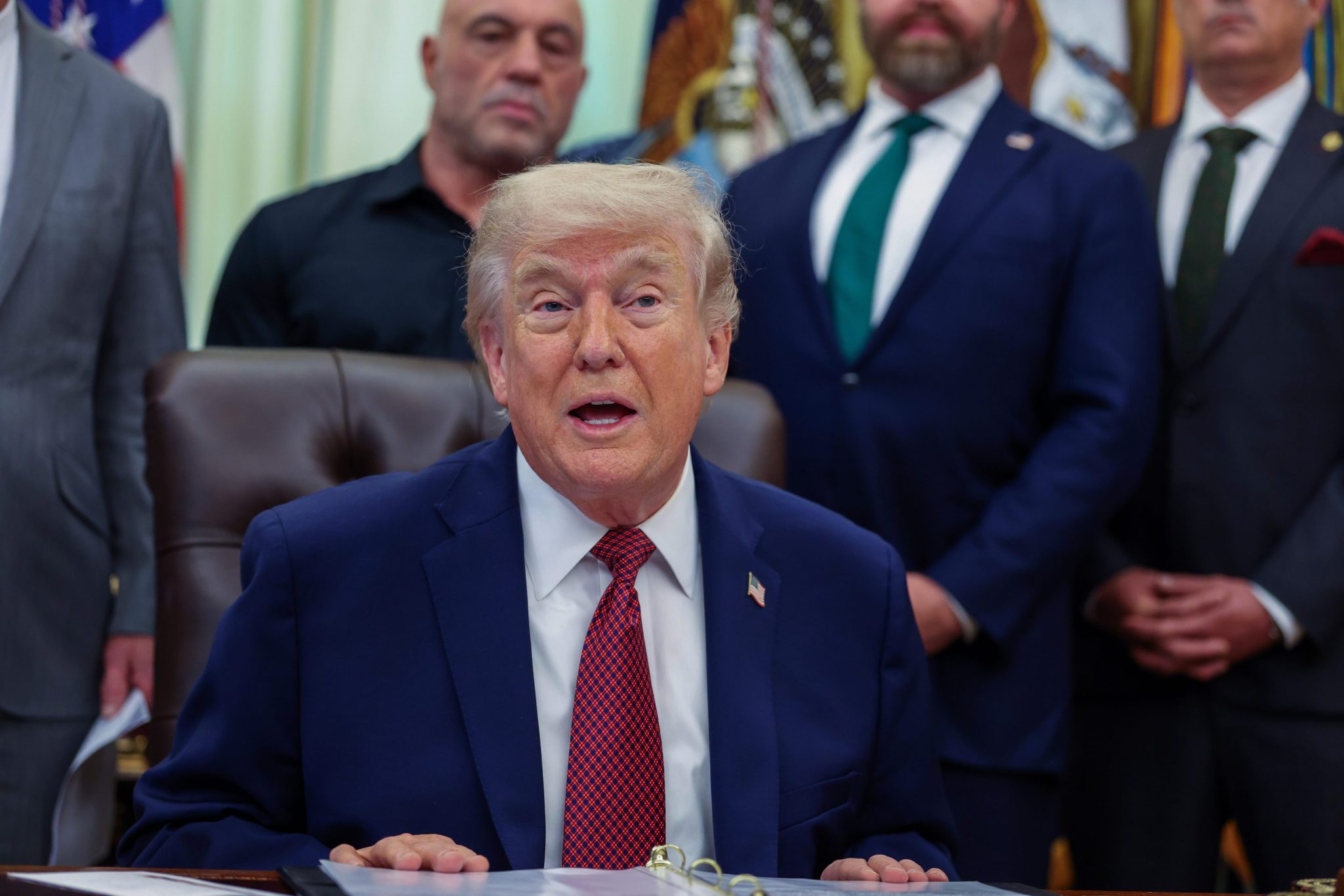
President Donald Trump said Tuesday he was caught off guard—pleasantly—by how well the U.S. economy held up during his war with Iran. Wall Street’s top analysts say he’s got part of the story right, and the rest dangerously wrong.
“Even when it was down more a couple of weeks ago, I was surprised,” Trump told CNBC’s Squawk Box Tuesday morning. “I thought it would be down much more, and I thought the oil would be much higher, and I’m very happy to say that it wasn’t.”
Trump spat out specific numbers, suggesting oil could or should actually be twice as expensive as it currently is: “If you would have told me that oil is at 90 as opposed to 200 [dollars per barrel] I would be frankly, surprised.”
The remarks came as Iran-U.S. ceasefire negotiations entered a critical 24-hour window, with Trump warning he expected to resume bombing if a deal framework wasn’t in place by Wednesday. With one eye on the ticker—Trump also noted during the interview the Dow was approaching 50,000—the president cast the conflict as an economic near-miss that validated his judgment. The recovery in markets, of course, is entirely self-inflicted, and Trump acknowledged as much with a trademark moment of levity when he described how he broke the news of the war to his cabinet.
“So, I said to the people, I said to my people, they’re all gathered, all these wonderful guys, Scott Bessent, the whole—the whole group … I said, ‘Fellas, I got a little bad news for you. I’m going to put a little wrinkle in your numbers.'” His assembled cabinet asked what he was talking about, and Trump described his explanation: “We’re going down to a place called Iran” and that, come what may, the damage in the stock market would be “peanuts” compared to a nuclear confrontation with the Islamic Republic.
Goldman: The rally is real, but it’s a bet on resolution
On the equity market, Trump has a point—and Goldman Sachs backs him up, to a degree. The S&P 500 has staged a powerful rebound from its late-March lows, rising more than 10% to hit fresh record highs last week as fears of a prolonged conflict faded.
Goldman’s senior research advisor Dominic Wilson argued on the bank’s Exchanges podcast the market has made a calculated judgment to look past the “spot reality” of surging oil prices,” much like the Covid-era rally that preceded the actual economic recovery.
“What you tend to see is the market worry a lot, and then the first stage of relief comes mostly from removing the weight that people put on the very bad tails that are out there,” Wilson said.
But Goldman is careful to note what that rally is and isn’t. It’s a bet on a negotiated resolution—not a verdict the economic damage has been contained. Bobby Molavi, Goldman’s head of European Execution Services, argued on the Markets podcast “there is a risk that if this lasts longer, and this oil shock turned from being a supply shock dynamic to a demand shock dynamic, that we’d begin to increase our recession probability.” F
irst-quarter earnings, now beginning to roll in, will be the first real stress test of whether corporate America’s supply chains and consumer spending have absorbed the blow—or are still absorbing it.
Where Trump’s math falls apart: inflation and GDP
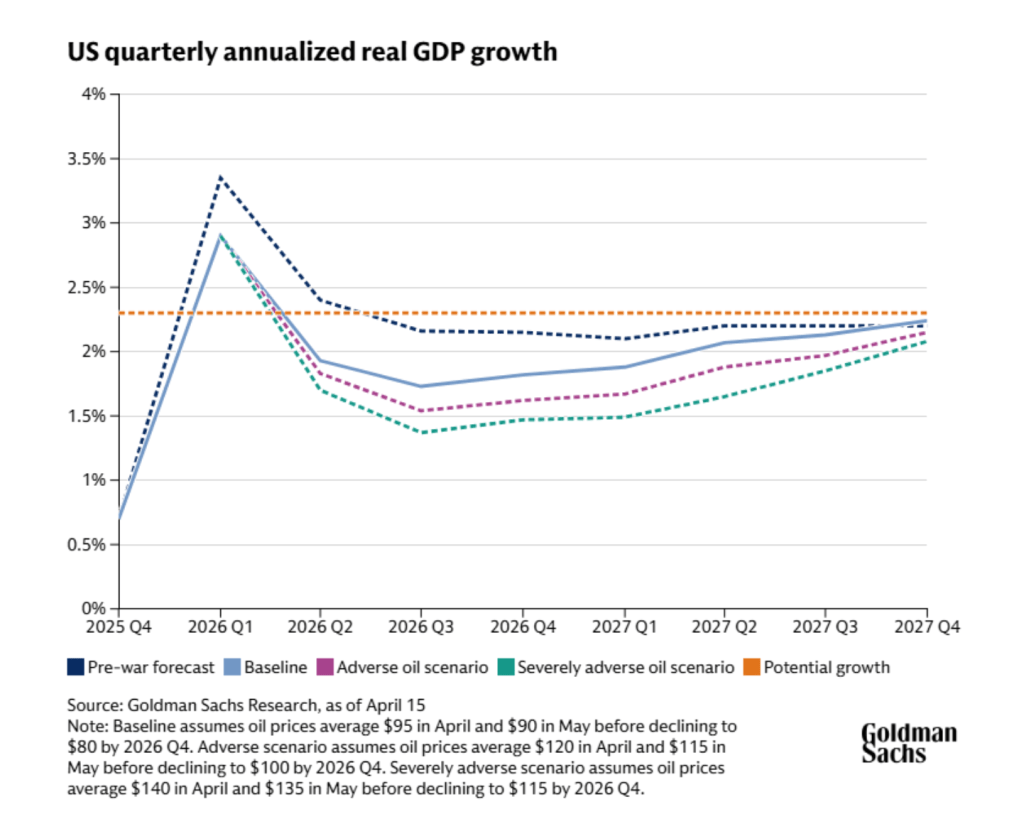
The stock market recovery is the headline. The rates market, Goldman warns, is telling a more sobering story: bond traders are pricing in hawkish central banks bracing for an inflation surge. Goldman’s economists have already raised their December 2026 headline PCE inflation forecast by a full percentage point to 3.1%, and trimmed their 2026 GDP growth forecast by half a point to 2%—a direct consequence of higher oil prices erasing much of the expected boost from last year’s fiscal bill.
This is the math that Trump glossed over on CNBC. Oil at $90 may be below the catastrophic $150-$200 scenarios some analysts feared, but Goldman’s baseline forecast for Brent crude is $80 per barrel by Q4, meaning prices are still running hot relative to their own projections. In a severely adverse scenario, in which the Strait reopening is delayed and Gulf production losses persist, Goldman sees Brent hitting $115. The IMF, for its part, has already revised global 2026 growth down to 3.1%, naming the Iran conflict as the primary driver.
Citadel: The president is the volatility
There’s a second, more structural problem with Trump’s reassuring tone. Sebastian Barrack, head of commodities at Citadel and one of the world’s most influential energy traders, told the FT Commodities Global Summit this week Trump’s Truth Social posts have fundamentally transformed oil market behavior, with oil and gas volatility surging roughly 300% in the conflict’s opening weeks. Barrack said he maintains a dedicated screen solely to monitor the president’s feed.
The record bears that out: crude plunged on March 23 after Trump posted about “productive” talks with Iran, and fell again weeks earlier when he declared the war “very complete.” Every optimistic comment Trump makes—including Tuesday’s—is now a potential price signal. Barrack also said the White House had been “under-thought” in its confidence that releasing Strategic Petroleum Reserve oil and offering Hormuz naval escorts would be enough to calm energy markets.
The bill hasn’t come due yet
What Goldman and Citadel together suggest is Trump is celebrating a halftime score in a game that isn’t over. The stock market rally is real, but it reflects hope for a deal—the same deal Trump is now threatening to blow up if negotiations stall by Wednesday. The inflation impact of $90 oil is still feeding through to consumers, with U.S. pump prices up roughly 35% from pre-war levels. And Goldman explicitly warns its inflation forecasts carry upside risk.
“Most people believe that consumers and corporates are going to be able to withstand this pressure, as they have at previous points,” Goldman’s Molavi said, a cautiously optimistic view that is a long way from Trump’s breezy assertion that the whole thing went better than expected.
Trump knew he was going to put a little wrinkle in everyone’s numbers and Wall Street is still smoothing it out. Every message from Trump risks a further wrinkle in the time of the Iran war.
For this story, Fortune journalists used generative AI as a research tool. An editor verified the accuracy of the information before publishing.
ملاحظة تحريرية | Editorial Note:
نُشر هذا المقال في الأصل بواسطة فورتشن العربية.
خبر (Khabr) هي منصة إعلامية أردنية مرخّصة تعمل بالذكاء الاصطناعي.
نضيف قيمة تحريرية من خلال: تحليل ذكي للأخبار، ملخصات تلقائية، رواية صوتية بالذكاء الاصطناعي، ترجمة متعددة اللغات، وتدقيق الحقائق.
هدفنا جعل الأخبار أكثر وضوحاً وسهولةً للقارئ العربي.
This article was originally published by فورتشن العربية.
Khabr is a licensed Jordanian AI-powered news platform (Registration #82086).
We add editorial value through: AI-powered news analysis, automated summaries, AI audio narration, multi-language translation (Arabic, English, French, Turkish), and AI fact-checking.
Our mission is to make news more accessible and understandable for Arabic-speaking audiences worldwide.
هذا الخبر ضمن تغطية خبر لقسم سياسة.
نقدّم لك تحليلات ذكية وملخصات يومية لأهم الأخبار من مصادر موثوقة متعددة.
المصدر: فورتشن العربية.
يوجد 6 مقالات مرتبطة بهذا الموضوع.
This article is part of Khabr's coverage of Politics.
We provide AI-powered analysis, summaries, and multi-source aggregation to keep you informed.
Source: فورتشن العربية.
Tags: Trump, Iran, oil, traders.
🍪 نستخدم ملفات تعريف الارتباط لتحسين تجربتك وعرض الإعلانات المخصصة. باستخدامك للموقع، فإنك توافق على سياسة ملفات تعريف الارتباط وسياسة الخصوصية.
We use cookies to enhance your experience and show personalized ads. By using this site, you agree to our Cookie Policy and Privacy Policy.
FREEFree 1GB Internet + Free International Calls
$1 trial — eSIM in 190+ countries — No roaming charges