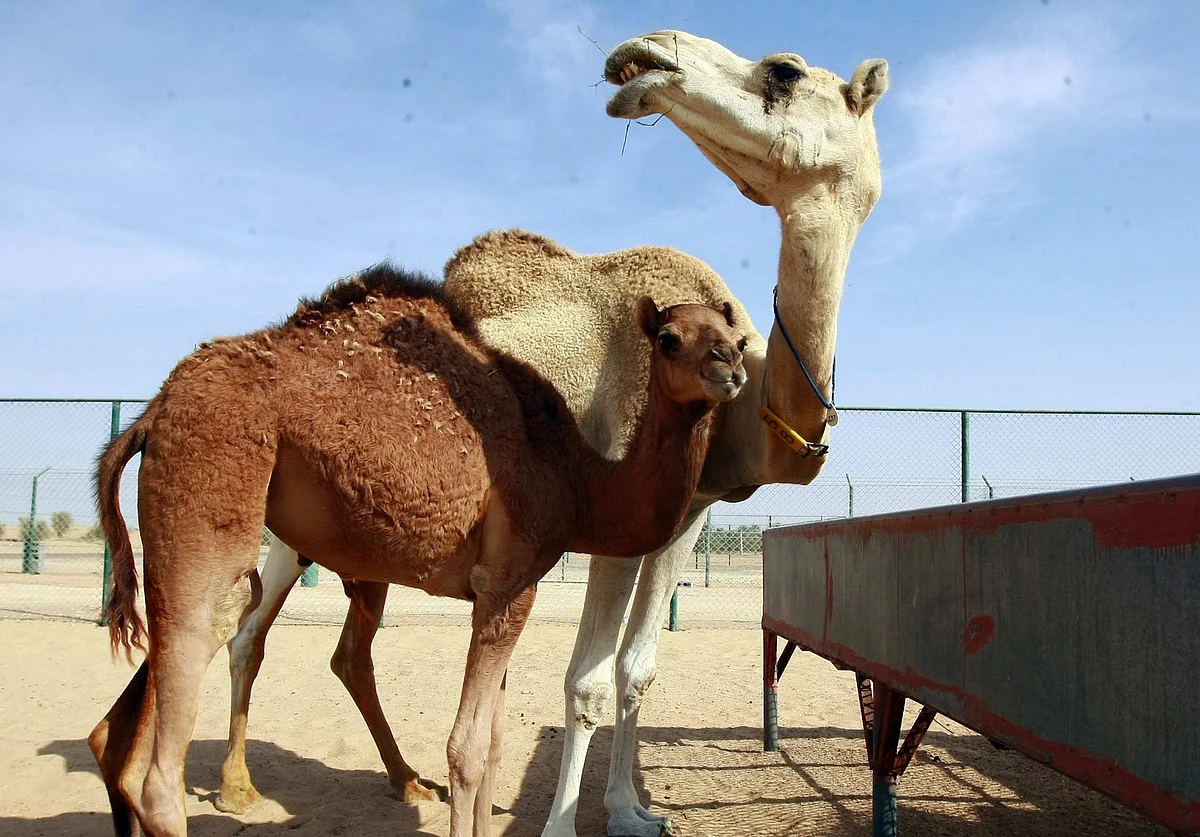
Seventeen years ago today, history was scripted in Dubai as the world’s first cloned camel was born in the emirate. Named Injaz, meaning achievement in Arabic, the female calf arrived at the Camel Reproduction Centre (CRC) after a 378-day pregnancy.
Scientists had taken a cell from an adult female camel, fused it with an egg cell, and implanted it into a surrogate — a process that took five years of failed attempts before success.
At the time, cloning was still approached with caution. The memory of Dolly the sheep, the first cloned mammal born in 1996 in the UK, loomed large. Dolly's early death had raised concerns about the long-term health of cloned animals. Yet, Injaz showed promise from the start — healthy, full of life, and behaving like any other young camel.
Stay up to date with the latest news. Follow KT on WhatsApp Channels.
At the center of its birth was the cryogenic storage facility where thousands of preserved animal cells were stored at temperatures as low as –196°C. This “frozen zoo” represented a vast genetic library, holding the potential for millions of future animals. Scientists had taken a single preserved cell from this collection and implanted it into a surrogate camel. Just over a year later, Injaz was born, marking a historic scientific achievement.
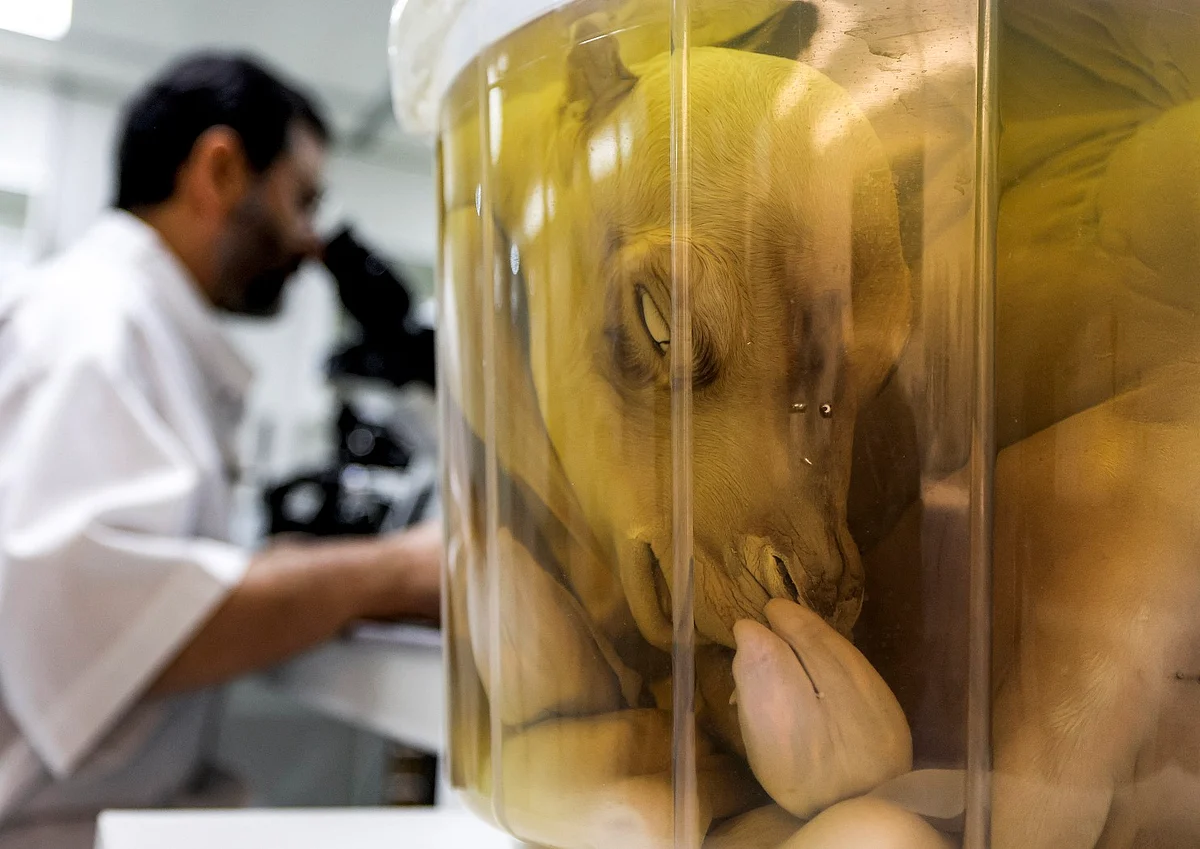
Dr Nisar Ahmad Wani, Scientific Director of the Reproductive Biotechnology Centre, examines a sample while a cloned camel calf is preserved nearby in the lab, Dubai
Bridge between tradition and innovation
Camels have always been central to life in the region, from their domestication during the Iron Age to their role in trade and survival. By 2009, camel racing had evolved into a thriving industry where elite animals were highly prized.
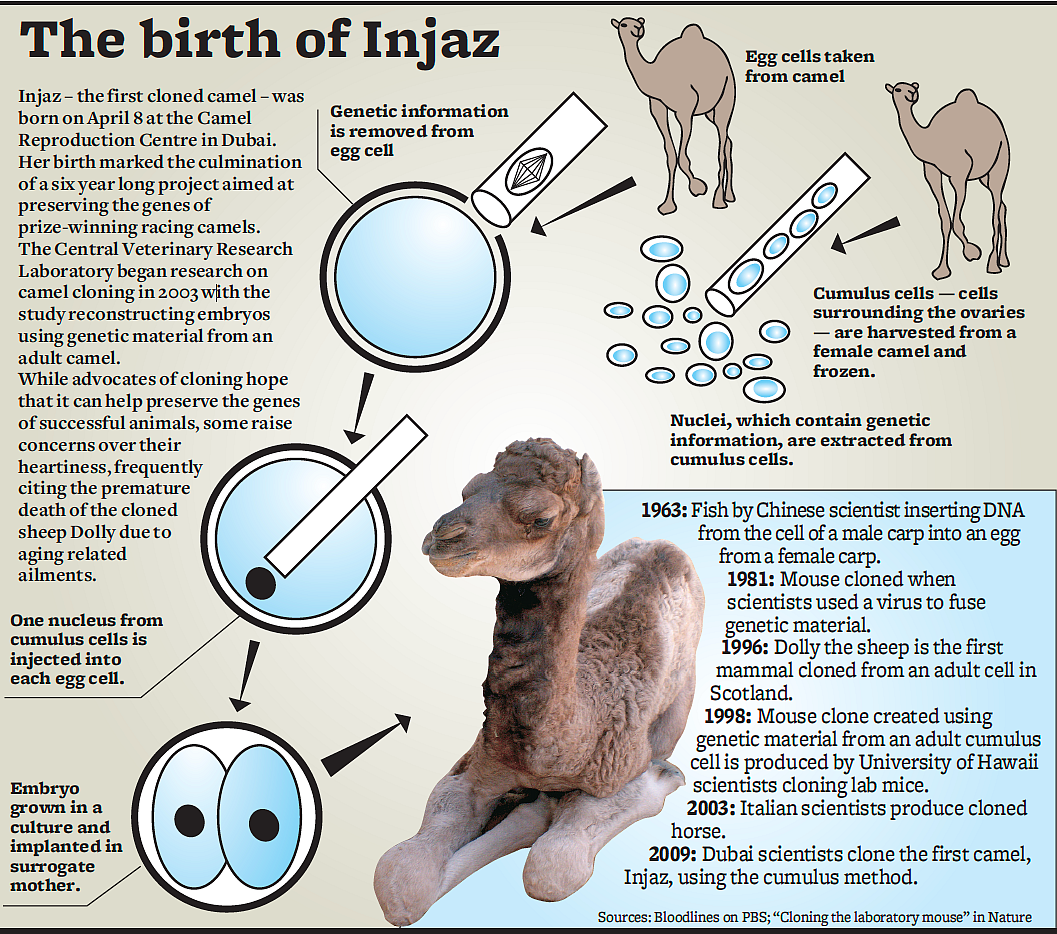
A timeline graph illustrating the major steps in the birth of Injaz, the first cloned camel.
The CRC, founded in 1989, had already built a legacy of innovation. Supported by Mohammed bin Rashid Al Maktoum, the centre had previously introduced the world to the “cama” in 1998 — a rare hybrid between a camel and a llama. By the time Injaz was born, researchers were already looking ahead, exploring new technologies to preserve and enhance camel genetics for future generations.
Injaz's birth was more than a scientific success. It honored the region's deep connection with camels while stepping boldly into the future.
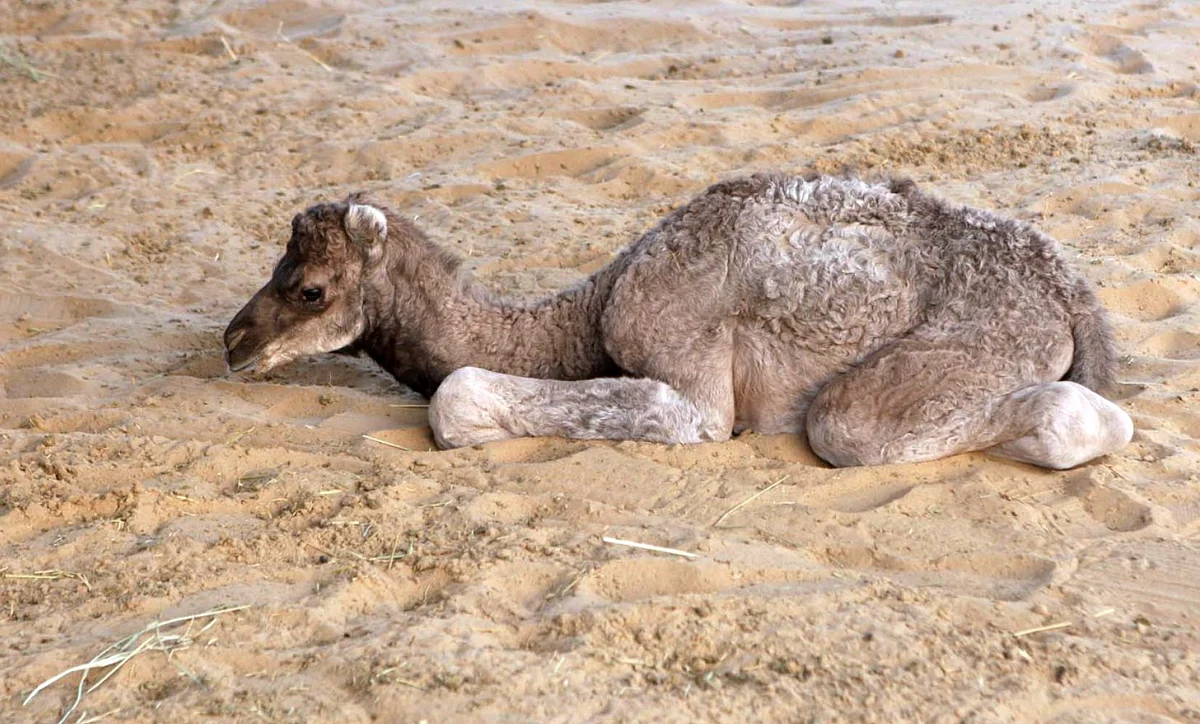
One-week-old Injaz at the Camel Reproduction Centre
Reproduction
In 2015, Injaz became a mother at age six, giving birth naturally to a healthy female calf after a normal gestation. The birth was a milestone: it demonstrated that cloned camels were not only healthy but also fertile and capable of natural reproduction.
In 2017, researchers in Dubai successfully cloned a Bactrian camel using interspecies nuclear transfer. Though the calf later died from an infection, the achievement marked progress toward preserving endangered camel species.
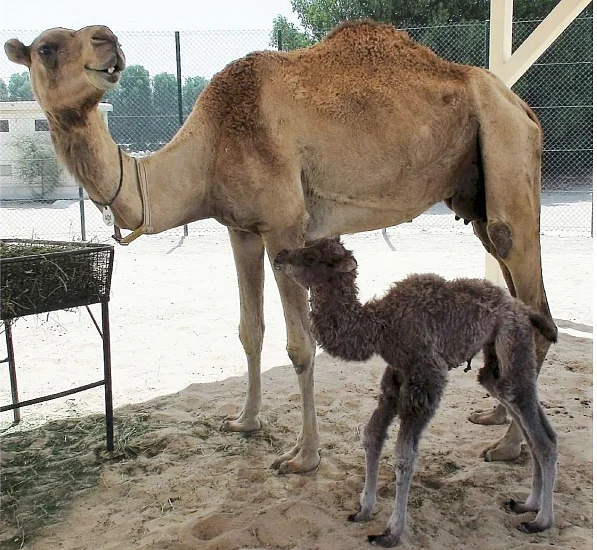
The Bactrian calf was cloned at the Reproductive Biotechnology Centre in Dubai from a dromedary (one-humped) camel who carried the pregnancy
"We need to establish cell lines from as many wild and captive wild Bactrian camels as possible for storage," said Dr Nisar Ahmad Wani of the Reproductive Biotechnology Centre.
The CRC, located in Lehbab in Dubai, continuous to offer world-class reproductive services and brings together science and innovation to support the future of camel breeding.