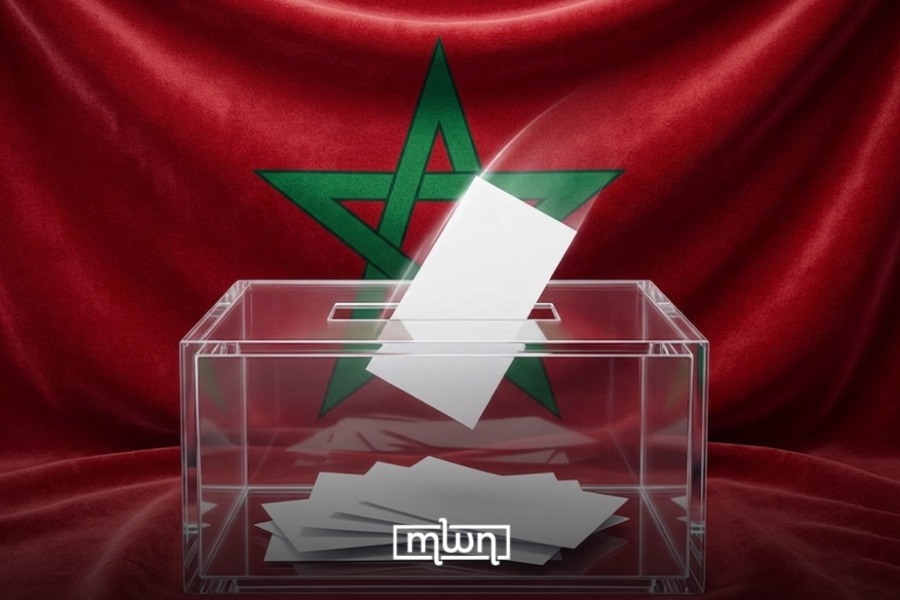
Rabat—2026 is Morocco’s first election year in five years. On September 23, the current session of Parliament will close, and both chambers will go up for re-election. The previous parliamentary election took place in 2021 and saw a decisive victory for the National Rally of Independents (RNI), led by current Head of Government Aziz Akhannouch.
At the time, electoral leaders, including Akhannouch, Authenticity and Modernity party leader Abdellatif Ouahbi, and the US Embassy in Rabat characterized the election as “successful” and a “victory of democracy.”
Five years later, Moroccan citizens are not certain of that democratic underpinning.
Widespread allegations of vote buying taking place across Morocco’s rural places, where politicians or their agents will trade dirhams or goods for citizens’ votes, swirl in community circles. Especially concerned are young adults, including many who participated in or supported the Generation Z protests that swept major Moroccan cities in the fall of 2025.
Though the national administration, as led by Akhannouch, has not investigated vote buying on local, regional, or national levels, colloquial evidence holds that it takes place “everywhere”—according to some of the young adults supporting or marching in the Gen Z 212 protests.
“Vote buying occurs… especially in poor or rural areas, particularly in Moroccan villages,” said 23-year-old Mustapha El-Gherri in an interview with Morocco World News (MWN). “Everyone knows about this phenomenon, but they do nothing about it.”
El-Gherri traveled from his hometown village of Errachidia in the south all the way to Rabat to study education at Mohammad V University. On a cool autumn evening at the campus, he and five other college students gathered for an interview with MWN that centered on vote buying, a topic which they are passionate to bring to light.
Beyond this circle, dozens of other surveyed citizens allege that vote buying is an electoral norm in Morocco, particularly in poor, rural areas.
All the students gathered here specialize in education. They are especially passionate about using their future work to improve Moroccan elections’ integrity—starting by raising awareness about how vote buying works.
“They [politicians and their campaigns] give [poor voters] money so they’ll vote a certain way,” said 22-year-old “Hassan,” one of the college students who studies education at Mohammed V University, who chose anonymity for the interview and is originally from Taounate. “Sometimes it’s just a little cash, or a food basket, or a container of cooking oil, but in return the entire household, sometimes 10 or 15 people, vote for that candidate.”
According to Hassan, such voters feel that the winner of the election will have less bearing in their daily life than the resources for which they are trading their vote; others are illiterate or uneducated, either in general or specifically when it comes to the election, the parties and candidates, or the issues at stake.
“[Campaign teams] go family by family, talking as if this candidate will bring great benefits to the area,” said Hassan. “Then they give the family some money and promise even more once [the candidate is] elected. In reality, it’s… a way to secure votes cheaply.”
“For a poor family, MAD 200 can be a lot,” he added. “Imagine 10 or 15 people in one household. The candidate basically buys all their votes with that small amount. The mandate is five years long, but those five years of public services get reduced to the value of that MAD 200 bribe. For the family, immediate cash seems more real than the abstract promise of good governance.”
“I’m not saying ordinary citizens [who sell votes] are ‘the problem,’” said college student “Malika,” who came all the way from Agadir to Rabat’s Mohammed V University to study education and who also chose to be anonymous. “[But] if the winner [of an election] isn’t the individual we want, the country won’t go the way we want. That’s not a good thing… There’s a failure of awareness [and education].”
Elections between reform and disillusionment
The lack of awareness about modern-day election fraud may stem, at least in part, from dramatic election scandals in the past. Election fraud is not a new phenomenon in Morocco.
Pre-2000, parts of the electoral process were widely criticized for interference and irregularities, at times affecting outcomes and fueling public frustration and protest. In 2006, a massive scandal resulted in the arrests of 17 parliamentary members for participation in voting fraud.
Since then, election fraud seems to have cooled. Reform has resulted in what foreign political rights watch groups have described as “clean” elections, devoid of vote miscounts. But “soft” election fraud continues. Even after 2006’s parliamentary scandal, researcher Amr Hamzawy noted in 2007 widespread allegations of vote buying in both urban and rural spaces. In 2016, third-party observers reported election manipulation; paid men and women would station themselves outside voting booths and encourage voters to select a certain party. In 2021, the Council of Europe sanctioned Moroccan political campaigns for funding misuse as well as a failure to educate voters properly on their platforms.
In the last decade, the government has launched several investigations and arrested multiple officials for attempting election fraud. Reports detailed bribery, vote buying, the use of intermediaries, document forgeries, and verbal assaults as methods of election interference.
Such findings have resulted in minor institutional reforms.
Parliamentary officials have proposed a law that would impose prison sentences or weighty fines on those who spread falsehoods with the intention of undermining confidence in election integrity; however, critics have framed this as suppression of dissent, not a genuine attempt at reform. Then, in late 2025, the Council of Ministers adopted an institutional reform package that bans candidates under criminal prosecution or who have been convicted from running for parliament.
Many of those interviewed do not feel that such measures sufficiently handled the issue. They point to low levels of voter trust and widespread voter disengagement.
“Many young people don’t vote because they feel that by not voting, they’re refusing to legitimize corrupt candidates. I used to think that way,” said El-Gherri. He described how watching vote buying in his small town while growing up made him feel that his vote did not matter.
He said that he has since come to believe that, if he considers himself informed, he has a “duty to vote, either for the [best] candidate… or even to submit a blank ballot as a statement.”
El-Gherri’s willingness to vote almost renders him a minority.
In 1997, 58% of registered Moroccans turned out to vote in parliamentary elections; in 2002, 51%; in 2007, just after the 2006 scandal, only 37% of voters turned out. Though registered voter turnout has improved somewhat—Morocco’s last general election in 2021 saw a rebound to a voter turnout hovering around 50%—anecdotal evidence suggests that many Moroccans are not even registered to vote, meaning they are not included in such statistics.
Many of these unregistered voters are young adults who believe that their voices will make no difference when stacked against an onslaught of vote buying in rural areas.
This disengagement also leads to a dearth of outsider candidates. Candidates who run without a party backing must provide 200 signatures before entering the race; lack of belief in the system damaging political will, coupled with lack of financial opportunity, discourages young people and newcomers from trying to become policymakers, much less voters.
Though El-Gherri said that he would enter politics himself in the future if he had the opportunity, he sees the signature requirement as an obstacle, especially in the age of vote buying and selling.
He said that wealthy families seem to control the vote in regions like his. Fathers in elected positions tend to pass their roles onto their sons or other relatives, making it difficult for outsiders to enter.
What he references is what the American policy think tank Washington Institute has called “parachutage”—where Moroccan leaders are usually the children of previous leaders.
“As a young outsider, I’m almost certain to be rejected at that step, before I even reach the ballot,” El-Gherri said.
And when citizens who are not political leaders feel that their voices are rendered ineffective by vote buying and other forms of electoral manipulation, the problem compounds into frustration directed towards the government—like the Generation Z protests that swept Morocco from August to October in 2025.
“Vote buying and electoral irregularities were among the reasons that led to the protests,” said El-Gherri.
Instead of opting into political systems that they feel have failed, young adults like those studying at Mohammed V University in Rabat do other things to spread awareness and call for change. They march in protests, write articles, organize focus groups, and go into career paths where they can help the rising generation understand the importance of the vote.
‘People don’t understand the weight of a vote’
College students specializing in education like El-Gherri, Hassan, Malika, and others have pledged to use their platforms as instructors to bolster Morocco’s electoral process.
“A lot of people don’t understand the weight of a vote. They don’t realize the seriousness of the electoral process. That’s why awareness is so important. The problem isn’t just the parties. It’s… the level of political consciousness in society,” said Hassan.
The solution? Education campaigns, particularly concerning civil rights, political platforms, and the importance of both.
“We should teach children from an early age about the consequences of selling their vote [and] how it affects schools, hospitals, and their neighborhood,” said Malika. “Teachers, parents, and all of us have a role in building what you could call collective awareness.”
“In the end, everything comes back to education. If people don’t read, don’t study, and don’t learn about their rights, they are easy to manipulate with money or promises,” she concluded.
“I have given a series of lessons to my students to raise their awareness of the seriousness of the current situation, considering them the youth of the future,” said El-Gherri. “The solution [to electoral problems is] raising public awareness, each from their own position.”
The post How ‘The Weight of a Vote’ Has Gotten Lost Ahead of Morocco’s 2026 Elections appeared first on Morocco World News.