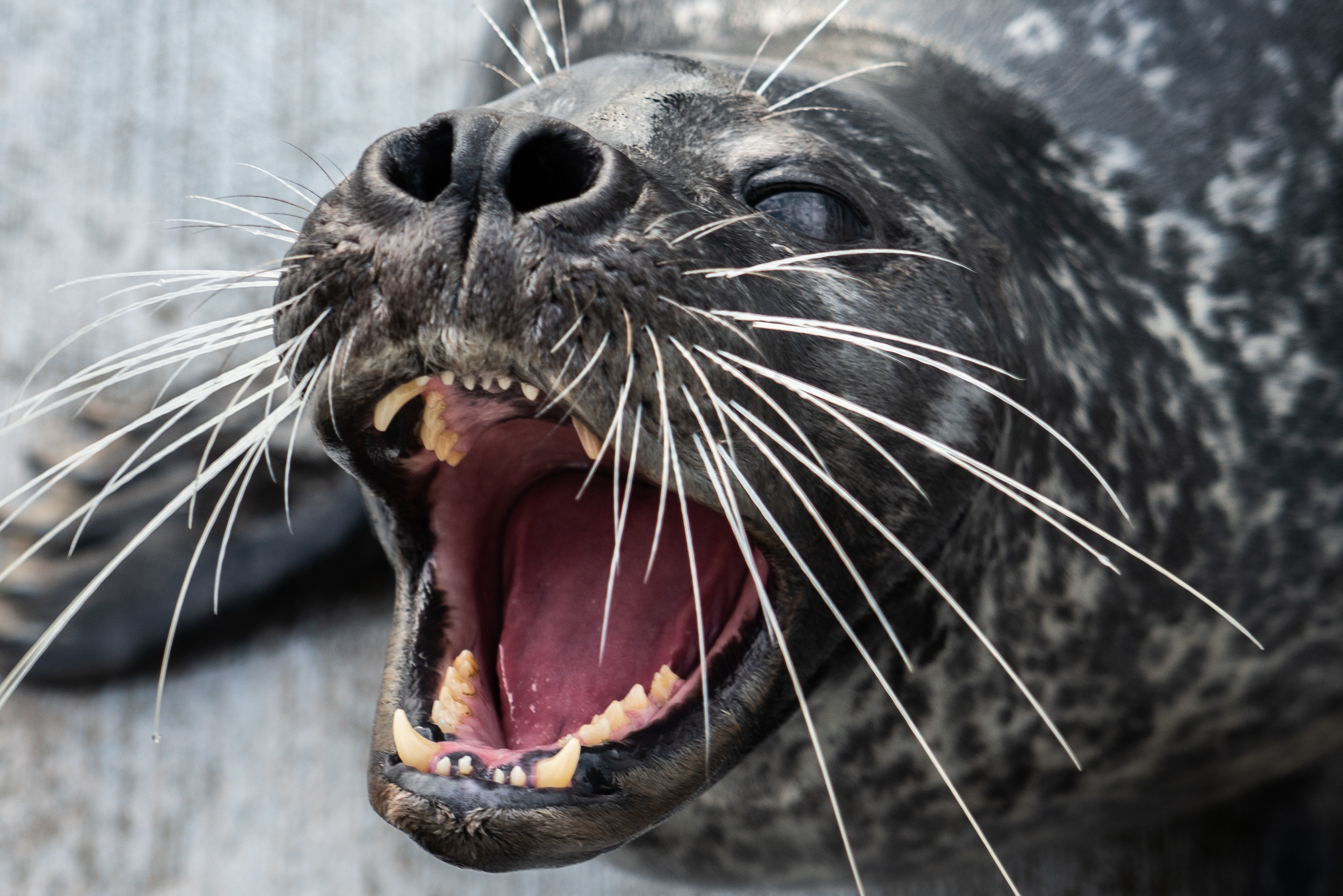
How seals' whiskers make them master underwater hunters
NPR Science LISTEN & FOLLOW NPR App Apple Podcasts Spotify Amazon Music iHeart Radio YouTube Music RSS link Science How seals' whiskers make them master underwater hunters April 16, 20267:00 AM ET Ari Daniel Filou worked with scientists for two years to help them test a theory about how harbor seals use their whiskers to hunt. Robin Heinrich/Marine Science Center hide caption toggle caption Robin Heinrich/Marine Science Center A harbor seal sports about a hundred whiskers — which are more than just for show. They provide the animals with key intel on their surroundings. "These are sensory hairs in the facial region," says Yvonne Krüger, a biologist at the University of Rostock in Germany. "And with these whiskers, they can sense the water movements that are generated by fish." Science These rock-climbing fish can shimmy up a 50-foot waterfall That's because those movements leave behind underwater trails that a seal can follow to find the fish and gobble them up. "If you look at an airplane, you can see a trail left behind," says Krüger by way of analogy. "And this is similar to what you have if a fish is swimming through the water column. You can't see it — but you can sense it, with the whiskers." Related: These rock-climbing fish can shimmy up a 50-foot waterfall Sponsor Message Seals can use their whiskers to pull all sorts of information out of disturbances in the water. They can determine the direction in which something has traveled. Lab studies suggest seals might even distinguish between the movements of different types of fish. Krüger has done research that suggests that harbor seal whiskers may even help the animals outmaneuver the evasive behavior of the fish they're hunting. A fishy escape In one experiment, published in the Journal of Experimental Biology, Krüger focused on the feats of an adult male harbor seal named Filou. He's a dark gray and lives at a marine science center in Germany. "He looks very beautiful," says Krüger. "We have a very strong b...المصدر: NPR | Source: NPR
ملاحظة تحريرية | Editorial Note: نُشر هذا المقال في الأصل بواسطة NPR. خبر (Khabr) هي منصة إعلامية أردنية مرخّصة تعمل بالذكاء الاصطناعي. نضيف قيمة تحريرية من خلال: تحليل ذكي للأخبار، ملخصات تلقائية، رواية صوتية بالذكاء الاصطناعي، ترجمة متعددة اللغات، وتدقيق الحقائق. هدفنا جعل الأخبار أكثر وضوحاً وسهولةً للقارئ العربي.
This article was originally published by NPR. Khabr is a licensed Jordanian AI-powered news platform (Registration #82086). We add editorial value through: AI-powered news analysis, automated summaries, AI audio narration, multi-language translation (Arabic, English, French, Turkish), and AI fact-checking. Our mission is to make news more accessible and understandable for Arabic-speaking audiences worldwide.

