تحليل ذكي | AI Editorial Analysis
•Weather ePaper Today’s Paper Journalism of Courage Home ePaper Politics Explained Opinion India Business Premium Cities UPSC Entertainment Sports World Lifestyle Tech Subscribe Sign In TrendingUPSC Of...
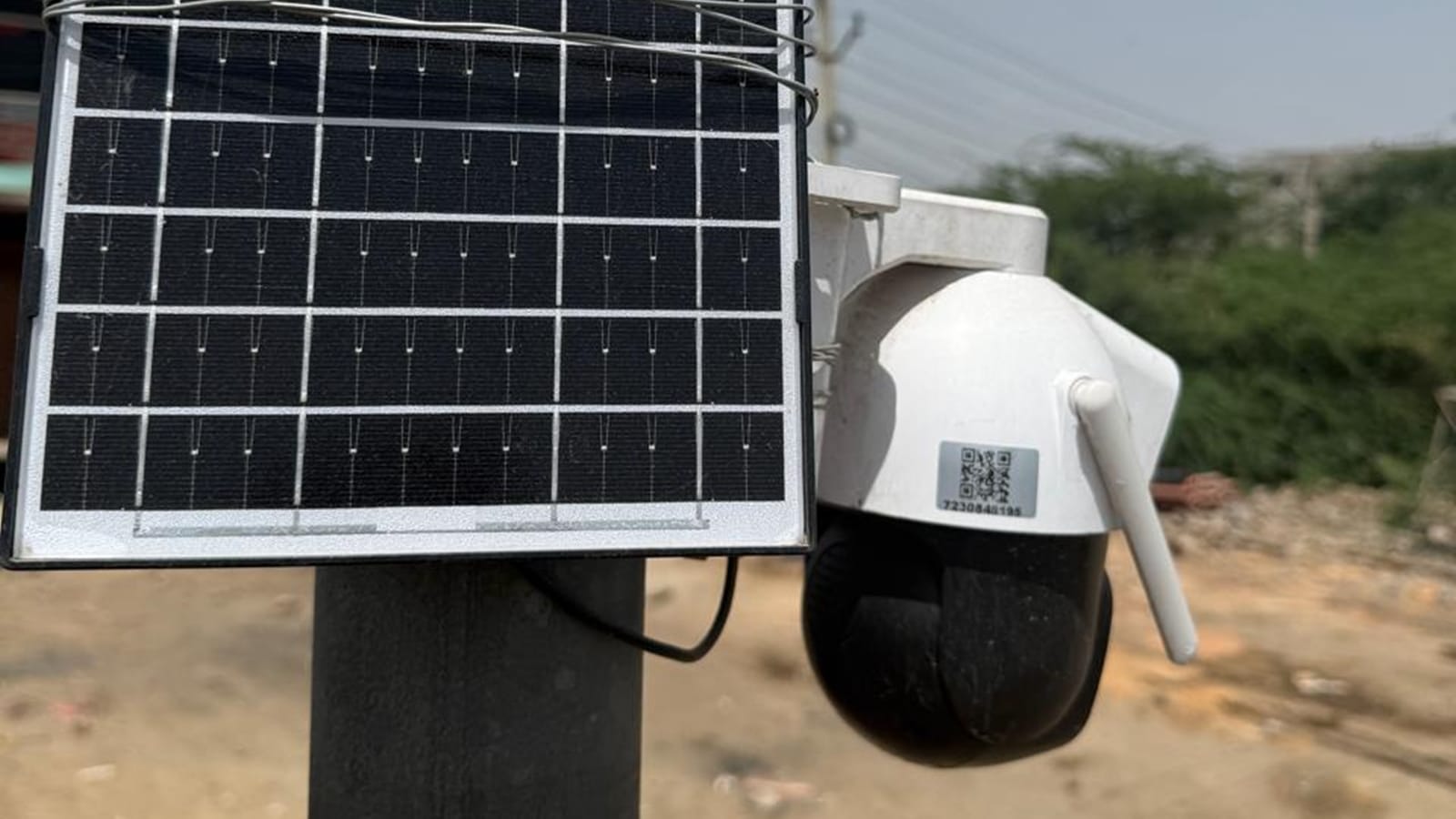
•Over a dozen youngsters — allegedly lured into installing solar powered CCTV cameras near Delhi Cantonment and the Sonipat railway track — were nabbed in March.
•Written by: Alok Singh4 min readNew DelhiApr 21, 2026 06:30 AM IST Two modules have been busted so far.
هذا الخبر من Indian Express. خبر يقدم أدوات ذكاء اصطناعي للتلخيص والترجمة والاستماع.
Weather ePaper Today’s Paper Journalism of Courage Home ePaper Politics Explained Opinion India Business Premium Cities UPSC Entertainment Sports World Lifestyle Tech Subscribe Sign In TrendingUPSC OfferIPL 2026US NewsPuzzles & GamesLegal NewsFresh TakeHealthResearch🎙️ Podcast Advertisement function checkAndLoadWindowSizeScript() { if (window.jQuery) { // jQuery is loaded, include your script jQuery(document).ready(function($) { // Your existing script for checking window width if (window.innerWidth) var page_w = window.innerWidth; else if (document.all) var page_w = document.body.clientWidth; if (page_w > 1024) { $(".add-left, .add-right").show(); } else { $(".add-left, .add-right").hide(); } }); } else { // jQuery is not loaded, check again after 0.2 seconds setTimeout(checkAndLoadWindowSizeScript, 200); } } // Initial call to the function checkAndLoadWindowSizeScript(); NewsCitiesDelhiHow Pak-linked espionage modules operated with evolved solar-powered CCTV networks How Pak-linked espionage modules operated with evolved solar-powered CCTV networks The first case was cracked by the Ghaziabad Police, along with the Uttar Pradesh Special Task Force. Over a dozen youngsters — allegedly lured into installing solar powered CCTV cameras near Delhi Cantonment and the Sonipat railway track — were nabbed in March. Written by: Alok Singh4 min readNew DelhiApr 21, 2026 06:30 AM IST Two modules have been busted so far. (File Photo) Make us preferred source on Google Whatsapp twitter Facebook Reddit PRINT The recent crackdown against two modules allegedly involved in the installation of spy CCTV cameras around army establishments in Delhi, Haryana, and the borders of Punjab and Rajasthan has revealed how traditional spying has evolved into technical surveillance, which is more accurate, according to investigators. The first case was cracked by the Ghaziabad Police, along with the Uttar Pradesh Special Task Force. Over a dozen youngsters — allegedly lured into installing solar powered CCTV cameras near Delhi Cantonment and the Sonipat railway track — were nabbed in March. Earlier this month, the Delhi Police Special Cell busted another espionage network, in which around 11 young men from Delhi and Punjab were allegedly involved in installing nine solar-powered CCTV cameras in border areas near security force establishments in Punjab and Rajasthan. According to the police, they were planning to install cameras around Ambala Cantonment in Haryana. In total, over 30 youth have been arrested for their alleged involvement in the two modules. In both cases, the security agencies found that the live feeds were being allegedly sent to handlers linked to Pakistan’s Inter-Services Intelligence (ISI) said sources. After these modules were busted, the Central government issued directions to all authorities in the country to conduct audits and checks of CCTV cameras installed around the premises of important installations. The exercise is ongoing, said sources. Security agencies, during the probe, found that the main objective behind installing such CCTV cameras was to monitor the movement of battalions and vehicles, including army trucks and tankers, The Indian Express has learnt. Initially, the handlers of these modules allegedly assign them tasks such as arms supply and drug smuggling, and later instruct them to install CCTV cameras, said sources. According to police officers, these modules operate by targeting vulnerable individuals, and the key objective is to gather sensitive information. Social media serves as the primary platform through which foreign handlers identify and approach educated but unemployed youth or those facing financial difficulties. They befriend them and lure them with promises of financial assistance in exchange for installing CCTV cameras at vulnerable or sensitive locations. Payments, according to sources, are made either through digital transactions or via hawala channels. The recruits are instructed to purchase solar-powered CCTV cameras from local markets and obtain SIM cards using fake identities to provide internet connectivity. These cameras are then used to transmit live footage to their Pakistan-based handlers. The integrated solar panels provide them with 24*7 power. Round-the-clock live feeds near sensitive installations allow handlers to analyse the demographics and situation of a particular location. Analysing patterns during peacetime could help adversaries identify vulnerabilities. This information may assist enemies or their handlers in planning attacks or exploiting weaknesses during times of conflict. In both modules, the youths were promised a substantial sum of money. Some were aware that the feeds were being sent to Pakistan, said sources. Retired BSF Inspector General B N Sharma told The Indian Express that espionage through CCTV is a serious threat and a significant security lapse for the authorities. This can be prevented through proper coordination between local authorities and institutions. It is important to know who has installed each camera and for what purpose. Sharma said that the installation of these cameras near the cantonment is not intended to track every moment. Instead, adversaries monitor unusual movements of vehicles and the deployment or relocation of forces at these bases. Live feeds may also assist in planning and carrying out attacks on such locations. According to defence expert Qamar Agha, the installation of CCTV cameras at sensitive locations by Pakistan-based agencies is another attempt to spread instability in the region. “We have seen this in Bangladesh and Iran as well, where, after analyzing the situation in a region, trained operatives infiltrate local communities and attempt to disturb peace and create mayhem,” Agha said. Stay updated with the latest - Click here to follow us on Instagram
المصدر: Indian Express
| Source: Indian Express
ملاحظة تحريرية | Editorial Note:
نُشر هذا المقال في الأصل بواسطة Indian Express.
خبر (Khabr) هي منصة إعلامية أردنية مرخّصة تعمل بالذكاء الاصطناعي.
نضيف قيمة تحريرية من خلال: تحليل ذكي للأخبار، ملخصات تلقائية، رواية صوتية بالذكاء الاصطناعي، ترجمة متعددة اللغات، وتدقيق الحقائق.
هدفنا جعل الأخبار أكثر وضوحاً وسهولةً للقارئ العربي.
This article was originally published by Indian Express.
Khabr is a licensed Jordanian AI-powered news platform (Registration #82086).
We add editorial value through: AI-powered news analysis, automated summaries, AI audio narration, multi-language translation (Arabic, English, French, Turkish), and AI fact-checking.
Our mission is to make news more accessible and understandable for Arabic-speaking audiences worldwide.