Hormuz crisis may push up drug prices: Pharma MSMEs battle cost spike of raw materials, packaging
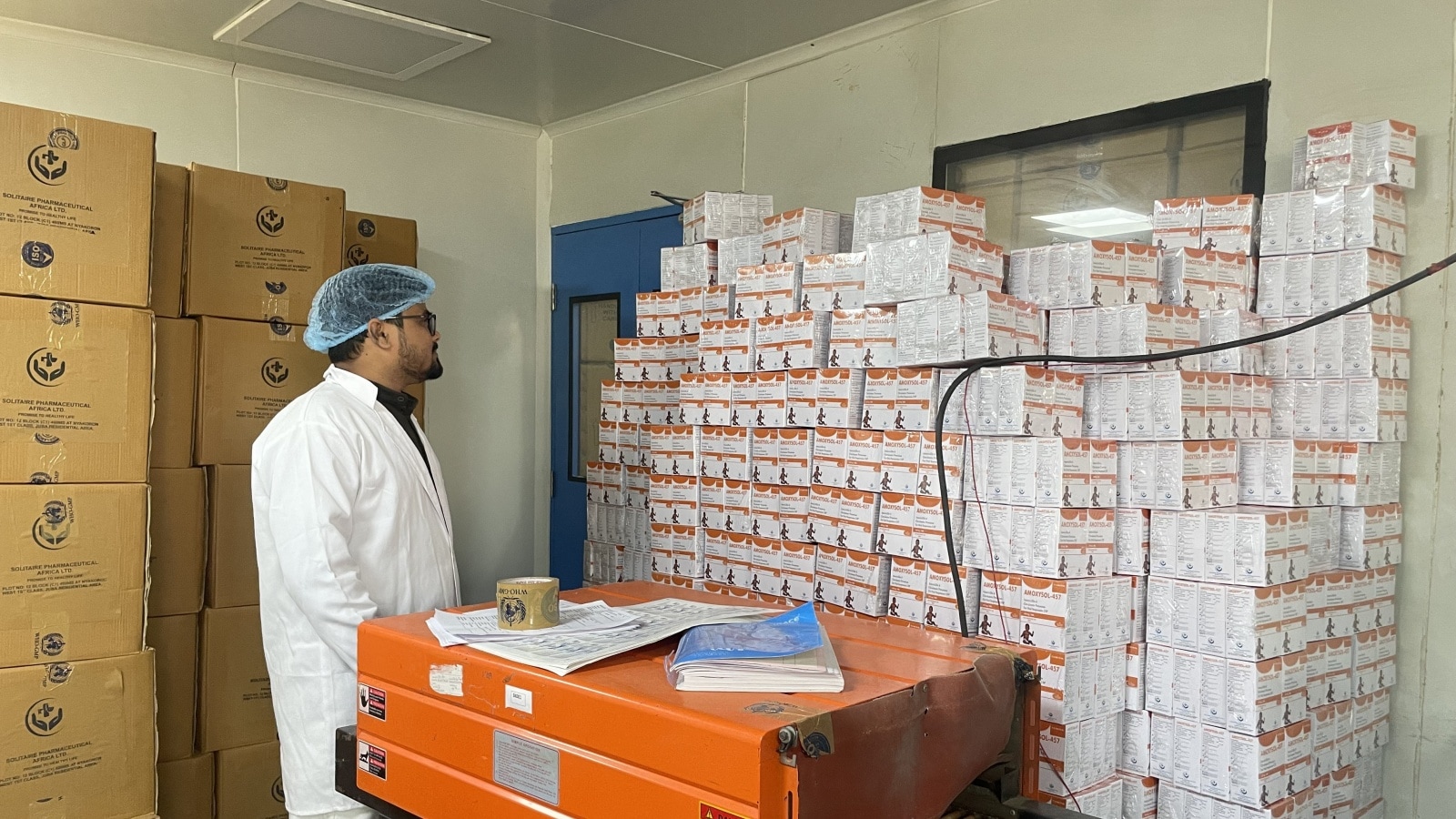
Weather ePaper Today’s Paper Journalism of Courage Home ePaper India Cities UPSC Premium Entertainment Politics Sports World Explained Opinion Business Lifestyle Tech Subscribe Sign In TrendingUPSC OfferIPL 2026US NewsPuzzles & GamesLegal NewsFresh TakeHealthResearch🎙️ Podcast Advertisement function checkAndLoadWindowSizeScript() { if (window.jQuery) { // jQuery is loaded, include your script jQuery(document).ready(function($) { // Your existing script for checking window width if (window.innerWidth) var page_w = window.innerWidth; else if (document.all) var page_w = document.body.clientWidth; if (page_w > 1024) { $(".add-left, .add-right").show(); } else { $(".add-left, .add-right").hide(); } }); } else { // jQuery is not loaded, check again after 0.2 seconds setTimeout(checkAndLoadWindowSizeScript, 200); } } // Initial call to the function checkAndLoadWindowSizeScript(); NewsHealth and WellnessHormuz crisis may push up drug prices: Pharma MSMEs battle cost spike of raw materials, packaging Hormuz crisis may push up drug prices: Pharma MSMEs battle cost spike of raw materials, packaging Industry bodies have reached out to policymakers, urging emergency measures, including shorter tender cycles, faster payments and policy support for MSMEs. Written by: Ankita Upadhyay5 min readNew DelhiApr 15, 2026 10:00 AM IST MSME manufacturers, who supply medicines to government procurement programmes, are particularly exposed. Express photo Make us preferred source on Google Whatsapp twitter Facebook Reddit PRINT Nischal Pruthi sits glued to the television with his son, tracking developments in the US-Iran conflict and the closure of the Strait of Hormuz at their unit in the Rai Industrial Area of Haryana’s Sonipat district, a hub of pharmaceutical manufacturing. For the owner of Afflatus Pharmaceuticals Pvt Ltd, every day of the crisis disrupts his factory floor in terms of delayed supplies and increased raw material costs for even the most commonly-used drugs. “The raw material cost of paracetamol has increased four-fold — from Rs 200 per kg to Rs 800 — while diclofenac, which is a non-steroidal anti-inflammatory drug (NSAID) used for relief from mild-to-moderate pain, migraine and arthritis, has risen from Rs 600 to Rs 950,” he says. Small drug manufacturers like him supply to big companies and feed government procurement programmes for generics like Jan Aushadhi. Disruptions in shipping routes have sharply raised input costs and triggered supply uncertainties for India’s small-scale pharmaceutical manufacturers, who warn of cascading effects on medicine prices, availability and even quality. Several key inputs for drugs, including isopropyl alcohol and methylene dichloride, are linked to supply routes passing through the Strait of Hormuz. Even if the route stabilises immediately, recovery will not be instant. “Manufacturing takes time —procurement, testing and processing can take 15–20 days. We usually plan one to one-and-a-half months in advance,” Pruthi explains. Rapid price changes and uncertain supply make such planning difficult. Pruthi, who is one of the 35 pharmaceutical manufacturers in the Rai industrial belt, produces antibiotics, syrups, injectables and other formulations. “The business is slow and the production in my factory has dropped by nearly 40 per cent,” he says, adding that the impact will ultimately be felt by consumers. Industry-wide, small and medium manufacturers, who account for nearly 60% of India’s 10,500 pharma units, are under pressure. “Branded medicines have already seen price increases of 15–20%, while overall costs have risen 30–40% since March,” says Pruthi. The cost surge has been steep. The raw material prices for broad spectrum antibiotic ceftriaxone has risen from about Rs 6,000 per kg to Rs 7,800, while that of another antibiotic meropenem has jumped from Rs 31,000 to Rs 48,000 per kg. Prices began climbing in early March and continue to fluctuate. “If you delay confirming an order even slightly, the price changes,” says Pruthi. Traders and importers are compounding woes by holding back stock, tightening availability. Labour shortages have compounded the problem. Of his 170 workers, several, particularly migrants, have left amid job uncertainty. “Even two missing workers on a production line can disrupt the entire process,” he says. Nipun Jain, chairman of Pharmexcil’s MSME panel, says prices of raw materials used in active pharmaceutical ingredients (APIs) and packaging have surged up to 2.5 times. “Material that was Rs 100 per kg is now Rs 300. Increased API costs will inevitably push up medicine prices since no company has a net profit margin high enough to absorb such a spike. Large companies already have high margins and typically cannot raise prices beyond 10%. But smaller manufacturers are finding it difficult to absorb the costs,” he says. Dr Darshan Kataria of the Madhya Pradesh Small Scale Drug Manufacturers Association concurs that the crisis has hit both availability and pricing of critical inputs. “Solvents like acetone, methanol and isopropyl alcohol are fundamental to production. Their prices have surged, pushing API costs up, sometimes by as much as 200%,” he says. Costs have risen across the board. Packaging materials, which are petroleum-based, such as PET bottles, aluminium caps, foil and PVC have become significantly more expensive, their prices increasing by 80–100%. The cost of PVC, used for blister packs, which hold individual pills due to its clarity and barrier properties, has increased from Rs 130 per kg to Rs190 per kg. The cost of aluminium caps has gone up from 45 paisa to 75 paisa per cap. Aluminium foil prices have gone up from 400 per kg to 600 per kg. The cost of Alu-Alu (Aluminium-Aluminium) premium packaging has gone up from Rs 360 per kg to Rs 560 per kg. Fixed-price government contracts have left manufacturers especially vulnerable. “Prices in tenders are locked for one or two years. If costs rise, we cannot adjust rates but failure to supply risks blacklisting,” says Pruthi. The impact extends beyond drug makers. Ambresh Kumar Mishra, who manufactures plastic bottles for syrups four kilometres away from Pruthi’s unit, says his production has dropped by 70% as polymer prices have doubled from Rs 90 per kg to Rs 180. “Duty waivers have offered limited relief,” he says. A senior official working in a pharmaceutical glass manufacturing company says production of items like ampoules, sealed glass vials containing single-dose medication have also reduced because manufacturing needs LPG gas. “The production has reduced to 50-60 per cent,” he says. Alongside cost pressures, manufacturers are grappling with supply delays and concerns over quality. “Delays and production pressure increase the risk of inferior material entering the system,” Kataria says, warning that strained conditions can heighten the possibility of compromised quality or human error. Industry bodies have begun seeking government intervention. The Pharmaceutical Export Promotion Council of India (Pharmexcil), along with associations in Visakhapatnam and Madhya Pradesh, have reached out to policymakers, urging emergency measures, including shorter tender cycles, faster payments and policy support for MSMEs. While larger firms may temporarily rely on existing inventories, they too could face pressure as stocks deplete.المصدر: Indian Express | Source: Indian Express
ملاحظة تحريرية | Editorial Note: نُشر هذا المقال في الأصل بواسطة Indian Express. خبر (Khabr) هي منصة إعلامية أردنية مرخّصة تعمل بالذكاء الاصطناعي. نضيف قيمة تحريرية من خلال: تحليل ذكي للأخبار، ملخصات تلقائية، رواية صوتية بالذكاء الاصطناعي، ترجمة متعددة اللغات، وتدقيق الحقائق. هدفنا جعل الأخبار أكثر وضوحاً وسهولةً للقارئ العربي.
This article was originally published by Indian Express. Khabr is a licensed Jordanian AI-powered news platform (Registration #82086). We add editorial value through: AI-powered news analysis, automated summaries, AI audio narration, multi-language translation (Arabic, English, French, Turkish), and AI fact-checking. Our mission is to make news more accessible and understandable for Arabic-speaking audiences worldwide.