⚡ عاجل: كريستيانو رونالدو يُتوّج كأفضل لاعب كرة قدم في العالم●⚡ أخبار عاجلة تتابعونها لحظة بلحظة على خبر●⚡ تابعوا آخر المستجدات والأحداث من حول العالم●
AI اقتراحات ذكية
AI مباشر|--مشاهد مباشر
910,552مقال401مصدر نشط228قناة مباشرة4,768خبر اليوم
آخر تحديث:منذ ثانية
Hantavirus outbreak on cruise ship triggers global alert
•The World Health Organisation sought to calm fears of a wider health emergency on Thursday as authorities across multiple continents scrambled to trace passengers and crew linked to a deadly hantaviru...
•Three people connected to the ship have died, including a Dutch couple and a German passenger.The outbreak has triggered alarm because laboratory tests confirmed the presence of the Andes strain of ha...
•What is happening on the cruise ship?The Netherlands-operated expedition vessel left Ushuaia in Argentina on April 1 for a voyage through South Atlantic islands including South Georgia, Tristan da Cun...
هذا الخبر من Gulf News. خبر يقدم أدوات ذكاء اصطناعي للتلخيص والترجمة والاستماع.
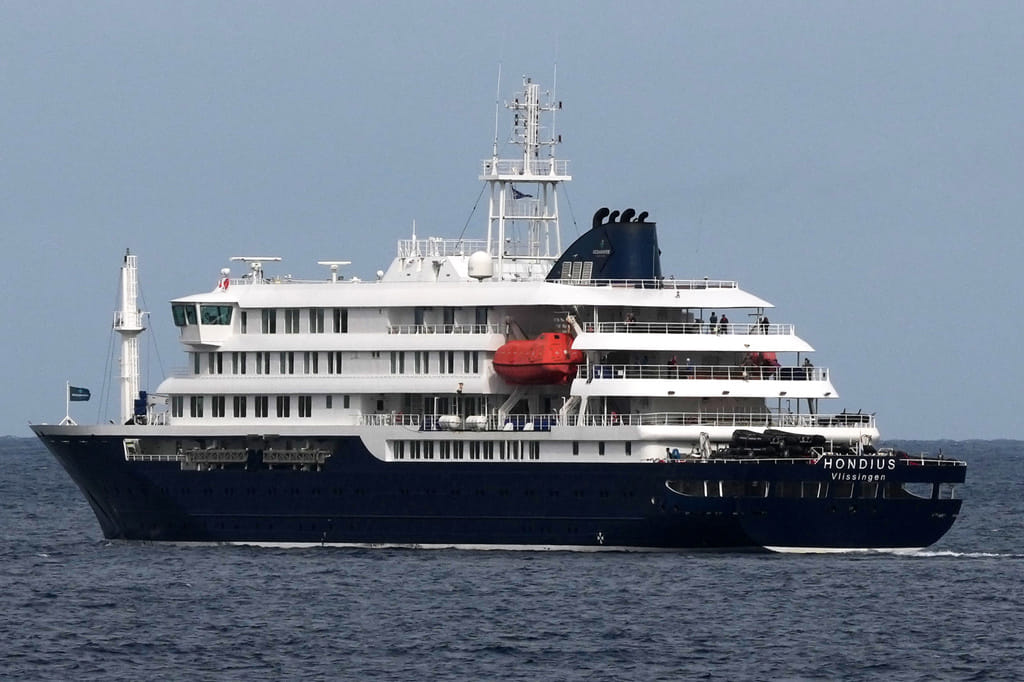
The World Health Organisation sought to calm fears of a wider health emergency on Thursday as authorities across multiple continents scrambled to trace passengers and crew linked to a deadly hantavirus outbreak aboard the cruise ship MV Hondius.
WHO chief Tedros Adhanom Ghebreyesus said the overall global risk remained “low”, even as confirmed infections and suspected cases continued to rise and international contact tracing expanded to Europe, Asia, Africa and the Americas.
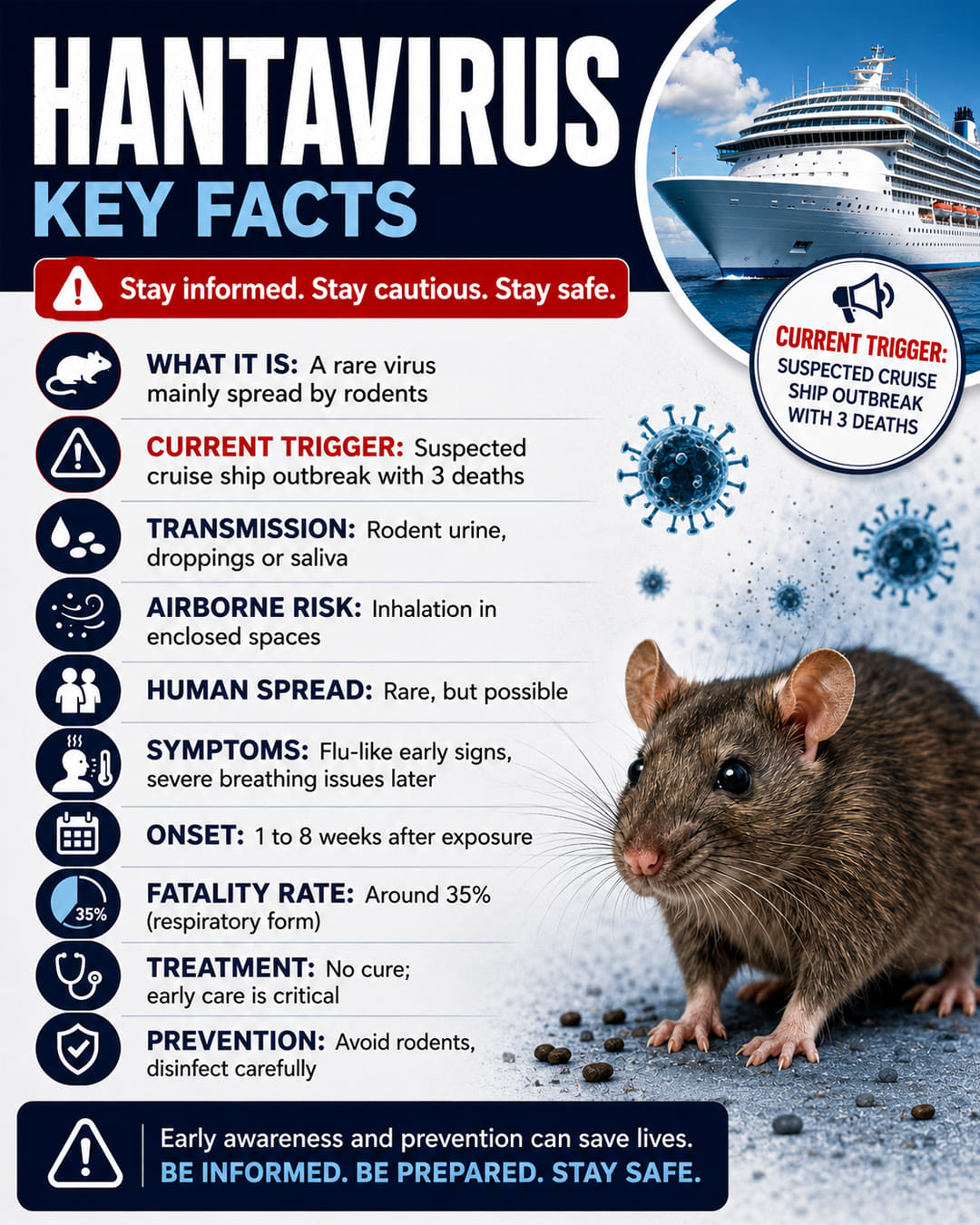
At least five confirmed infections linked to the outbreak have now been identified, while several more cases remain under investigation. Three people connected to the ship have died, including a Dutch couple and a German passenger.
The outbreak has triggered alarm because laboratory tests confirmed the presence of the Andes strain of hantavirus — the only known variant capable of spreading from person to person, although experts stress such transmission is rare and usually requires close, prolonged contact.
The ship, carrying passengers from more than 20 countries, is now sailing toward Spain’s Canary Islands, where authorities plan a tightly controlled evacuation and repatriation operation beginning next week.
What is happening on the cruise ship?
The Netherlands-operated expedition vessel left Ushuaia in Argentina on April 1 for a voyage through South Atlantic islands including South Georgia, Tristan da Cunha, Saint Helena and Ascension Island.
The first passenger — a 70-year-old Dutch man — reportedly developed symptoms on April 6 and died on board five days later. At the time, the death was believed to be from natural causes and did not initially raise alarm among passengers.
His wife later became ill, disembarked in Saint Helena and flew to Johannesburg, where she died in hospital. Hantavirus was confirmed afterward.
A third fatality, a German passenger who developed pneumonia-like symptoms, died on May 2. Her body reportedly remains aboard the vessel.
Several other passengers and crew members later showed symptoms ranging from fever and respiratory distress to pneumonia. Three suspected cases were medically evacuated from Cape Verde this week to specialised hospitals in Europe.
Officials say no symptomatic individuals currently remain aboard the ship.
Why experts are closely watching this outbreak
Hantavirus infections themselves are rare. But this outbreak is being monitored intensely because the identified strain — Andes virus — is unusual.
Most hantaviruses spread to humans through exposure to infected rodents, especially via inhalation of particles from rodent urine, droppings or saliva. Human-to-human transmission is extremely uncommon across the hantavirus family.
The Andes strain, found mainly in South America, is the major exception.
Health experts believe one or more passengers may have contracted the virus before boarding the ship in Argentina, possibly during excursions in southern regions where hantavirus cases have increased in recent years.
Authorities in Argentina are now testing rodents in areas around Ushuaia linked to the travellers’ itinerary.
Still, infectious disease specialists have repeatedly stressed that the virus is far less transmissible than Covid-19.
“It is not easily transmissible from person to person,” Dutch infectious disease specialist Karin Ellen Veldkamp told AFP.
WHO officials have echoed that message, saying close and prolonged exposure is usually needed for transmission.
International tracing operation expands
The outbreak has nonetheless triggered a complex multinational tracing effort because dozens of passengers left the ship at different ports before the disease cluster was fully understood.
Passengers who disembarked in Saint Helena later travelled onward to countries including Britain, Switzerland, Singapore and South Africa.
Among the latest developments:
Two Singapore residents who had been aboard the ship were isolated and tested after returning home. One showed mild symptoms while the other remained asymptomatic.
British authorities asked former passengers to self-isolate while tracing a small number of contacts.
Swiss officials confirmed a passenger who returned from the voyage tested positive and was hospitalised in Zurich.
A KLM flight attendant in the Netherlands was being tested after possible exposure to an infected traveller.
South African authorities continued tracing passengers from a commercial flight taken by the Dutch woman before her death.
Officials on Saint Helena have reportedly asked some close contacts to isolate for up to 45 days because hantavirus can incubate for between one and eight weeks.
What are the symptoms of hantavirus?
The disease often begins with flu-like symptoms, making early diagnosis difficult.
Patients may initially experience:
Fever
Chills
Muscle aches
Headaches
Fatigue
In severe cases, symptoms can rapidly worsen into breathing difficulties as fluid builds up in the lungs, causing hantavirus pulmonary syndrome — the form linked to the current outbreak.
Some hantavirus strains can also trigger kidney failure and haemorrhagic fever.
The mortality rate varies depending on the strain involved. According to the US Centres for Disease Control and Prevention, hantavirus pulmonary syndrome can kill roughly 35 per cent of infected patients.
There is currently no vaccine and no specific antiviral treatment.
Doctors mainly focus on supportive care, oxygen therapy and intensive monitoring, especially in severe respiratory cases.
Is this the next Covid?
Health agencies have been careful to avoid comparisons with the coronavirus pandemic.
WHO officials, the US CDC and European infectious disease experts have all emphasised that the risk of widespread global transmission remains low.
“This is not the next COVID, but it is a serious infectious disease,” WHO epidemic preparedness director Maria Van Kerkhove said.
Researchers say the limited transmissibility of Andes virus, combined with rapid tracing and isolation measures, reduces the likelihood of a major international outbreak.
However, the situation has highlighted how quickly infectious disease scares can become global because of international travel networks and cruise tourism.
Why cruise ships remain vulnerable
Cruise ships have long posed unique challenges during outbreaks because of confined environments, shared dining areas and prolonged close contact among passengers.
One former passenger told AFP that life aboard the Hondius initially continued normally after the first death, with passengers still dining together and not wearing masks because the cause was not yet known.
The WHO later said passengers were eventually isolated in cabins while disinfection and containment measures were implemented.
Spain’s Canary Islands regional government has now said the vessel will remain anchored offshore rather than dock directly at port to reduce possible transmission risks during evacuation.
Why cases may be increasing in South America
Argentina has reported a sharp increase in hantavirus infections over the past year.
The country recorded 101 infections since June 2025 — roughly double the level seen during the previous comparable period, according to health officials.
Some researchers believe climate change and environmental shifts may be contributing to greater rodent-human interaction, potentially increasing exposure risks.
The WHO says hantavirus infections remain relatively uncommon globally, with 229 cases and 59 deaths reported across the Americas in 2025.
Still, the outbreak aboard the Hondius has become one of the most internationally dispersed hantavirus investigations in recent years.
ملاحظة تحريرية | Editorial Note:
نُشر هذا المقال في الأصل بواسطة Gulf News.
خبر (Khabr) هي منصة إعلامية أردنية مرخّصة تعمل بالذكاء الاصطناعي.
نضيف قيمة تحريرية من خلال: تحليل ذكي للأخبار، ملخصات تلقائية، رواية صوتية بالذكاء الاصطناعي، ترجمة متعددة اللغات، وتدقيق الحقائق.
هدفنا جعل الأخبار أكثر وضوحاً وسهولةً للقارئ العربي.
This article was originally published by Gulf News.
Khabr is a licensed Jordanian AI-powered news platform (Registration #82086).
We add editorial value through: AI-powered news analysis, automated summaries, AI audio narration, multi-language translation (Arabic, English, French, Turkish), and AI fact-checking.
Our mission is to make news more accessible and understandable for Arabic-speaking audiences worldwide.
هذا الخبر ضمن تغطية خبر لقسم صحة.
نقدّم لك تحليلات ذكية وملخصات يومية لأهم الأخبار من مصادر موثوقة متعددة.
المصدر: Gulf News.
يوجد 6 مقالات مرتبطة بهذا الموضوع.
This article is part of Khabr's coverage of Health.
We provide AI-powered analysis, summaries, and multi-source aggregation to keep you informed.
Source: Gulf News.
Tags: Hantavirus, outbreak, global alert.
🍪 نستخدم ملفات تعريف الارتباط لتحسين تجربتك وعرض الإعلانات المخصصة. باستخدامك للموقع، فإنك توافق على سياسة ملفات تعريف الارتباط وسياسة الخصوصية.
We use cookies to enhance your experience and show personalized ads. By using this site, you agree to our Cookie Policy and Privacy Policy.
🔍
FREEFree 1GB Internet + Free International Calls
$1 trial — eSIM in 190+ countries — No roaming charges