⚡ عاجل: كريستيانو رونالدو يُتوّج كأفضل لاعب كرة قدم في العالم●⚡ أخبار عاجلة تتابعونها لحظة بلحظة على خبر●⚡ تابعوا آخر المستجدات والأحداث من حول العالم●
AI اقتراحات ذكية
AI مباشر|--مشاهد مباشر
850,977مقال404مصدر نشط224قناة مباشرة4,937خبر اليوم
آخر تحديث:منذ 4 ثواني
Global military spending continues to rise as European and Asian expenditures surge
ISLAMABAD: World military expenditure reached $2,887 billion in 2025, an increase of 2.9 per cent in real terms over 2024, according to new data published by the Stockholm International Peace Research Institute (SIPRI) on Monday.
Military spending declined in the United States but rose by 14pc in Europe and by 8.1pc in Asia and Oceania. The top three military spenders—the USA, China and Russia—spent a combined total of $1,480bn, or 51pc of the global total.
Spending in Middle East stable despite ongoing conflicts and regional rivalries
Military expenditure in the Middle East reached an estimated $218bn in 2025, just 0.1pc higher than in 2024. Besides Israel, most other major spenders in the region for which data is available increased their spending.
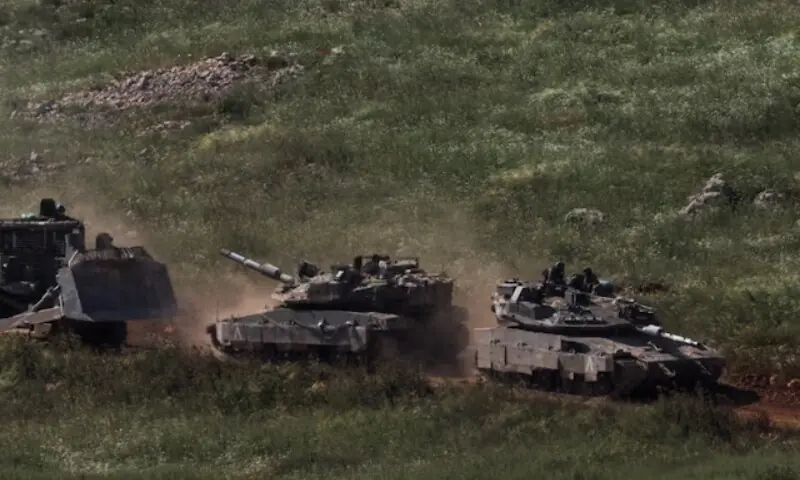
Israel’s military expenditure decreased by 4.9pc to $48.3bn, reflecting a reduction in the intensity of the Gaza conflict during 2025 following the ceasefire agreement with Hamas.
Israel’s spending remained 97pc higher than in 2022. Military spending by Turkiye grew by 7.2pc in 2025 to $30.0bn, partly driven by its ongoing military operations in Iraq, Somalia, and Syria.
Spending by Iran declined for the second consecutive year, falling by 5.6pc to $7.4 bn in 2025. The real-terms decrease was due to high annual inflation of 42pc; however, spending increased in nominal terms.
“Despite the recent conflicts, Iran’s military spending decreased in real terms due to economic difficulties,” said Zubaida Karim, a researcher with the SIPRI Military Expenditure and Arms Production Programme.
“However, official figures almost certainly understate the true level of Iran’s spending. Iran also uses off-budget oil revenues to finance its military, including the production of missiles and drones,” she said.
Rearmament and heightened insecurity fuel widespread spending increases
Global military expenditure increased to $2,887bn in 2025, the 11th consecutive year of increases, bringing the global military burden—military expenditure as a share of GDP—to 2.5pc, its highest level since 2009.
At 2.9pc, the annual spending increase was significantly smaller than the 9.7pc increase recorded in 2024. However, this slowdown is largely accounted for by a decline in US military spending. Outside the USA, total spending grew by 9.2pc in 2025.
“Global military spending rose again in 2025 as states responded to another year of wars, uncertainty, and geopolitical upheaval with large-scale armament drives,” said Xiao Liang, a researcher with SIPRI’s Military Expenditure and Arms Production Programme.
US spending shrinks as no new military aid for Ukraine approved during year
At $954bn, military spending by the United States was 7.5pc lower in 2025 than in 2024. The decline was primarily due to the fact that no new military financial assistance for Ukraine was approved during the year. This was in sharp contrast to the previous three years, during which a total of $127bn was approved.
However, the USA increased investments in both nuclear and conventional military capabilities to maintain dominance in the Western Hemisphere and deter China in the Indo-Pacific, which are key goals of the new National Security Strategy.
“The decline in US military expenditure in 2025 is likely to be short-lived,” said Nan Tian, programme director of the SIPRI Military Expenditure and Arms Production Programme.
“Spending approved by the US Congress for 2026 has risen to over $1 trillion, a substantial increase from 2025, and could rise further to $1.5 trillion in 2027 if President Trump’s latest budget proposal is accepted,” he said.
Sharp rise in European spending amid war and new NATO spending target
The main contributor to the global increase in military spending in 2025 was a 14pc rise in Europe, reaching $864bn.
Spending by Russia and Ukraine continued to grow in the fourth year of the war in Ukraine, while ongoing rearmament efforts by European NATO members led to the sharpest annual growth in spending in Central and Western Europe since the end of the cold war.
Russia’s military spending grew by 5.9pc in 2025 to $190bn, giving it a military burden of 7.5pc of GDP. Ukraine, the seventh largest spender in 2025, increased its spending by 20pc to $84.1bn, or 40pc of GDP.
“In 2025, military expenditure as a share of government spending reached the highest level ever recorded in both Russia and Ukraine,” said Lorenzo Scarazzato, researcher with the SIPRI Military Expenditure and Arms Production Programme.
“Their spending is likely to keep growing in 2026 if the war continues, with revenues from Russia’s oil sales increasing and a major European Union loan expected by Ukraine,” he added.
The 29 European NATO members spent a combined total of $559bn in 2025, and 22 of them had military spending of at least 2.0pc of GDP, according to SIPRI’s methodology.
Germany was the largest military spender in the group, with its expenditure growing by 24pc year-on-year to $114bn Germany’s military burden exceeded the 2.0pc threshold for the first time since 1990, reaching 2.3 per cent of GDP in 2025.
“In 2025, military spending by European NATO members rose faster than at any time since 1953, reflecting the ongoing pursuit of European self-reliance alongside increasing pressure from the United States to strengthen burden sharing within the alliance,” Jade Guiberteau Ricard, a researcher with SIPRI’s Military Expenditure and Arms Production Programme.
Asia and Oceania sees fastest military spending growth since 2009
Military expenditure in Asia and Oceania totaled $681bn in 2025, 8.1pc higher than in 2024—the largest annual rise since 2009. China, the world’s second largest military spender, increased its military spending by 7.4pc to $336bn. This was the 31st consecutive year-on-year increase as China continued its military modernisation drive.
Japan’s military expenditure rose by 9.7pc to reach $62.2bn in 2025, equivalent to 1.4pc of GDP —the highest share since 1958. Taiwan’s military spending rose by 14pc to $18.2bn (2.1pc of GDP), the largest annual increase since at least 1988, against a backdrop of intensifying military exercises around the island by the People’s Liberation Army.
“US allies in Asia and Oceania, such as Australia, Japan and the Philippines, are spending more on their militaries, not only due to long-standing regional tensions but also due to growing uncertainty over US support,” said Diego Lopes da Silva, senior researcher with the SIPRI Military Expenditure and Arms Production Programme.
Noting other notable developments, SIPRI data shows between 2024 and 2025, military spending by the United Kingdom decreased by 2.0pc to $89.0bn. France’s military expenditure rose by 1.5pc to $68.0bn in the same period.
India, the fifth biggest military spender in the world in 2025, increased its military spending by 8.9pc to $92.1bn. Pakistan’s military spending increased by 11pc to $11.9bn.
Saudi Arabia’s military spending increased by 1.4pc to reach $83.2bn, making it the eighth biggest military spender in the world.
Total military spending in Africa increased by 8.5pc in 2025 to reach $58.2bn. Nigeria’s military expenditure grew by 55pc to $2.1bn in 2025, as insurgencies and extremist violence contributed to worsening insecurity.
Guyana’s military expenditure increased by 16pc to $248 million in 2025, fueled by escalating tensions with Venezuela over the Essequibo region. Venezuela’s military spending remains unknown due to a lack of publicly available data.
ملاحظة تحريرية | Editorial Note:
نُشر هذا المقال في الأصل بواسطة Dawn.
خبر (Khabr) هي منصة إعلامية أردنية مرخّصة تعمل بالذكاء الاصطناعي.
نضيف قيمة تحريرية من خلال: تحليل ذكي للأخبار، ملخصات تلقائية، رواية صوتية بالذكاء الاصطناعي، ترجمة متعددة اللغات، وتدقيق الحقائق.
هدفنا جعل الأخبار أكثر وضوحاً وسهولةً للقارئ العربي.
This article was originally published by Dawn.
Khabr is a licensed Jordanian AI-powered news platform (Registration #82086).
We add editorial value through: AI-powered news analysis, automated summaries, AI audio narration, multi-language translation (Arabic, English, French, Turkish), and AI fact-checking.
Our mission is to make news more accessible and understandable for Arabic-speaking audiences worldwide.
هذا الخبر ضمن تغطية خبر لقسم اقتصاد.
نقدّم لك تحليلات ذكية وملخصات يومية لأهم الأخبار من مصادر موثوقة متعددة.
المصدر: Dawn.
يوجد 6 مقالات مرتبطة بهذا الموضوع.
This article is part of Khabr's coverage of Economy.
We provide AI-powered analysis, summaries, and multi-source aggregation to keep you informed.
Source: Dawn.
Tags: military spending, global economy, expenditures.
🍪 نستخدم ملفات تعريف الارتباط لتحسين تجربتك وعرض الإعلانات المخصصة. باستخدامك للموقع، فإنك توافق على سياسة ملفات تعريف الارتباط وسياسة الخصوصية.
We use cookies to enhance your experience and show personalized ads. By using this site, you agree to our Cookie Policy and Privacy Policy.
FREEFree 1GB Internet + Free International Calls
$1 trial — eSIM in 190+ countries — No roaming charges