Frontiers Planet Prize 2026: How GCC carbon capture innovation is powering net-zero industrial growth
•As the UAE strengthens its role in global climate innovation, groundbreaking research from Heriot Watt University is helping shape the future of industrial decarbonisation.
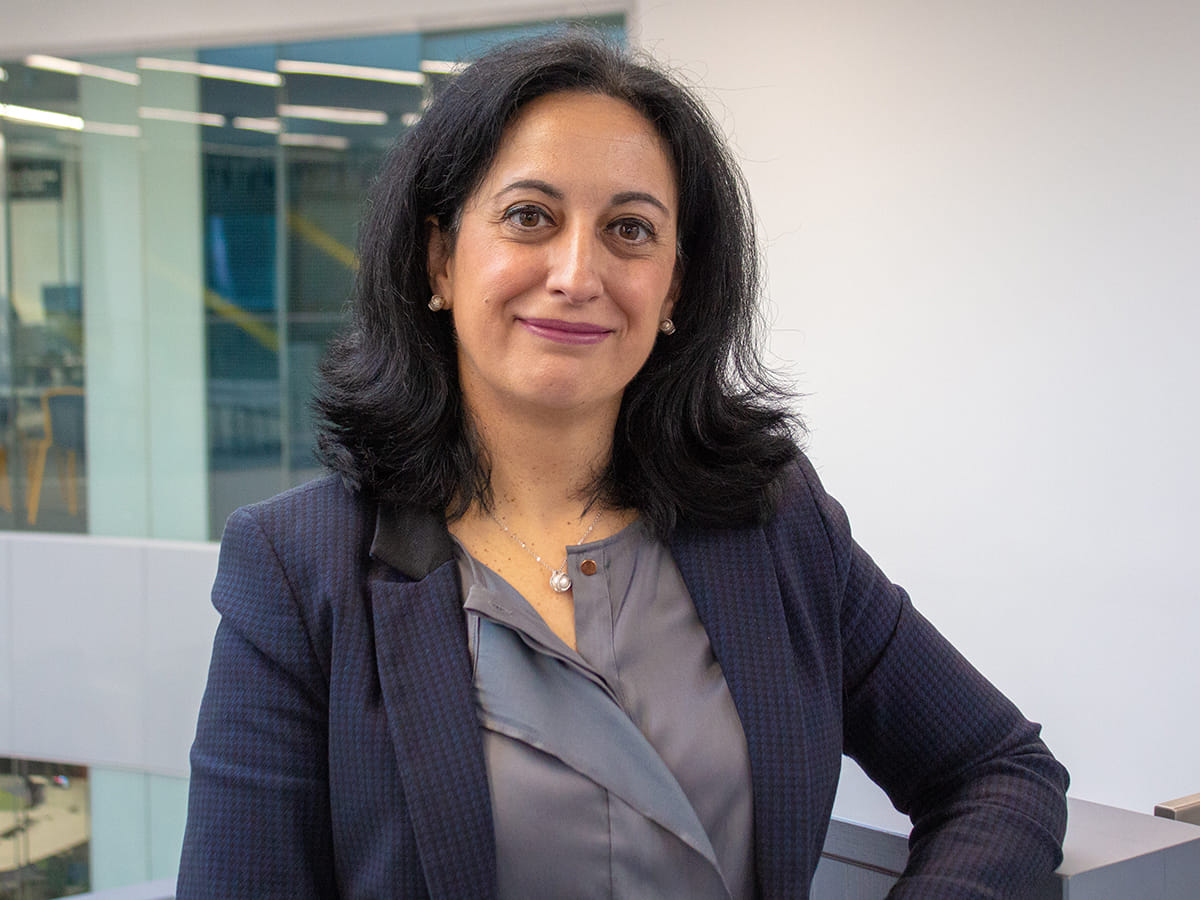
•Professor Mercedes Maroto-Valer, Director of the Industrial Decarbonisation Research & Innovation Centre (IDRIC), is one of the leading voices behind a landmark study recognised through the UAE’s Nati...
•Her team’s work examines the chemistry and real-world deployment challenges of carbon capture technologies, an area increasingly critical to secure the economic competitiveness of the region’s heavy i...
هذا الخبر من Gulf News. خبر يقدم أدوات ذكاء اصطناعي للتلخيص والترجمة والاستماع.
المصدر: Gulf News | Source: Gulf NewsAs the UAE strengthens its role in global climate innovation, groundbreaking research from Heriot Watt University is helping shape the future of industrial decarbonisation. Professor Mercedes Maroto-Valer, Director of the Industrial Decarbonisation Research & Innovation Centre (IDRIC), is one of the leading voices behind a landmark study recognised through the UAE’s National Champion award at the Frontiers Planet Prize.
Her team’s work examines the chemistry and real-world deployment challenges of carbon capture technologies, an area increasingly critical to secure the economic competitiveness of the region’s heavy industries and achieving net zero ambitions. In this Q&A, Professor Maroto-Valer explains the science, the infrastructure needs, and the opportunities ahead for the GCC.
Your research evaluates five emerging carbon capture technologies, what differentiates these solutions in terms of real-world viability and scalability?
Our paper uniquely bridges the gap between fundamental chemistry and industrial deployment for five carbon capture technologies: absorption, adsorption, membrane separation, cryogenic gas separation, and electroswing systems. In addition to chemical performance, our study evaluates industrial readiness, including commercial maturity, retrofitting capacity, footprint, environmental impact, and capital/operational costs.
Absorption technologies are well-established and suitable for retrofitting industrial facilities, but they are constrained by energy-intensive solvent regeneration. Adsorption presents lower energy requirements, though scaling is challenged by material degradation and heat management issues. Membrane separation is highly modular and compact, ideal for space-limited retrofits, but costs rise with low-concentration emissions due to trade-offs between permeability and selectivity.
Cryogenic gas separation produces liquid CO₂ directly, removing compression needs, but high energy and capital costs restrict its use to specialised industries. Electroswing technologies show promise for modular capture and renewable integration, yet remain commercially immature and costly for widespread deployment.
In summary, there is no universal technology winner. Successful decarbonisation of hard-to-abate sectors such as cement, steel, and chemicals will depend on matching chemically driven constraints with the specific characteristics of each emission stream.
A key challenge you highlight is the variability of industrial exhaust gases. How does this complexity impact the design and deployment of carbon capture systems?
Industrial exhaust gases differ widely in CO₂ concentration, temperature, pressure, humidity, and contaminants depending on the sector, making it very challenging for one single carbon capture technology to work efficiently across all streams. Our study concludes that variability in exhaust gas profiles mandates highly customized carbon capture design, and therefore, scalability relies on flexible, site-specific solutions rather than universal approaches.
In the paper we introduce a "chemistry-to-deployment" framework, connecting molecular constraints of each capture technology directly to specific industrial exhaust characteristics. In other words, we move beyond generic technology comparisons by matching chemical mechanisms to challenging emissions, offering a practical guide for decarbonisng hard-to-abate sectors.
From your perspective, has carbon capture now moved beyond a scientific challenge to an infrastructure and execution issue? What does this shift mean in practice?
Significant advances in chemistry, materials science, and process engineering have enabled effective carbon capture at both pilot and commercial levels. The main challenge is scaling deployment across industries, which requires robust infrastructure, skilled labour, regulation, and significant investment.
According to the Global CCS Institute's 2025 data, there has been a 54% increase in operational facilities and over 700 projects in progress, spanning sectors like cement and waste-to-energy. The focus has shifted from proving technology to securing viable business models and cross-border systems. In the UK, government support of nearly £22 billion is driving execution on shared networks such as East Coast Cluster and HyNet, emphasizing supply chain development and extensive pipeline and storage infrastructure.
Carbon capture is critical for key industries, including cement, steel, and chemicals, that form the foundation of our economy. It's not only an environmental requirement, but also crucial for their continued existence, protecting skilled jobs, and opening up new markets. This transition represents a monumental green growth opportunity, ensuring we avoid deindustrialisation while securing a resilient, competitive and prosperous economic future.
Which sectors in the GCC, such as oil and gas, cement, or heavy industry, are best positioned to adopt carbon capture at scale, and why?
The GCC is uniquely positioned to become a global leader in carbon capture deployment because it combines concentrated industrial emissions, existing energy infrastructure, abundant capital, deep engineering expertise, and vast geological storage. Major regional developments include Saudi Arabia’s Jubail CCS hub and Qatar Energy’s large-scale CCS expansion linked to LNG production.
Oil and gas facilities are primed for CCS adoption, with existing pipelines and expertise, as well as concentrated CO₂ streams that lower capture costs. Using captured CO₂ for Enhanced Oil Recovery (EOR) provides an immediate commercial incentive. Large industrial hubs in the GCC, especially steel and aluminium sectors, offer economies of scale for retrofitting capture technology, though their exhaust complexity presents challenges. The world’s first commercial-scale CCS project for the steel industry in Mussafah captures up to 800,000 tonnes of CO2 annually from Emirates Steel Industries. In cement production, CCUS is essential due to calcination’s unavoidable CO₂ emissions.
The UK’s Industrial Decarbonisation Research and Innovation Centre (IDRIC, http://www.idric.org) plays a significant role by advancing comprehensive, systems-based industrial decarbonisation strategies. This approach is particularly pertinent to the GCC, given its concentration of industrial zones and export-oriented energy infrastructure, which present strong opportunities to develop regional low-carbon hubs. Such hubs can facilitate the rapid expansion of carbon capture and storage (CCS), enhance economic competitiveness, and contribute to long-term net-zero objectives.
What role do AI and data-driven monitoring play in improving the efficiency and reliability of carbon capture technologies?
Artificial intelligence and data-driven monitoring are critical enablers for advancing carbon capture technologies. As CCS scales across industry, the challenge is no longer simply capturing CO₂, but operating highly complex systems efficiently, reliably, and at lower cost. AI allows operators to process large volumes of real-time industrial data to optimise capture rates, reduce energy penalties, and predict operational issues before they disrupt performance.
Our research at IDRIC leverages artificial intelligence and digital twin technologies to advance material discovery and enhance the integration of technological pathways (carbon capture, hydrogen, transport, and heat networks) aimed at decarbonising industrial clusters. Several IDRIC projects have concentrated on data-driven decision-making, infrastructure planning, and operational optimisation.
Looking ahead, what are the next critical steps needed to move carbon capture from pilot projects to widespread commercial deployment?
The next critical steps in carbon capture need to focus on accelerating integration, reducing costs, and achieving systems-scale implementation. Policy certainty and long-term investment frameworks are also very important for ensuring stable carbon-pricing signals, infrastructure funding, and regulatory alignment.
We need to consider that carbon capture is not only a climate mitigation technology, but also a strategic enabler of economic growth and resilience. Investment in capture plants, transport infrastructure, and storage hubs creates new engineering, construction, and service-sector opportunities. This aligns with systems-based approaches such as those developed through IDRIC, where industrial decarbonisation is framed as a driver of innovation, regional development, and supply-chain transformation.
ملاحظة تحريرية | Editorial Note: نُشر هذا المقال في الأصل بواسطة Gulf News. خبر (Khabr) هي منصة إعلامية أردنية مرخّصة تعمل بالذكاء الاصطناعي. نضيف قيمة تحريرية من خلال: تحليل ذكي للأخبار، ملخصات تلقائية، رواية صوتية بالذكاء الاصطناعي، ترجمة متعددة اللغات، وتدقيق الحقائق. هدفنا جعل الأخبار أكثر وضوحاً وسهولةً للقارئ العربي.
This article was originally published by Gulf News. Khabr is a licensed Jordanian AI-powered news platform (Registration #82086). We add editorial value through: AI-powered news analysis, automated summaries, AI audio narration, multi-language translation (Arabic, English, French, Turkish), and AI fact-checking. Our mission is to make news more accessible and understandable for Arabic-speaking audiences worldwide.