From neighbourhood fight to hospital duty: Delhi High Court quashes 2018 FIR, orders community service
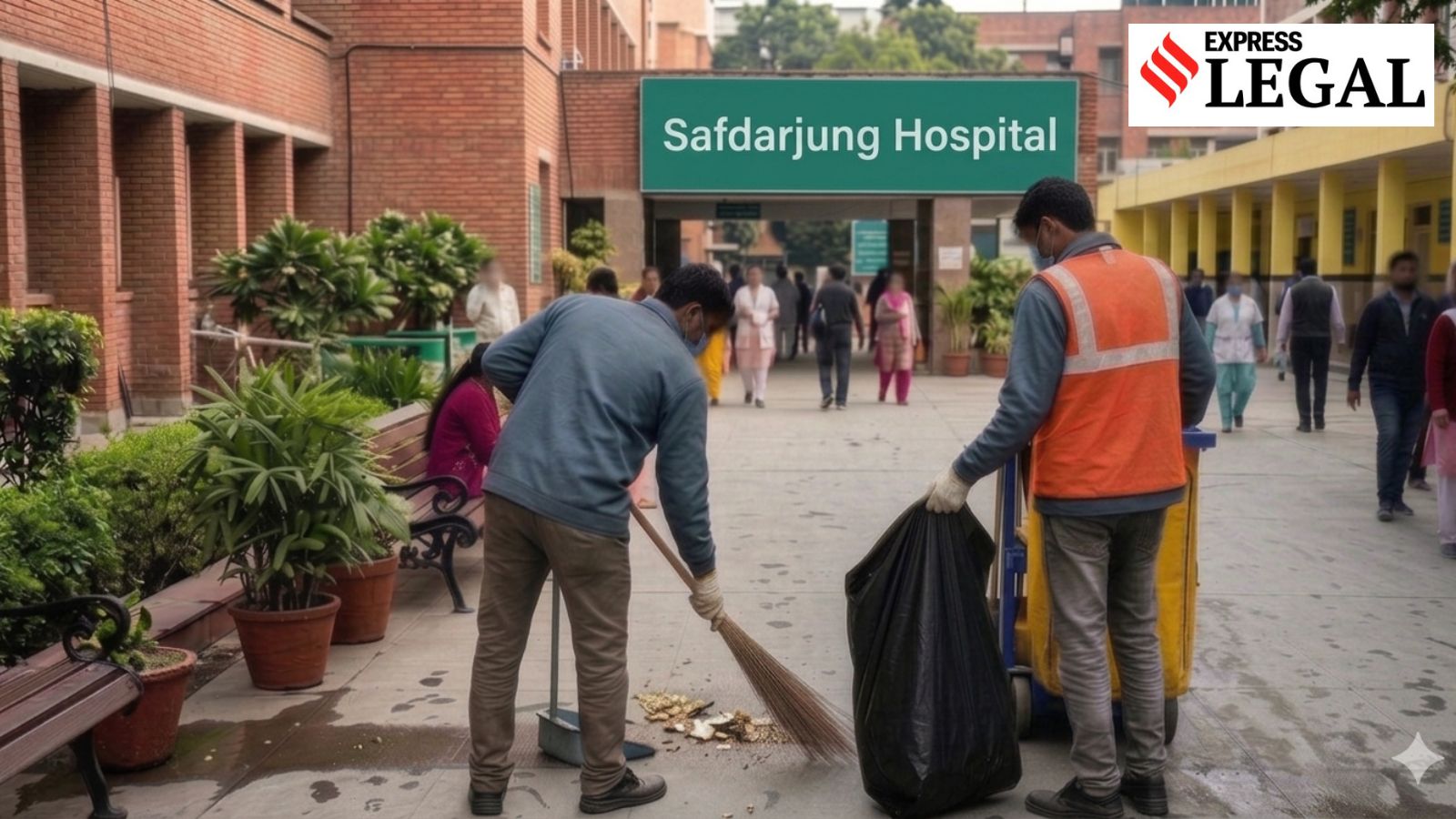
Weather ePaper Today’s Paper Journalism of Courage Home ePaper India Cities UPSC Premium Entertainment Politics Sports World Explained Opinion Business Lifestyle Tech Subscribe Sign In TrendingUPSC OfferIPL 2026US NewsPuzzles & GamesLegal NewsFresh TakeHealthResearch🎙️ Podcast Advertisement function checkAndLoadWindowSizeScript() { if (window.jQuery) { // jQuery is loaded, include your script jQuery(document).ready(function($) { // Your existing script for checking window width if (window.innerWidth) var page_w = window.innerWidth; else if (document.all) var page_w = document.body.clientWidth; if (page_w > 1024) { $(".add-left, .add-right").show(); } else { $(".add-left, .add-right").hide(); } }); } else { // jQuery is not loaded, check again after 0.2 seconds setTimeout(checkAndLoadWindowSizeScript, 200); } } // Initial call to the function checkAndLoadWindowSizeScript(); NewsLegalFrom neighbourhood fight to hospital duty: Delhi High Court quashes 2018 FIR, orders community service From neighbourhood fight to hospital duty: Delhi High Court quashes 2018 FIR, orders community service The petitioners were also directed to deposit Rs 25,000 as costs with the Delhi High Court Bar Association, noting that considerable judicial time had already been spent on the matter. Written by: Vineet Upadhyay4 min readNew DelhiApr 15, 2026 08:00 AM IST The case originated from an incident on May 13, 2018, when a dispute over a parked scooty escalated into violence between neighbours in Delhi’s Sunlight Colony. (Image generated using AI) Make us preferred source on Google Whatsapp twitter Facebook Reddit PRINT Delhi High Court news: The Delhi High Court brought an eight-year-old neighbourhood dispute to a close, quashing a 2018 assault FIR after noting that the parties had amicably settled their differences, and directed the two accused to undertake community service at Safdarjung Hospital as a measure of accountability and reconciliation. Justice Prateek Jalan was hearing a petition seeking the quashing of a First Information Report (FIR) registered in 2018 at Sunlight Colony Police Station under charges pertaining to voluntarily causing grievous hurt and wrongful restraint of the Indian Penal Code (IPC). “Continuation of the criminal proceedings would serve no useful purpose and is unlikely to culminate in a conviction…it would result in an unnecessary expenditure of judicial time and impede the restoration of harmony between the parties,” the Delhi High Court observed on April 7. “The petitioners are directed to undertake community service, in addition to depositing costs, as stated above. The petitioners are, accordingly, directed to report to the Medical Superintendent, Safdarjung Hospital, New Delhi, on 17.04.2026 at 11:30 AM,” the Delhi High Court said. Additionally, the court directed the petitioners to deposit Rs 25,000 as costs with the Delhi High Court Bar Association within two weeks, noting that considerable judicial time had already been spent on the matter. It added that the two petitioners shall perform community service for three hours per session, for eight sessions, over the next three months and the medical superintendent shall assign appropriate duties to them, and issue a certificate of compliance upon completion of the period. The case originated from an incident on May 13, 2018, when a dispute over a parked scooty escalated into violence between neighbours in Delhi’s Sunlight Colony. According to the FIR, one of the petitioners allegedly broke the complainant’s car window with a brick, leading to a physical altercation. Following the investigation, a chargesheet was filed under Sections 325 (voluntarily causing grievous hurt), 341 (wrongful restraint), 427 (mischief causing damage to the amount of fifty rupees) and 34 (common intention) of the IPC. Medical records placed before the court showed that the complainant suffered a fracture, though there were no lasting injuries, and no weapons were used in the incident. The parties entered into a ‘Memorandum of Understanding’ (MoU) on December 18, 2025, agreeing to resolve their disputes amicably. As part of the settlement, the petitioners paid Rs 5.5 lakh to the complainant, who confirmed receipt of the amount before the Delhi High Court and expressed no objection to the quashing of proceedings. The court also verified the voluntary nature of the settlement and the presence of both parties in court. The Delhi High Court relied on settled legal principles laid down by the Supreme Court in cases such as Gian Singh v State of Punjab and Narinder Singh v State of Punjab, which permit quashing of criminal proceedings in cases of a predominantly private nature where parties have resolved their disputes. The court noted that the present matter arose out of a misunderstanding between neighbours and did not involve any overriding public interest or serious offence that would bar such relief. Highlighting a balanced approach, the Delhi High Court combined relief with responsibility, quashing the FIR while imposing both monetary costs and community service. It observed that continuation of proceedings would be futile and would only burden the judicial system without advancing justice. The order reflects a growing judicial trend toward restorative justice, particularly in cases involving personal disputes, where reconciliation is prioritised alongside measures to instil social responsibility. With the FIR and all consequential proceedings quashed, the court cancelled the next date of hearing, May 22, 2026, formally bringing the long-pending dispute to an end. Vineet Upadhyay is an Assistant Editor with The Indian Express, where he leads specialized coverage of the Indian judicial system. Expertise Specialized Legal Authority: Vineet has spent the better part of his career analyzing the intricacies of the law. His expertise lies in "demystifying" judgments from the Supreme Court of India, various High Courts, and District Courts. His reporting covers a vast spectrum of legal issues, including: Constitutional & Civil Rights: Reporting on landmark rulings regarding privacy, equality, and state accountability. Criminal Justice & Enforcement: Detailed coverage of high-profile cases involving the Enforcement Directorate (ED), NIA, and POCSO matters. Consumer Rights & Environmental Law: Authoritative pieces on medical negligence compensation, environmental protection (such as the "living person" status of rivers), and labor rights. Over a Decade of Professional Experience: Prior to joining The Indian Express, he served as a Principal Correspondent/Legal Reporter for The Times of India and held significant roles at The New Indian Express. His tenure has seen him report from critical legal hubs, including Delhi and Uttarakhand. ... Read Moreالمصدر: Indian Express | Source: Indian Express
ملاحظة تحريرية | Editorial Note: نُشر هذا المقال في الأصل بواسطة Indian Express. خبر (Khabr) هي منصة إعلامية أردنية مرخّصة تعمل بالذكاء الاصطناعي. نضيف قيمة تحريرية من خلال: تحليل ذكي للأخبار، ملخصات تلقائية، رواية صوتية بالذكاء الاصطناعي، ترجمة متعددة اللغات، وتدقيق الحقائق. هدفنا جعل الأخبار أكثر وضوحاً وسهولةً للقارئ العربي.
This article was originally published by Indian Express. Khabr is a licensed Jordanian AI-powered news platform (Registration #82086). We add editorial value through: AI-powered news analysis, automated summaries, AI audio narration, multi-language translation (Arabic, English, French, Turkish), and AI fact-checking. Our mission is to make news more accessible and understandable for Arabic-speaking audiences worldwide.