From Dh2,000 job to restaurant owner in Dubai: How a waiter built a global business
•When Takahiro Mogi arrived in Dubai eight years ago, he chose to start from zero.
•Leaving a managerial role at a Japanese restaurant in Singapore, the 34-year-old took up a Dh2,000 a month kitchen job, lived in shared accommodation, and began studying the city’s food and beverage s...
•“We will support you with money, but you need to challenge yourself and understand Dubai,” his former manager in Singapore and Japan told him at the time.
هذا الخبر من Khaleej Times. خبر يقدم أدوات ذكاء اصطناعي للتلخيص والترجمة والاستماع.
المصدر: Khaleej Times | Source: Khaleej TimesWhen Takahiro Mogi arrived in Dubai eight years ago, he chose to start from zero. Leaving a managerial role at a Japanese restaurant in Singapore, the 34-year-old took up a Dh2,000 a month kitchen job, lived in shared accommodation, and began studying the city’s food and beverage sector from the ground up.
His decision was shaped by kodawari, a Japanese principle that centres on discipline and constant improvement. “We will support you with money, but you need to challenge yourself and understand Dubai,” his former manager in Singapore and Japan told him at the time. That manager would later become his business partner.
Stay up to date with the latest news. Follow KT on WhatsApp Channels.
Starting from the bottom
Mogi arrived in 2018 and joined a Japanese restaurant owned by a Taiwanese operator. He rotated between kitchen and service roles, learning how teams worked, how customers behaved, and what it takes to run a restaurant in Dubai.
Within six months, he felt ready. He called his former manager and asked him to honour his promise to support a new venture.
By the last quarter of 2018, Mogi opened his first restaurant.
Expansion and timing
The following year brought steady growth, with plans already in place to expand. Then the pandemic hit in 2020, forcing the industry into uncertainty.
But Dubai’s quick recovery created an unexpected opening. As rents dropped, Mogi moved ahead with expansion plans, opening more branches through 2021.
That decision helped shape what is now a growing international operation. Today, his company runs 10 restaurant locations, operates across 10 countries, and employs around 300 people.
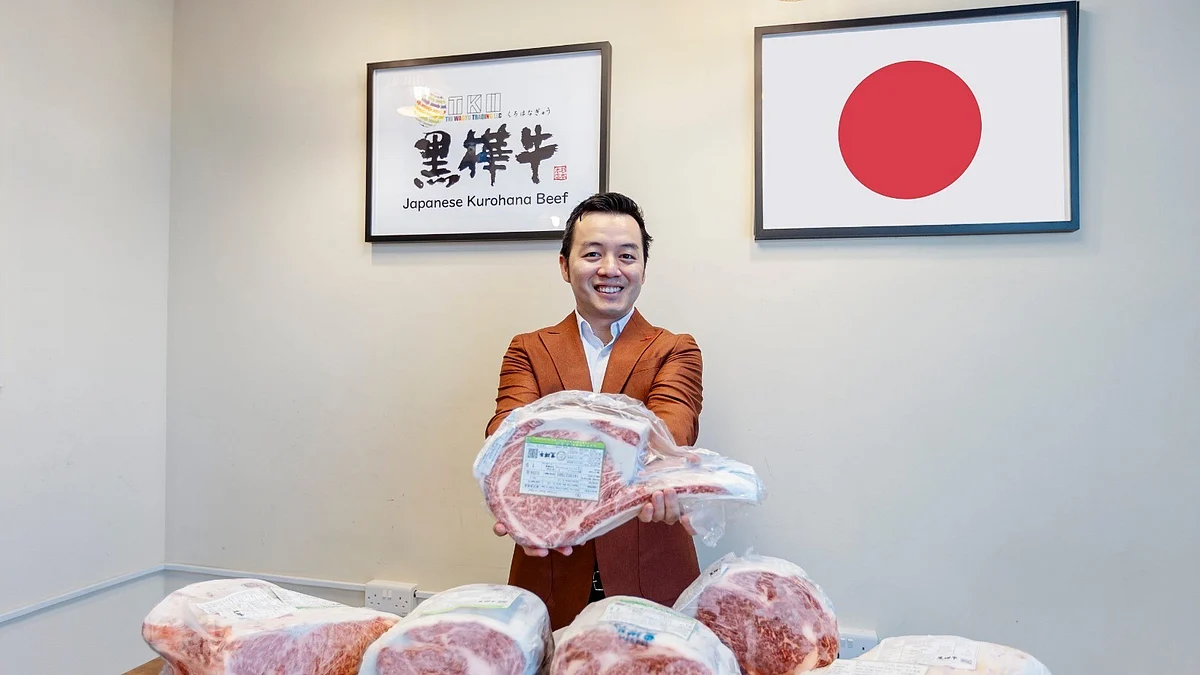
The business also imports around 100 tonnes of Japanese Wagyu beef annually from Kumamoto Prefecture, supplying the UAE and wider Middle East.
Investing in people
Mogi credits much of his growth to one thing he noticed early on while working in the kitchen: the need for structured learning.
“The key reason our business continues to grow stably and sustainably is our continuous study programme,” he said.
Employees are encouraged to choose their own learning paths, while professional trainers are brought in to deliver specialised sessions. Medical professionals and hospitality experts also conduct practical training inside restaurants.
“The focus is not only on knowledge, but also on developing good judgment, responsibility, and personal growth,” he said.
This approach has been central to the company’s identity. In a previous interview with Khaleej Times, Mogi said the goal is not only to deliver authentic Japanese food, but to build people.
“We not only serve world-class cuisine, but also ensure employee empowerment and well-being through continuous learning,” he said. “If a restaurant wants the highest customer satisfaction, employee satisfaction must come first.”
The company has partnered with educational institutions to offer staff free courses in culinary arts, business operations, accounting, and even creative fields such as photography and social media. Tuition and related costs are covered by the company.
For employees like Filipino chefs Gary Pangilinan and Noah Jay Cantuia, the system has helped them advance in rank through continuous education.
Managing uncertainty
Plans for further growth in 2026 were affected by regional tensions, which have added pressure on the restaurant sector. But Mogi said preparation has helped limit disruption.
“We expected the tension in the Middle East and prepared in advance, so we have secured enough stock,” he said.
He added that supply chains remain stable, as beef is shipped frozen from Japan, reducing immediate risks.
“Business is about balancing foresight and risk management,” he said.
While acknowledging concerns, he emphasised the importance of internal stability. “I trust my managers and employees. We value communication, stability, and continuity. We do our best to protect jobs and keep the team united.”
Staying the course
For Mogi, staying in Dubai during difficult periods is part of leadership.
“It would be embarrassing to stay only when times are good and leave when times are bad,” he said. “In difficult situations, the head of the company should stay on the front line.”
He described Dubai as a resilient city with strong leadership and global connectivity, adding that he remains confident in its long-term prospects.
For now, the focus is inward.
“We are reviewing the basics and rebuilding our operations from the ground up,” he said. “We are also using this time to improve our QSC, quality, service, and cleanliness.”
For a restaurateur who once started again from the bottom, the strategy remains consistent: keep learning, stay disciplined, and build for the long term.
ملاحظة تحريرية | Editorial Note: نُشر هذا المقال في الأصل بواسطة Khaleej Times. خبر (Khabr) هي منصة إعلامية أردنية مرخّصة تعمل بالذكاء الاصطناعي. نضيف قيمة تحريرية من خلال: تحليل ذكي للأخبار، ملخصات تلقائية، رواية صوتية بالذكاء الاصطناعي، ترجمة متعددة اللغات، وتدقيق الحقائق. هدفنا جعل الأخبار أكثر وضوحاً وسهولةً للقارئ العربي.
This article was originally published by Khaleej Times. Khabr is a licensed Jordanian AI-powered news platform (Registration #82086). We add editorial value through: AI-powered news analysis, automated summaries, AI audio narration, multi-language translation (Arabic, English, French, Turkish), and AI fact-checking. Our mission is to make news more accessible and understandable for Arabic-speaking audiences worldwide.