From Antalya, Sharaa Pitches a New Syria: Neutral, Investable, and Open to a Security Deal with Israel
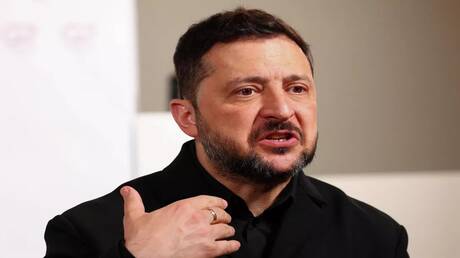
المصدر: The Syrian Observer | Source: The Syrian ObserverAt the Antalya Diplomacy Forum on Friday, Syrian President Ahmad al-Sharaa offered one of his clearest public outlines yet of the Syria he hopes to shape after years of war: a state that avoids regional alignments, engages global powers without binding itself to any of them, seeks a security arrangement with Israel that restores the 1974 lines, and reimagines its geography not as a battlefield but as a bridge for trade, energy, and investment.
His appearance at the forum’s fifth edition, held under the theme “Managing Uncertainty in a Changing World,” went beyond routine diplomacy. It was a deliberate effort to present Syria as a country attempting to move past its long role as a venue for proxy conflicts and to introduce itself instead as a state with strategic utility, economic potential, and a new political vocabulary.
Sharaa described the region as living through exceptional and deeply rooted turmoil, arguing that its crises cannot be resolved through conventional approaches. Syria’s answer, he said, is to avoid lining up with any camp and to pursue a different role altogether: that of a connector between major powers. Within that framework, he said Damascus now maintains strong relations with the United States, Russia, China, Britain, France, Germany, and several regional states.
That framing was central to the message he wanted to convey. Syria, he said, is writing a new chapter in its history. The country that once served as a “mailbox for conflicts” now aims to become a platform for sustainable investment. He acknowledged the destructive role Iran played in Syria through its support for the former regime against the Syrian people, yet insisted that Damascus had deliberately stayed out of the recent confrontation involving Iran, the United States, and Israel. More than that, he said Syria worked to prevent the conflict from erupting because of the devastation it would have unleashed across the region.
The broader thrust of his remarks was unmistakable: Syria wants to be seen as a force for de-escalation. Sharaa said his country is pushing for regional stability and for the resolution of disputes through diplomacy rather than confrontation. He praised President Donald Trump’s efforts to stop the war in Lebanon and expressed hope that the region might enter a phase of political course correction that spares it yet another cycle of destruction.
The most politically sensitive portion of his address concerned the occupied Golan Heights. Sharaa said any recognition of Israel’s claim to the Syrian Golan is null and void, reaffirming that the territory remains occupied Syrian land under international law. He accused Israel of violating the 1974 disengagement agreement and said Syria is now working toward a new security arrangement that would secure Israel’s withdrawal from areas it occupied after the fall of the former regime on December 8, 2024, and restore the 1974 lines.
He suggested that such an arrangement could take one of two forms: either a revival of the 1974 disengagement framework or a new agreement establishing rules that guarantee security for both sides. If such an understanding is reached, he added, Syria could then enter long-term negotiations over the broader question of the occupied Golan. The formulation combined a firm assertion of sovereignty with a clear signal that Damascus is open to structured, security-based diplomacy.
At home, Sharaa paired his regional messaging with signs of institutional recovery. He announced that the first session of Syria’s elected parliament would be held at the end of the month, presenting it as part of a broader effort to rebuild state institutions after the collapse of the old order.
He also addressed northeastern Syria, saying implementation continues on an agreement to integrate the Syrian Democratic Forces into state institutions. He acknowledged that obstacles remain, but insisted that the direction is clear: all sides, he said, are moving toward the same endpoint of territorial unity and national stability.
In one of the session’s more striking claims, Sharaa said the last American military vehicle left Syrian territory the previous day and that northeastern Syria is now free of foreign bases. Whether intended primarily for domestic or foreign audiences, the message was clear: the Syrian state wants to be seen as reclaiming sovereignty while reintegrating armed and semi-autonomous realities into a central political framework.
Economics occupied a substantial share of his remarks, and here too the language was deliberate. Syria, he said, is trying to build an environment that attracts investment and improves economic conditions while relying first on its own capacities. External aid, if it comes, should not be politicized or tied to conditions. The country, in his telling, has moved out of the phase of open conflict and into an environment stable enough to be taken seriously by investors.
Sharaa linked that claim to geography. Syria’s location, he argued, has renewed value in a world increasingly preoccupied with supply-chain security, East-West connectivity, and the safe movement of energy. He said Syria has already begun exporting some Iraqi oil shipments and that several countries are exploring regional routes through Syrian territory to move their goods. He invoked the “Four Seas” project as one example of the kinds of schemes now under discussion, presenting Syria not as a passive transit corridor but as an emerging node in wider regional thinking about logistics and trade.
He also highlighted Syria’s agricultural potential, human resources, and accumulated expertise, arguing that these endowments make it well placed to become an important investment destination across multiple sectors. As an example of growing external interest, he pointed to an agreement with Saudi Arabia’s STC to develop telecommunications and internet infrastructure.
Taken together, Sharaa’s appearance in Antalya amounted to a political pitch as much as a policy statement. He was speaking to several audiences at once: foreign governments weighing whether Syria can be reintegrated, investors asking whether it is stable enough to matter, and Syrians themselves, who have heard grand declarations before and now want evidence that the language of transition can be matched by institutions, security, and economic change.
The Syria he described no longer defines itself through permanent confrontation or strategic dependency. It is a Syria seeking room to maneuver between rival blocs, trying to convert diplomacy into stability and stability into economic relevance. Whether that project can withstand the pressures surrounding it is another matter. But in Antalya, Sharaa sought to make one point unmistakably clear: Damascus wants to be seen not as a battleground, but as a state returning to the world on different terms.
This article was translated and edited by The Syrian Observer. The Syrian Observer has not verified the content of this story. Responsibility for the information and views set out in this article lies entirely with the author.
The post From Antalya, Sharaa Pitches a New Syria: Neutral, Investable, and Open to a Security Deal with Israel first appeared on The Syrian Observer.
ملاحظة تحريرية | Editorial Note: نُشر هذا المقال في الأصل بواسطة The Syrian Observer. خبر (Khabr) هي منصة إعلامية أردنية مرخّصة تعمل بالذكاء الاصطناعي. نضيف قيمة تحريرية من خلال: تحليل ذكي للأخبار، ملخصات تلقائية، رواية صوتية بالذكاء الاصطناعي، ترجمة متعددة اللغات، وتدقيق الحقائق. هدفنا جعل الأخبار أكثر وضوحاً وسهولةً للقارئ العربي.
This article was originally published by The Syrian Observer. Khabr is a licensed Jordanian AI-powered news platform (Registration #82086). We add editorial value through: AI-powered news analysis, automated summaries, AI audio narration, multi-language translation (Arabic, English, French, Turkish), and AI fact-checking. Our mission is to make news more accessible and understandable for Arabic-speaking audiences worldwide.