Faisal Islam: Why the government is relaxed about Chinese car imports
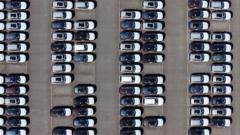
Faisal Islam: Why the government is relaxed about Chinese car imports15 minutes agoShareSaveAdd as preferred on GoogleFaisal IslamEconomics editorGetty ImagesIn a Somerset field, with a distant view on one side of Hinckley Point nuclear power station (under construction) and on the other side the windswept grassy folds of Glastonbury Tor, lies the future of the British car industry. It is possibly also the foundation of our future economic resilience, at what is a troubled moment in the global economy.Right now the site is a lattice of hulking steel frames covering an area the size of 30 football pitches, interspersed with cranes, earth movers and drainage channels. From next year, it will be the Agratas electric vehicles battery facility, the UK's largest gigafactory, manufacturing cells for electric vehicle batteries, that will go on to power Jaguar Land Rover's electric vehicle fleet.For successive governments this investment from India's Tata Group has been a £5bn triumph of industrial policy, but it is also a minimum requirement to secure the future of British car manufacturing.Peter Kyle, second from left, at the Agratas facilityThat's a sector that came in for a bit of a shock this week with the release of data that showed that a Chinese car - the Jaecoo 7 - was the number one car in the UK for the first time ever.The Jaecoo 7 is a medium-sized petrol or hybrid SUV. But Chinese imports have more generally been of electric vehicles, and the numbers are as remarkable. Chinese-owned brands have made up one in seven new UK cars, about 15% so far in 2026. Five years ago this was 1.3%.The news about the Jaecoo came in the same week Business Secretary Peter Kyle was visiting the Agratas site to confirm a £380m grant to the company.Getty ImagesI wanted to hear his thoughts on this wave of Chinese imports: was it good for consumers or bad? What about for governments? They are questions I've been grappling with for three years.The government&#x...المصدر: BBC News | Source: BBC News
ملاحظة تحريرية | Editorial Note: نُشر هذا المقال في الأصل بواسطة BBC News. خبر (Khabr) هي منصة إعلامية أردنية مرخّصة تعمل بالذكاء الاصطناعي. نضيف قيمة تحريرية من خلال: تحليل ذكي للأخبار، ملخصات تلقائية، رواية صوتية بالذكاء الاصطناعي، ترجمة متعددة اللغات، وتدقيق الحقائق. هدفنا جعل الأخبار أكثر وضوحاً وسهولةً للقارئ العربي.
This article was originally published by BBC News. Khabr is a licensed Jordanian AI-powered news platform (Registration #82086). We add editorial value through: AI-powered news analysis, automated summaries, AI audio narration, multi-language translation (Arabic, English, French, Turkish), and AI fact-checking. Our mission is to make news more accessible and understandable for Arabic-speaking audiences worldwide.