⚡ عاجل: كريستيانو رونالدو يُتوّج كأفضل لاعب كرة قدم في العالم●⚡ أخبار عاجلة تتابعونها لحظة بلحظة على خبر●⚡ تابعوا آخر المستجدات والأحداث من حول العالم●
AI اقتراحات ذكية
AI مباشر|--مشاهد مباشر
870,860مقال404مصدر نشط228قناة مباشرة5,385خبر اليوم
آخر تحديث:منذ ثانية
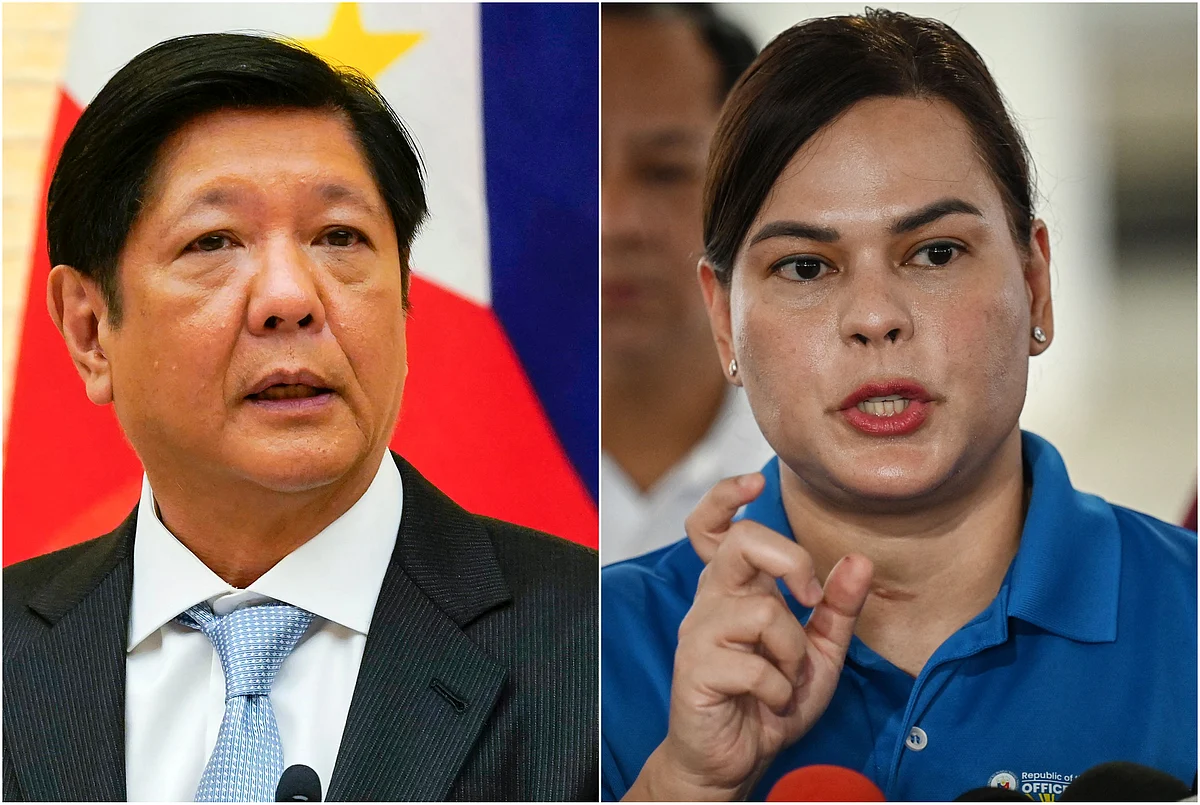
Explained: What’s next in Philippines VP Sara Duterte's impeachment trial
Majority of the 53 members of the Committee on Justice (CoJ) of the Philippine House of Representatives (HoR) cheered and clapped at the conclusion of Wednesday’s hearing when they unanimously found existence of probable cause for the impeachment of Vice President Sara Duterte.
The CoJ is set to approve its committee report on Monday, May 4, and send to the plenary by May 11 a recommendation to subject Duterte to a full impeachment trial by the Philippine Senate. If convicted, she will be removed from office and perpetually barred from any government position.
Duterte did not attend any of the hearings to directly confront her accusers. Instead, she sought a restraining order from the Supreme Court which did not comment.
Let's look back at what have been revealed so far, and what can be the next move by the vice president:
Is there a probable cause to impeach VP Duterte?
Yes, the CoJ has determined the impeachment complaints against Duterte are sufficient in form, substance and ground.
In five hearings, the panel revealed that Duterte embezzled P625 million (Dh39 million) from her intelligence and confidential funds which a former aide said were largely distributed among her friends.
Various government agencies such as the Commission on Audit (CoA) said the reports submitted by the vice president were to persons that had no birth, marriage or death certificates. In other words, they were non-existent. In total, CoA said Duterte must return P448 million (Dh28 million) to government’s coffers.
The investigations also focused on the disparity between Duterte’s official report of assets and the staggering amounts that passed through her bank accounts with husband Manases Carpio totalling P6.77 billion (Dh423 million) while declaring she had no cash on hand in some years.
What happens next?
Wednesday’s hearing for the determination of the existence of probable cause is the fourth and final ground. CoJ members are confident the articles of impeachment would sail through the plenary when put into a vote. They are confident they can muster the 106 votes required to subject Duterte to a full impeachment trial by the Philippine Senate.
Who has the numbers in the Senate?
Unlike in 2025 when Duterte’s camp successfully prevented a trial in the Senate following a Supreme Court restraining order, President Ferdiinand Marcos Jr's allies in Congress are making sure it would be held this time.
There are 24 incumbent senators; and six are avowedly pro-Duterte allies — of these, one (Senator Bato dela Rosa) is in hiding.
Other senators prefer to be seen as independents; so, it is hard at this point to say if the pro-Marcos camp would have the 16 votes needed to convict Duterte.
What a full impeachment trial would create?
Duterte’s impeachment would not be confined to the Senate floor. It would also be fought out in the streets and on social media. It would be very noisy.
Duterte’s supporters are expected to blame Marcos. They would correctly point out that Marcos himself should have also been impeached for authorising insertions in the national budget that eventually found their way to questionable flood control projects worth hundreds of billions of pesos.
What could be Duterte’s option?
Duterte may opt to resign from the vice presidency in the hope that the move would prevent more evidence of her alleged corruption from being laid bare in addition to what have already been revealed at the CoJ. If the Marcos camp agrees to this apparent compromise and would no longer pursue an impeachment conviction, Duterte may still be allowed to be a candidate for the presidency in the future.
But the Marcos camp may still decide to go for an impeachment to prevent her from being a political threat ever again.
Political operators allied with the Dutertes are grooming incumbent Davao City Mayor Sebastian Duterte as possible replacement to his sister, Sara, should things go awry for the camp.
Will the political turmoil in the Philippines get worse?
Fights among various political personalities in the Philippines had never been a good-versus-evil type of war. Political analysts say "it is simply a brawl among dominant political groups and interests that are universally regarded as corrupt."
The father of the current president, Ferdinand Marcos Sr. was ousted in 1986 largely due to reports of corrupt cronyism. Not one presidency that came later had been free from allegations of corruption.
Conservative estimates say that 30 per cent of public funds are wasted on corruption, leading to severe crises in social services and poverty.
Anti-corruption advocates point out the Marcos-Duterte fight is really between who is more corrupt between the two warring parties. Duterte is in the ropes at the moment, being pummeled by revelations of wrongdoing while Marcos evaded impeachment early this year. Ironically, political pundits pointed out he would not have won in the 2022 elections without Duterte by his side.
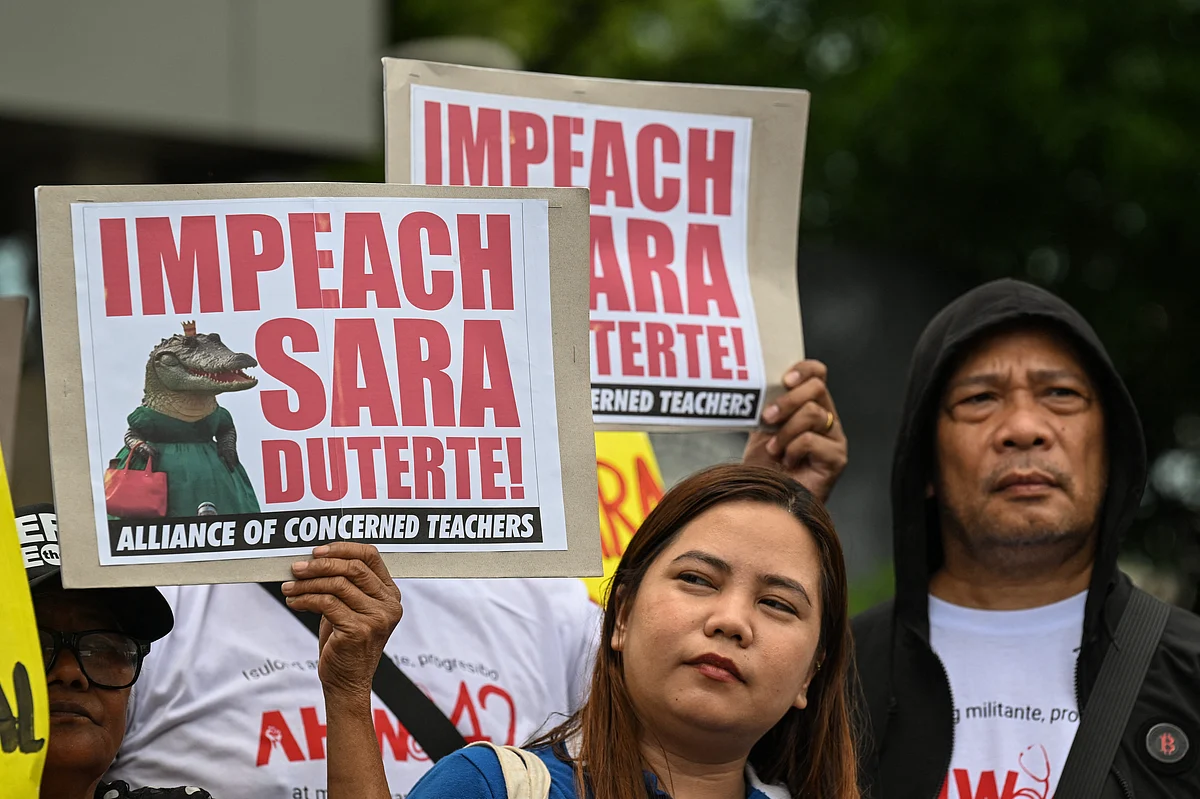
Protesters call for the impeachment of Philippine Vice President Sara Duterte outside the House of Representatives in Quezon City on Wednesday, April 29
ملاحظة تحريرية | Editorial Note:
نُشر هذا المقال في الأصل بواسطة Khaleej Times.
خبر (Khabr) هي منصة إعلامية أردنية مرخّصة تعمل بالذكاء الاصطناعي.
نضيف قيمة تحريرية من خلال: تحليل ذكي للأخبار، ملخصات تلقائية، رواية صوتية بالذكاء الاصطناعي، ترجمة متعددة اللغات، وتدقيق الحقائق.
هدفنا جعل الأخبار أكثر وضوحاً وسهولةً للقارئ العربي.
This article was originally published by Khaleej Times.
Khabr is a licensed Jordanian AI-powered news platform (Registration #82086).
We add editorial value through: AI-powered news analysis, automated summaries, AI audio narration, multi-language translation (Arabic, English, French, Turkish), and AI fact-checking.
Our mission is to make news more accessible and understandable for Arabic-speaking audiences worldwide.
هذا الخبر ضمن تغطية خبر لقسم سياسة.
نقدّم لك تحليلات ذكية وملخصات يومية لأهم الأخبار من مصادر موثوقة متعددة.
المصدر: Khaleej Times.
يوجد 6 مقالات مرتبطة بهذا الموضوع.
This article is part of Khabr's coverage of Politics.
We provide AI-powered analysis, summaries, and multi-source aggregation to keep you informed.
Source: Khaleej Times.
Tags: impeachment, Sara Duterte, Philippines.
🍪 نستخدم ملفات تعريف الارتباط لتحسين تجربتك وعرض الإعلانات المخصصة. باستخدامك للموقع، فإنك توافق على سياسة ملفات تعريف الارتباط وسياسة الخصوصية.
We use cookies to enhance your experience and show personalized ads. By using this site, you agree to our Cookie Policy and Privacy Policy.
FREEFree 1GB Internet + Free International Calls
$1 trial — eSIM in 190+ countries — No roaming charges