Explained: Below normal monsoon, but no cause for alarm
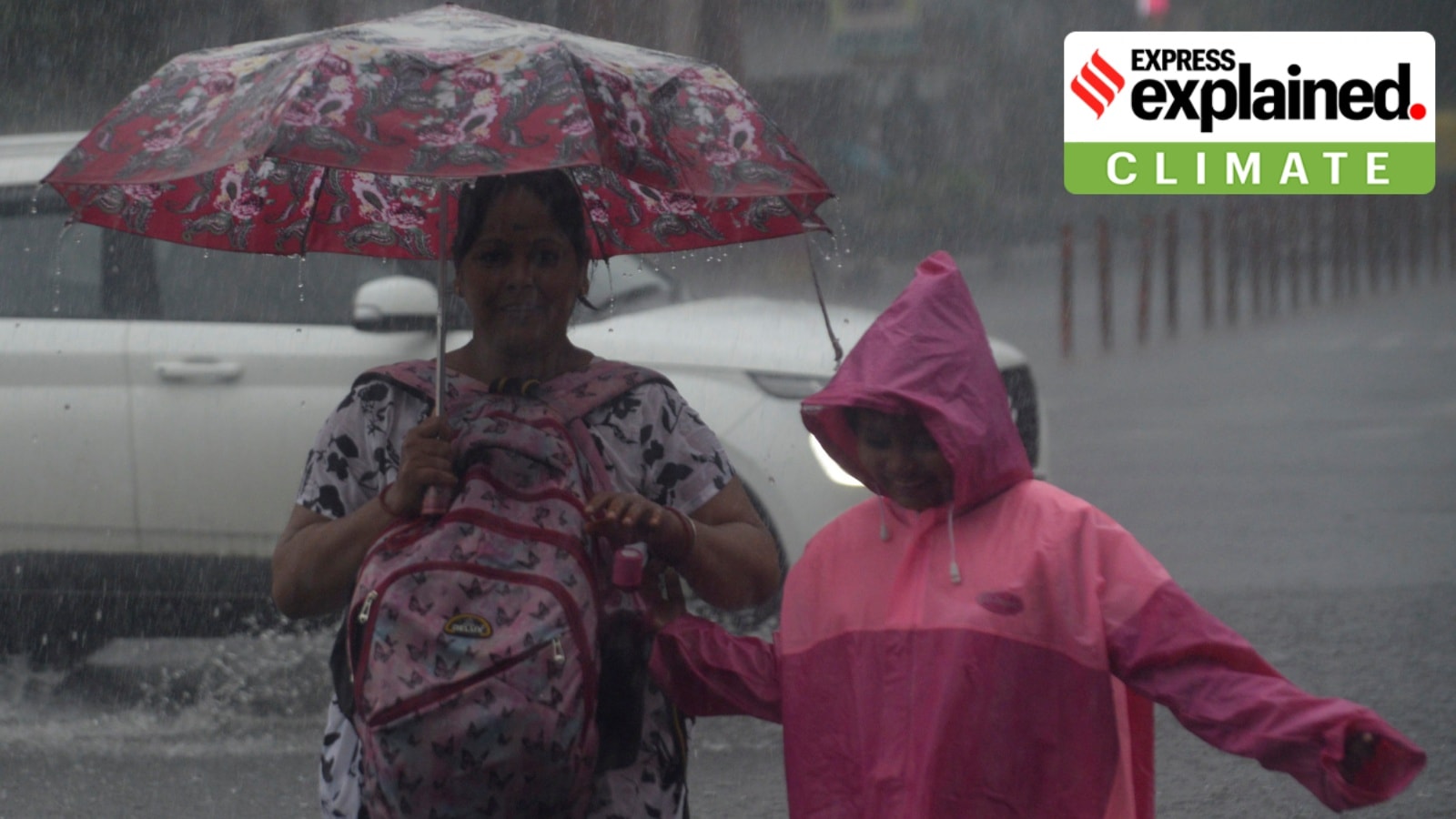
Weather ePaper Today’s Paper Journalism of Courage Home ePaper Politics Explained Opinion India Business Premium Cities UPSC Entertainment Sports World Lifestyle Tech Subscribe Sign In TrendingUPSC OfferIPL 2026US NewsPuzzles & GamesLegal NewsFresh TakeHealthResearch🎙️ Podcast Advertisement function checkAndLoadWindowSizeScript() { if (window.jQuery) { // jQuery is loaded, include your script jQuery(document).ready(function($) { // Your existing script for checking window width if (window.innerWidth) var page_w = window.innerWidth; else if (document.all) var page_w = document.body.clientWidth; if (page_w > 1024) { $(".add-left, .add-right").show(); } else { $(".add-left, .add-right").hide(); } }); } else { // jQuery is not loaded, check again after 0.2 seconds setTimeout(checkAndLoadWindowSizeScript, 200); } } // Initial call to the function checkAndLoadWindowSizeScript(); NewsExplainedExplained ClimateExplained: Below normal monsoon, but no cause for alarm Explained: Below normal monsoon, but no cause for alarm India has been slowly becoming more resilient to annual up and downs. Improvements in IMD’s own forecasts have helped as well Written by: Amitabh Sinha6 min readApr 17, 2026 07:00 AM IST People on a street amid monsoon rain in Kolkata on July 25, 2025. Photo: (Express) Make us preferred source on Google Whatsapp twitter Facebook Reddit PRINT After seven consecutive years of fairly good rainfall in the monsoon season, India seems to be finally running out of luck. This year’s monsoon is expected to be relatively dry, according to the forecast by India Meteorological Department (IMD). In its first forecast for the coming rainy season, IMD on Tuesday said the country as a whole was likely to get only 92% of normal rainfall this time. It is the lowest forecast for all India monsoon rainfall that IMD has put out in the last 20 years. The monsoon forecast is one of the most keenly tracked announcements in the month of April. It is not merely an exercise in weather prediction. The four-month monsoon, from June to September, brings over 70% of India’s annual rainfall. Besides offering respite from the summer heat to large parts of the country, rainfall during this season has a big impact on the economy. Nearly half of India’s cropland is still dependent on rainwater for irrigation. Timely and adequate rainfall is critical for good agricultural yields which in turn drives up farm incomes and rural demand. The monsoon rainfall also feeds India’s reservoirs, which are used to meet the needs of drinking water, hydroelectricity, and industry for the rest of the year. Maintaining the flow of rivers, inland water transportation, and groundwater recharge are some of the other things affected by monsoon rainfall. An early monsoon forecast — the first one comes in April, which is updated with a more detailed one in May, and then daily updates after that — is used by policy planners for water management decisions for the year. A forecast for low rainfall, like this year, is a sort of notice to governments and policymakers to begin preparing for all kinds of contingencies to absorb the impacts of a dry monsoon season. Until recently, a prediction of relatively low rainfall usually triggered alarm bells in the government. It was seen as a sure signal of impending agricultural stress and a dampener on economic growth outlooks. Even the market sentiment used to get affected. Things have become a lot better in the last few years. Not because the dependence on monsoon rainfall has reduced, but because India has been slowly becoming more resilient to the annual fluctuations in monsoon rainfall, thanks to a diverse set of initiatives in different areas. That IMD’s own forecasts have improved significantly over the last one decade has helped immensely. Forecasts have not just become more accurate and timely, but also more detailed, granular, and actionable. This has brought about greater efficiency and certainty in the policy planning exercise. The improvement in forecast accuracy has come at a time when weather patterns are becoming increasingly unpredictable under the influence of climate change. Rainfall events have become particularly erratic. The number of very heavy and highly localised rainfall events have increased significantly over the last few years, and so have extended dry spells. The challenge ahead of IMD is to further improve the forecasts of these events because of their potential to cause large-scale disasters and destruction. There are many other reasons why the prospects of a bad monsoon is not seen as a major cause of worry. Better water management practices, efforts to improve groundwater conservation, river and lake cleaning exercises have all contributed to ensuring that India is much better prepared to deal with rainfall shortages during the monsoon. A large part of the works done under the flagship rural employment guarantee programme were aimed at water conservation. Creation of thousands of ponds, wells, check dams, and other similar assets in the rural areas has improved water availability, raised groundwater levels, and reduced the dependence on rainwater. Successive assessments of groundwater resources, prepared by the Central Ground Water Board and the state governments, have shown an encouraging improvement in groundwater situation in most parts of India. Similarly, the river and lake cleaning exercises have made several water bodies accessible for normal usage. A major concern in a bad monsoon year is reservoirs getting drained out. Thanks to bountiful rains in the last two years — both 2024 and 2025 saw more than 100% rains during the monsoon season — the reservoirs are in a relatively comfortable position right now. The combined water storage in India’s 166 large reservoirs is not just better than last year, but also higher than the average of the last 10 years (see table). This is true for reservoirs in almost every region of the country. This asset will be crucial in the coming months. Unless the rainfall scarcity is really acute, India seems to be better prepared to deal with shortages than excesses of rainfall, particularly when it leads to flooding and disasters. Heavy rainfall events have resulted in at least one major disaster every year over the last one decade. The monsoon forecast for the entire country — done in April every year — is useful and indicative, but does not say anything about the expected temporal and spatial variations in rainfall. The 92% rainfall forecast does not mean that every place in the country was likely to get deficient rainfall. The forecasts for specific regions and months are done in the month of May. This year, however, IMD has given an indication of what might be in store for individual regions and months. “Below normal rainfall” was expected almost over the country, and only a few areas in the northeast, the northwest, and southern peninsula could be expected to get normal or above-normal rainfall. The rainfall is likely to be normal during the first two months of the season (June and July) while the second half (August and September) are expected to be dry, because the main cause for suppressing the monsoon rainfall, the El Niño phenomenon in the eastern Pacific Ocean, was expected to peak sometime in July, and its impact over India is usually felt after a lag of one or two months. An indication of the likely impacts during specific months and regions in April itself is a sign of IMD’s greater confidence in its forecasts.المصدر: Indian Express | Source: Indian Express
ملاحظة تحريرية | Editorial Note: نُشر هذا المقال في الأصل بواسطة Indian Express. خبر (Khabr) هي منصة إعلامية أردنية مرخّصة تعمل بالذكاء الاصطناعي. نضيف قيمة تحريرية من خلال: تحليل ذكي للأخبار، ملخصات تلقائية، رواية صوتية بالذكاء الاصطناعي، ترجمة متعددة اللغات، وتدقيق الحقائق. هدفنا جعل الأخبار أكثر وضوحاً وسهولةً للقارئ العربي.
This article was originally published by Indian Express. Khabr is a licensed Jordanian AI-powered news platform (Registration #82086). We add editorial value through: AI-powered news analysis, automated summaries, AI audio narration, multi-language translation (Arabic, English, French, Turkish), and AI fact-checking. Our mission is to make news more accessible and understandable for Arabic-speaking audiences worldwide.

