Europe’s Markets Reel as War-Driven Energy Shock Hits Equities
المصدر: Morocco World News | Source: Morocco World NewsFez– European equity markets witnessed a drop on Monday after President Donald Trump announced plans to blockade the Strait of Hormuz following the failure of US-Iran negotiations in Islamabad over the weekend, raising the risk of a deeper global energy crisis.
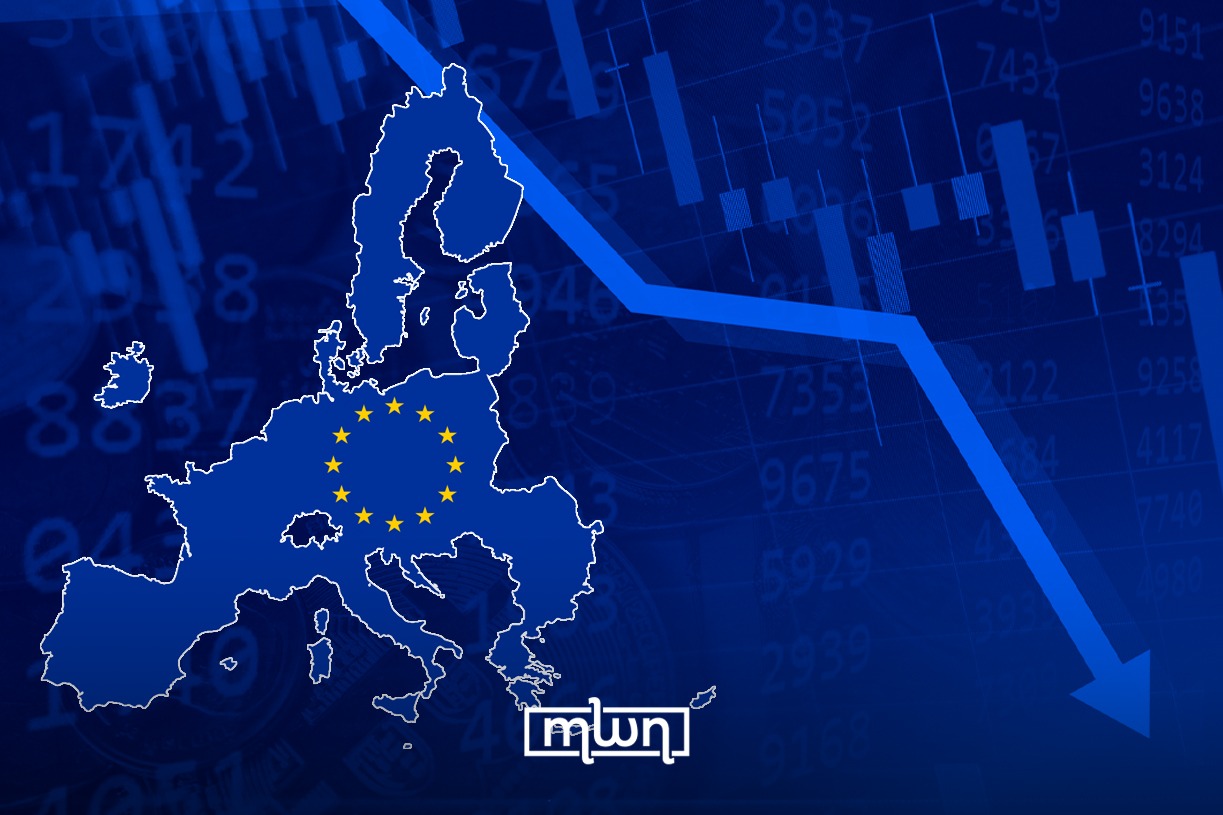
Europe’s equity markets are absorbing the sharpest shock from the war in Iran, as investors reassess risk in a conflict that has rapidly spilled into energy prices and, by extension, corporate earnings expectations.
The sell-off is not driven by politics so much as exposure. Markets, by design, price future profitability, and Europe’s vulnerability is structural.
As the world’s largest developed-market energy importer, the region is acutely sensitive to any disruption that pushes oil and gas costs higher. The latest escalation has done precisely that, forcing a repricing of European assets.
At the start of the year, the outlook had been markedly different. European equities entered 2026 with momentum, supported by improved investor sentiment, domestic capital flows, and expectations of fiscal expansion, particularly in core economies.
That narrative has now been overtaken by a harsher reality: higher input costs, tightening margins, and weakening earnings visibility.
The shift in positioning has been swift. Asset managers who had cautiously rotated into Europe are now reversing course, trimming exposure as the energy shock feeds through to valuations.
The issue is not simply that prices have fallen, but that the case for further upside has weakened materially. Without a corresponding improvement in earnings forecasts, there is little justification for elevated multiples.
Indices such as the Euro Stoxx 600 remain marginally positive for the year, but that resilience is increasingly fragile.
The market’s earlier gains were built in part on multiple expansion, investors paying more for each unit of expected earnings.
In the current environment, that dynamic has stalled. Rising costs and geopolitical uncertainty are eroding confidence in forward projections.
The contrast with the S&P 500 is instructive. While the United States is not immune to global energy shocks, its position as a major producer offers a partial buffer. Europe, by comparison, faces a direct and immediate hit to its cost base, with limited insulation.
What is unfolding is less a collapse than a recalibration. Investors are not abandoning Europe outright, but they are demanding clearer evidence of earnings resilience before maintaining exposure.
Until energy markets stabilise, or the conflict itself de-escalates, European equities are likely to remain under pressure.
In this cycle, geography matters. And for now, it is working against Europe.
The post Europe’s Markets Reel as War-Driven Energy Shock Hits Equities appeared first on Morocco World News.
ملاحظة تحريرية | Editorial Note: نُشر هذا المقال في الأصل بواسطة Morocco World News. خبر (Khabr) هي منصة إعلامية أردنية مرخّصة تعمل بالذكاء الاصطناعي. نضيف قيمة تحريرية من خلال: تحليل ذكي للأخبار، ملخصات تلقائية، رواية صوتية بالذكاء الاصطناعي، ترجمة متعددة اللغات، وتدقيق الحقائق. هدفنا جعل الأخبار أكثر وضوحاً وسهولةً للقارئ العربي.
This article was originally published by Morocco World News. Khabr is a licensed Jordanian AI-powered news platform (Registration #82086). We add editorial value through: AI-powered news analysis, automated summaries, AI audio narration, multi-language translation (Arabic, English, French, Turkish), and AI fact-checking. Our mission is to make news more accessible and understandable for Arabic-speaking audiences worldwide.