⚡ عاجل: كريستيانو رونالدو يُتوّج كأفضل لاعب كرة قدم في العالم●⚡ أخبار عاجلة تتابعونها لحظة بلحظة على خبر●⚡ تابعوا آخر المستجدات والأحداث من حول العالم●
AI اقتراحات ذكية
AI مباشر|--مشاهد مباشر
906,638مقال401مصدر نشط228قناة مباشرة4,832خبر اليوم
آخر تحديث:منذ ثانية
Emirates reports record revenue, profit despite late-year disruption
•Dubai: Emirates has retained its position as the world’s most profitable airline, reporting record financial results for 2025–26 despite operational disruption in the final month of its financial year...
•The results come despite what the airline described as a “disruptive and challenging” 12th month.
•Regional aviation, which was enjoying a robust growth period post-Covid, has plunged into chaos after the US-Israel-Iran broke out late-February.
هذا الخبر من Gulf News. خبر يقدم أدوات ذكاء اصطناعي للتلخيص والترجمة والاستماع.
Sign up for our daily business newsletter, Cheques & Balances.
Emirates follows an April-to-March financial year, with the latest results covering the 12 months to March 31, 2026.
The Emirates Group, comprising of Emirates airline and dnata, its aviation services arm, alongside subsidiaries spanning cargo, catering, travel, and retail operations, reported a record profit before tax of Dh 24.4 billion, with revenue reaching Dh 150.5 billion and cash assets at Dh 59.6 billion.
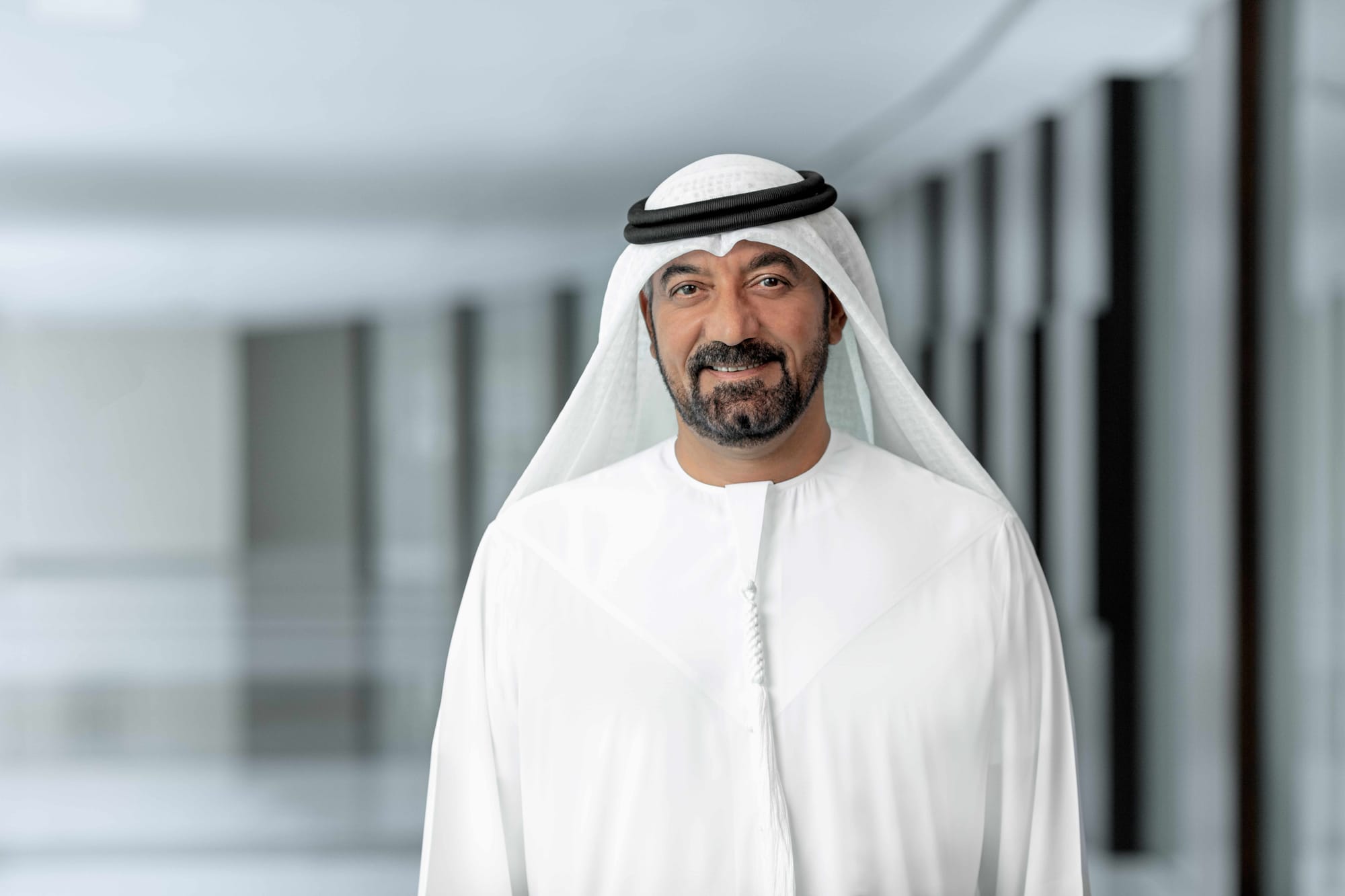
Sheikh Ahmed bin Saeed Al Maktoum, Chairman and Chief Executive, Emirates airline and Group, said in a statement: “These outstanding results, despite significant challenges in the last month of our financial year, reaffirm the strength and resilience of the Emirates Group’s business model…”
He added: “For the first 11 months of 2025-26, the picture across the Group was very positive… Month after month, we were surpassing our targets.” However, operations were impacted towards the end of the financial year. “On February 28, military activity massively disrupted global commercial air traffic in the Gulf region, including in the UAE," he said.
Sheikh Ahmed said, "We are fortunate to be based in Dubai, where years of infrastructure investments and a cohesive aviation ecosystem has enabled the government to quickly secure safe corridors for commercial flights."
Emirates and dnata have since gradually restored operations at DXB. "Although we are still operating at a lower passenger capacity than pre-disruption, cargo operations have ramped up to support the movement of essential goods into and through the UAE," he added.
“We are fortunate to be based in Dubai, where years of infrastructure investments and a cohesive aviation ecosystem has enabled the government to quickly secure safe corridors for commercial flights," says Sheikh Ahmed.
Emirates airline performance
Emirates reported record profit and revenue, maintaining its position as the most profitable airline globally.
The airline generated an operating cash flow of Dh xx billion, supporting its ongoing growth and investment plans. Its cash balance stood at Dh xx billion at the end of the financial year.
Revenue increased as Emirates deployed capacity to meet demand across markets, supported by network expansion and partnerships covering more than 1,700 cities beyond its network.
The airline carried xx million passengers, while maintaining a passenger seat factor of xx per cent. Passenger yields increased, reflecting sustained demand.
Fuel and employee costs remained the largest cost components. While total operating costs rose, the airline said lower fuel prices helped offset the increase in flying activity.
Most valuable brand
The airline was also ranked the UAE’s third strongest brand, with its brand value rising 27 per cent year-on-year to $10.6 billion. The Dubai airline achieved a Brand Strength Index (BSI) score of 85.3 out of 100, supported by strong global visibility, sustained travel demand and one of the aviation industry’s largest sports sponsorship portfolios.
According to Brand Finance, In 2025 alone, Emirates announced nine major sports deals and renewals, positioning itself as one of the world's most visible sports sponsors through the 2030s.
Fleet expansion and upgrades
Fleet growth remained a key focus during the year.
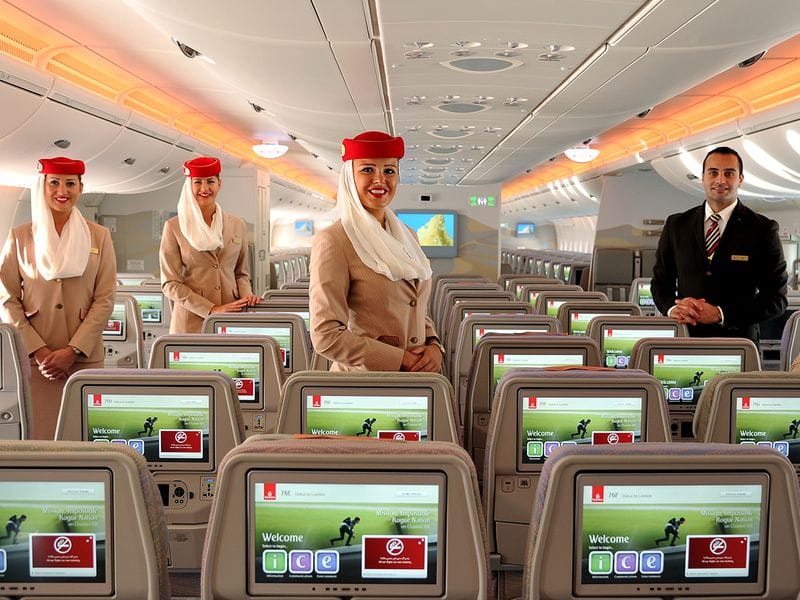
Emirates took delivery of 15 Airbus A350 aircraft, bringing its A350 fleet to 19 aircraft serving 21 destinations. The total fleet stood at 277 aircraft, with an average age of 10.8 years.
The airline also continued its $5 billion retrofit programme, with 91 aircraft upgraded so far out of 215 planned.
At the Dubai Airshow, Emirates announced additional aircraft orders worth $41.4 billion, with its total order book reaching 367 aircraft, extending deliveries into 2038.
Future plans
Looking ahead, the Emirates Group said it will continue investing in aircraft, infrastructure and technology.
“The Emirates Group has navigated crises and disruptions before… each time, we have bounced back stronger," said Sheikh Ahmed.
The Group said its business model and Dubai’s position as a global aviation hub remain unchanged as it enters the new financial year.
Sheikh Ahmed remains confidently optimistic. “The Emirates Group has navigated crises and disruptions before. Each time, we placed our focus on our customers and our people, and each time, we have bounced back stronge," he added.
“Our people are a big part of our success, enabling us to respond with agility in a dynamic operating environment. I’d like to thank all our employees – they have truly exemplified the qualities that set the Emirates Group apart during testing times."
The Group’s total workforce grew by 8% to 130,919 employees, as Emirates and dnata continued recruitment activity around the world to support its expanding operations and boost its future capabilities.
Employee growth
The Group’s workforce grew by 8 per cent to 130,919 employees, reflecting continued recruitment across Emirates and dnata.
Its UAE national workforce surpassed 4,000 employees, indicating growth in local talent programmes.
Fuel and cost management
Fuel remained a major cost component, accounting for a significant share of operating costs. The airline said its fuel bill decreased slightly compared to the previous year due to lower average fuel prices, despite higher flying activity.
Emirates continued to hedge fuel exposure and manage currency risks through financial instruments to maintain cash flow stability.
“From a fuel perspective, Emirates is well-hedged until 2028-29; and we have worked with our suppliers to secure the volumes required to support our current operations and our scaling up to pre-disruption levels,” said Sheikh Ahmed.
dnata and other business units
dnata
dnata reported record revenue and profit growth, supported by increased global travel and cargo activity.
Revenue rose to Dh xx billion, with international operations contributing a significant share. The business also reported strong operating cash flow and increased investments in infrastructure, including cargo and catering facilities.
Emirates SkyCargo
The cargo division carried xx million tonnes, supported by expanded freighter capacity and network growth to 44 destinations.
Emirates Flight Catering (EKFC)
EKFC reported revenue growth driven by external contracts, serving over 100 airline customers and large-scale global events.
MMI / Emirates Leisure Retail (ELR)
MMI/ELR reported a decline in revenue due to market conditions and tax changes, while continuing to expand its international footprint and retail operations.
ملاحظة تحريرية | Editorial Note:
نُشر هذا المقال في الأصل بواسطة Gulf News.
خبر (Khabr) هي منصة إعلامية أردنية مرخّصة تعمل بالذكاء الاصطناعي.
نضيف قيمة تحريرية من خلال: تحليل ذكي للأخبار، ملخصات تلقائية، رواية صوتية بالذكاء الاصطناعي، ترجمة متعددة اللغات، وتدقيق الحقائق.
هدفنا جعل الأخبار أكثر وضوحاً وسهولةً للقارئ العربي.
This article was originally published by Gulf News.
Khabr is a licensed Jordanian AI-powered news platform (Registration #82086).
We add editorial value through: AI-powered news analysis, automated summaries, AI audio narration, multi-language translation (Arabic, English, French, Turkish), and AI fact-checking.
Our mission is to make news more accessible and understandable for Arabic-speaking audiences worldwide.
هذا الخبر ضمن تغطية خبر لقسم اقتصاد.
نقدّم لك تحليلات ذكية وملخصات يومية لأهم الأخبار من مصادر موثوقة متعددة.
المصدر: Gulf News.
يوجد 6 مقالات مرتبطة بهذا الموضوع.
This article is part of Khabr's coverage of Economy.
We provide AI-powered analysis, summaries, and multi-source aggregation to keep you informed.
Source: Gulf News.
Tags: Emirates, revenue, profit.
🍪 نستخدم ملفات تعريف الارتباط لتحسين تجربتك وعرض الإعلانات المخصصة. باستخدامك للموقع، فإنك توافق على سياسة ملفات تعريف الارتباط وسياسة الخصوصية.
We use cookies to enhance your experience and show personalized ads. By using this site, you agree to our Cookie Policy and Privacy Policy.
🔍
FREEFree 1GB Internet + Free International Calls
$1 trial — eSIM in 190+ countries — No roaming charges