... | 🕐 --:--
-- -- --
عاجل
⚡ عاجل: كريستيانو رونالدو يُتوّج كأفضل لاعب كرة قدم في العالم ⚡ أخبار عاجلة تتابعونها لحظة بلحظة على خبر ⚡ تابعوا آخر المستجدات والأحداث من حول العالم
⌘K
AI مباشر
35941 مقال 232 مصدر نشط 38 قناة مباشرة 7957 خبر اليوم
آخر تحديث: منذ 5 ثواني

ECC allows 1m-ton wheat purchase

العالم
Express Tribune
2026/03/27 - 06:08 502 مشاهدة
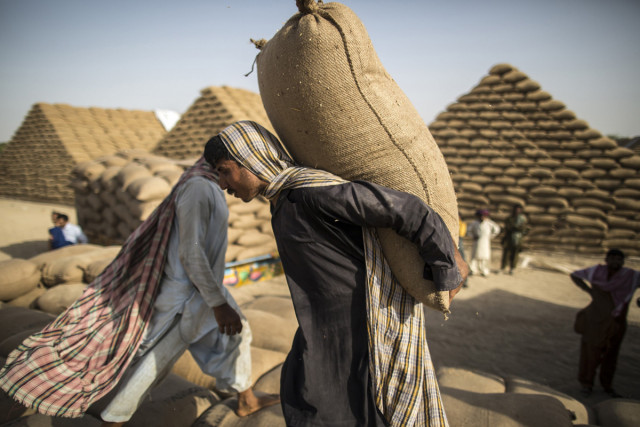
The government on Thursday formally approved the transfer of Rs100 billion worth of development budget to the Prime Minister's Austerity Fund and also cleared a plan to procure one million metric tons of wheat by reversing an earlier decision to exit the commodity market. The Economic Coordination Committee (ECC) of the cabinet took these decisions in a hurriedly called meeting, chaired by Finance Minister Muhammad Aurangzeb. The ECC just put its stamp on an earlier decision taken by the PM to slash the Public Sector Development Programme (PSDP). "The ECC considered and approved a summary submitted by the Finance Division seeking a technical supplementary grant of Rs100 billion for onward transfer to the Prime Minister's Austerity Fund 2026," said a statement issued by the finance ministry. It added that the ECC was informed that, in light of evolving developments in the Gulf region and their potential impact on international petroleum prices, the PM had directed the mobilisation of PSDP resources to meet the price differential requirement for petroleum products and to shield consumers from price volatility. However, the decision has been taken without the consent of the planning ministry, which is responsible for the execution of projects and will now face severe funding constraints. The finance ministry said that the ECC noted that the Rs100 billion allocation was being met through rationalisation and surrendering PSDP funds by various ministries and divisions, as coordinated by the planning ministry in consultation with the federal secretaries. It was emphasised that the reallocation exercise had been undertaken to minimise disruption to priority and well-performing projects while creating the required fiscal space. However, the Planning Commission did not cut the budget on a project-to-project basis and instead decided to implement the PM's decision on a pro-rata basis. The Khyber-Pakhtunkhwa government has already opposed the decision, which resulted in slashing the merged districts' funding by Rs6.5 billion. The National Highway Authority's (NHA) budget has been reduced by Rs22.3 billion, while the Power Division's allocation has been slashed by Rs9.1 billion. The Water Resources Division is facing a Rs12.9 billion reduction, which could compromise major water storage projects. But the division's secretary will have the choice to prioritise the remaining budget. A Rs7 billion reduction has been made in the schemes recommended by parliamentarians under the Sustainable Development Goals. The defence ministry's development budget has dropped by Rs1 billion. The education ministry's budget has been cut by Rs3.2 billion, while another Rs4.2 billion reduction has been made in the Higher Education Commission's allocation. Azad Kashmir and Gilgit-Baltistan budgets have been slashed by Rs8.2 billion and the allocation for provincial projects has gone down by Rs10.2 billion. Wheat procurement The ECC approved the purchase of one million metric tons of wheat to give price signals to the market. The commodity will be bought by the federal government, which is already struggling to sell the two million metric tons of stocks held by the Pakistan Agricultural Storage and Supplies Corporation (Passco). According to the finance ministry, the ECC considered a summary submitted by the Ministry of National Food Security regarding procurement of wheat for federal strategic reserves under the Interim National Wheat Policy 2025-26 through private sector participation. The ECC approved the procurement of up to one million metric tons of wheat through a transparent and competitive process to be executed by the private sector, according to the finance ministry. The ECC directed officials that key elements including financial implications, pricing benchmarks and operational modalities be further refined in consultation with the Finance Division before finalisation. The food ministry had proposed to buy 1.5 million metric tons of wheat. The government had earlier stopped procuring wheat as part of an IMF condition, which hit the farmers hard. However, the finance ministry does not have expertise in these matters, which are essentially provincial in nature. The ministry said that the ECC was apprised of the current supply and demand outlook, including production estimates, evolving weather conditions, and existing public and private stock positions. It was noted that while projections suggest improved crop conditions, uncertainties remain, warranting a cautious and calibrated approach to maintaining adequate reserves. The ECC discussed the need to balance market stability, farmer support and fiscal considerations, while avoiding premature interventions that could distort market signals or create uncertainty. The ECC highlighted the importance of distinguishing between strategic and commercial reserves, ensuring that procurement decisions are aligned with actual requirements and do not impose unnecessary fiscal or storage burdens. The committee emphasised that procurement levels and financial commitments should remain flexible and responsive to updated crop assessments and market conditions. Earlier, the ECC had allowed the sale of wheat stocks at subsidised rates by bearing Rs24 billion losses. Compared to the price of Rs6,425 per 40 kg for the imported wheat, the ECC had set the price at Rs3,800 to offload the commodity in the market. The price for the imported wheat was 41% less than the cost at which the government had imported it. Passco was maintaining the wheat stocks but the government was in the process of shutting it down.
مشاركة:

مقالات ذات صلة

AI
يا هلا! اسألني أي شي 🎤