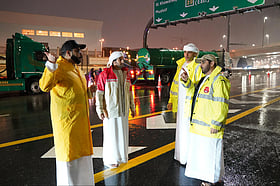
Dubai: Dubai’s Roads and Transport Authority (RTA) said the emirate’s main road network and vital areas are now 100% recovered following the recent adverse weather conditions, with only minor impacts that were resolved immediately.
Hamad Ali Al Shehhi, Director of Roads at the RTA, said preparations began well before the weather system arrived, with proactive measures implemented in coordination with strategic partners to minimise disruption and ensure traffic continuity.
Stay updated: Get the latest faster by downloading the Gulf News app now - it's completely free. Click here for Apple or here for Android. You can also find it on the Huawei AppGallery.
مع تغيّر الأحوال الجوية، نواصل في #هيئة_الطرق_و_المواصلات رفع جاهزيتنا الميدانية عبر فرقنا المختصة وآلياتنا الموزعة في مواقع عدة، للتعامل السريع مع مستجدات الطقس والحفاظ على سلامة التنقّل في مختلف أنحاء #دبي.
— RTA (@rta_dubai) March 27, 2026
ونحرص على ضمان طرق أكثر أماناً وحركة مرورية أكثر انسيابية، بما يعكس… pic.twitter.com/92SYIWipMW
According to Emarat Al Youm, he said that the authority implemented advanced engineering solutions at more than 14 key locations prior to the weather event. These included increasing the number of drainage inlets, installing temporary connections using high-capacity pumps linked to the deep tunnel drainage system, expanding final discharge points into Dubai Creek and waterways, and creating retention ponds in several areas to absorb excess rainwater and reduce pressure on the drainage network.
The RTA also introduced comprehensive field plans in coordination with Dubai Police, Dubai Municipality, Civil Defence and Dubai Corporation for Ambulance Services, as well as private sector partners and developers. Dubai was divided into operational sectors to allow resources to be deployed efficiently and enable rapid response to water accumulation areas.
Weather response operations were managed through the authority’s joint command room at its unified control centre, which coordinates with the National Centre of Meteorology to monitor developments and determine readiness levels before and during rainfall.
Al Shehhi said the centre relies on more than 10,000 cameras across the emirate, alongside historical data analysis, big data insights and lessons learned from previous weather events to guide decision-making and direct response teams.
He added that more than 380 pumps, over 500 water tankers and 100 emergency vehicles were deployed across Dubai, supported by around 1,300 RTA personnel. No major road closures were recorded during the weather event, he said, with impacts limited to minor cases that were resolved quickly.
The authority also used new equipment and technologies for the first time, including specially designed high-capacity pumping vehicles capable of rapidly reaching flooded areas. Smart sensor systems were also deployed in tunnels and underpasses to monitor water levels and transmit real-time data to control centres, allowing preventive actions such as traffic diversions or early water removal.
Al Shehhi said the RTA would continue to enhance its engineering and technical systems and apply lessons learned from each weather event to further strengthen preparedness and response capabilities for the future.