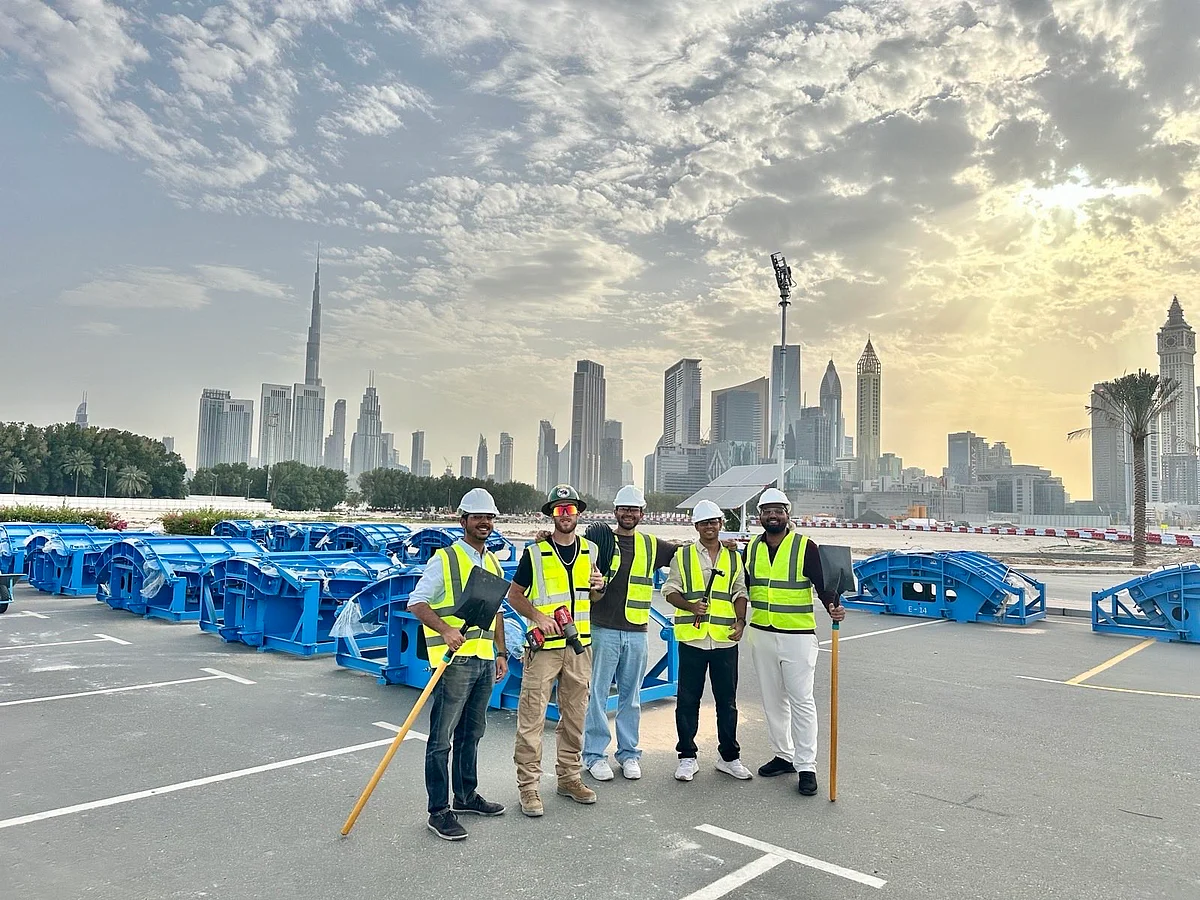
Dubai Loop: Multiple jobs listed as hiring begins for construction phase
•Construction mobilisation has begun for the Dubai Loop, with Elon Musk’s The Boring Company saying the first step is to activate precast concrete segment production for the project.The development was...
•Roles in project development, procurement and recruitment are also listed.The updates mark the clearest indication yet that early groundwork is under way for the Dubai Loop, an underground transport s...
•The company lists the status of the project as “under contract”.The agreement, signed during the World Governments Summit 2026, sets out a first-phase pilot route extending 6.4km, with four stations l...
هذا الخبر من Khaleej Times. خبر يقدم أدوات ذكاء اصطناعي للتلخيص والترجمة والاستماع.
المصدر: Khaleej Times | Source: Khaleej TimesConstruction mobilisation has begun for the Dubai Loop, with Elon Musk’s The Boring Company saying the first step is to activate precast concrete segment production for the project.
The development was hailed as a “first step in bringing the future of mobility to Dubai” by Omar Sultan AlOlama, UAE Minister of State for Artificial Intelligence, Digital Economy and Remote Work Applications, who congratulated teams from Dubai’s Roads and Transport Authority (RTA) and The Boring Company, and thanked Elon Musk for his commitment to the UAE.
In posts on X, the company also signalled a hiring push in Dubai, inviting applicants to “come dig with us” and linking to its careers page, which lists multiple in-office roles across engineering, construction and operations.
Open positions in Dubai include construction manager, head of precast operations, civil, structural and geotechnical engineers, as well as architect, mechanical engineer and environmental health and safety leader. Roles in project development, procurement and recruitment are also listed.
The updates mark the clearest indication yet that early groundwork is under way for the Dubai Loop, an underground transport system being developed by The Boring Company in partnership with the RTA. The company lists the status of the project as “under contract”.
The agreement, signed during the World Governments Summit 2026, sets out a first-phase pilot route extending 6.4km, with four stations linking Dubai International Financial Centre and Dubai Mall. The project is planned to expand into a 22.5km network with 19 stations connecting key commercial hubs, including Dubai World Trade Centre and Business Bay.
The company said at the time that next steps include finalising designs, securing permits and approvals from multiple entities, and preparing to begin tunnelling in the second half of 2026.
The Loop is designed as an all-electric, zero-emissions, high-speed underground system where passengers travel directly to their destination without intermediate stops. The company describes it as operating more like an underground highway than a traditional subway, enabling point-to-point journeys at higher speeds.
Tunnels will be built with a diameter of 3.6 metres using advanced tunnelling technologies aimed at faster delivery, lower costs and minimal disruption to existing infrastructure.
The first phase is estimated to cost about $154 million, with an expected delivery timeline of around one year after design and preparatory works are completed. The full project is projected to cost $545 million and take approximately three years to complete.
ملاحظة تحريرية | Editorial Note: نُشر هذا المقال في الأصل بواسطة Khaleej Times. خبر (Khabr) هي منصة إعلامية أردنية مرخّصة تعمل بالذكاء الاصطناعي. نضيف قيمة تحريرية من خلال: تحليل ذكي للأخبار، ملخصات تلقائية، رواية صوتية بالذكاء الاصطناعي، ترجمة متعددة اللغات، وتدقيق الحقائق. هدفنا جعل الأخبار أكثر وضوحاً وسهولةً للقارئ العربي.
This article was originally published by Khaleej Times. Khabr is a licensed Jordanian AI-powered news platform (Registration #82086). We add editorial value through: AI-powered news analysis, automated summaries, AI audio narration, multi-language translation (Arabic, English, French, Turkish), and AI fact-checking. Our mission is to make news more accessible and understandable for Arabic-speaking audiences worldwide.