⚡ عاجل: كريستيانو رونالدو يُتوّج كأفضل لاعب كرة قدم في العالم●⚡ أخبار عاجلة تتابعونها لحظة بلحظة على خبر●⚡ تابعوا آخر المستجدات والأحداث من حول العالم●
AI اقتراحات ذكية
AI مباشر|--مشاهد مباشر
1,075,651مقال401مصدر نشط228قناة مباشرة3,945خبر اليوم
آخر تحديث:منذ 4 ثواني
Dubai doctors rebuild Indian expat's face after nose cut, teeth crushed and jaw damaged in accident
•Dubai: His nose had been cut, his teeth crushed, his jaw and eye socks badly damaged, and blood was pooling fast.
•He could barely breathe.
•His vision had doubled.
هذا الخبر من Gulf News. خبر يقدم أدوات ذكاء اصطناعي للتلخيص والترجمة والاستماع.
Dubai: His nose had been cut, his teeth crushed, his jaw and eye socks badly damaged, and blood was pooling fast. He could barely breathe. His vision had doubled. One side of his face had begun to lose feeling.
When a 42-year-old Indian expat arrived at the emergency room of Aster Hospital, Mankhool in this condition, it was immediately clear to the doctors there that this was a fight for far more than just his face.
What followed was a race against time and a surgical feat that few hospitals in the region could have pulled off.
Rare and complex
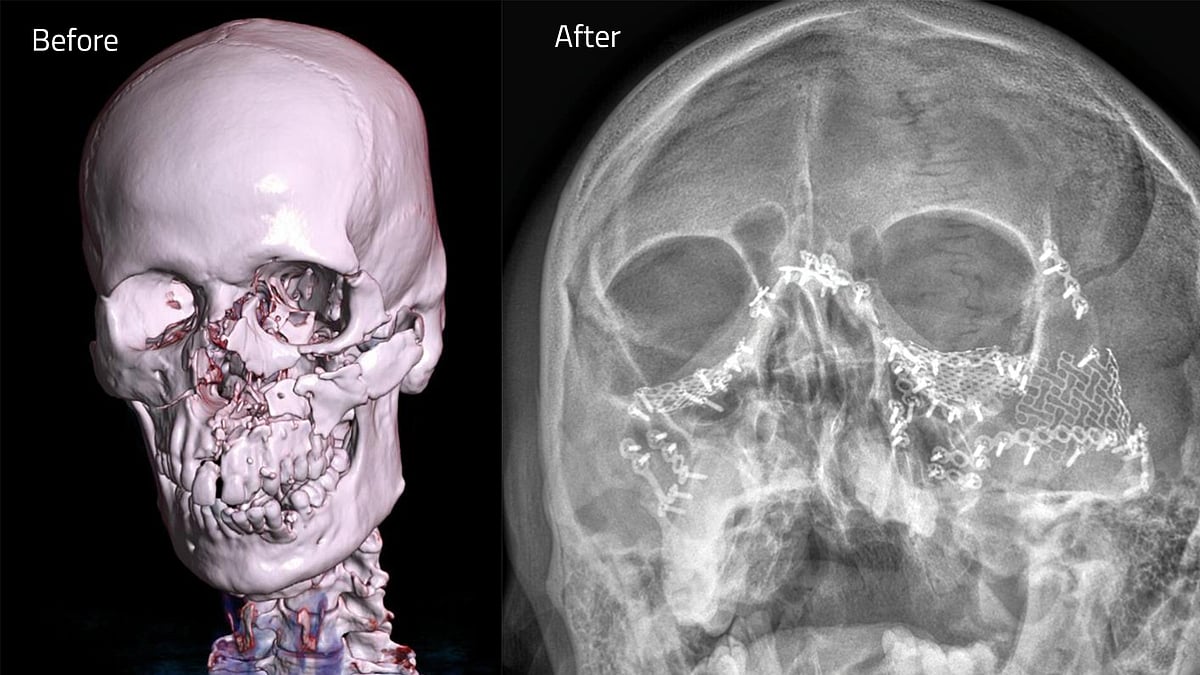
Doctors quickly identified the severity of what they were dealing with: pan facial trauma, a rare condition involving fractures across the upper, middle, and lower regions of the face simultaneously.
It accounts for just four to ten per cent of all facial fractures and is almost always the result of a high-intensity impact. Young adults bear the brunt of such injuries, with cases most recorded in the 18 to 40 age group.
For this patient, who did not wish to be identified, the damage was extensive: multiple fractures of the jaw, cheekbones, nasal bones and eye sockets, significant loss of nasal cartilage and teeth, disrupted jaw alignment, and orbital injuries that placed his vision at serious risk.
Precision under pressure
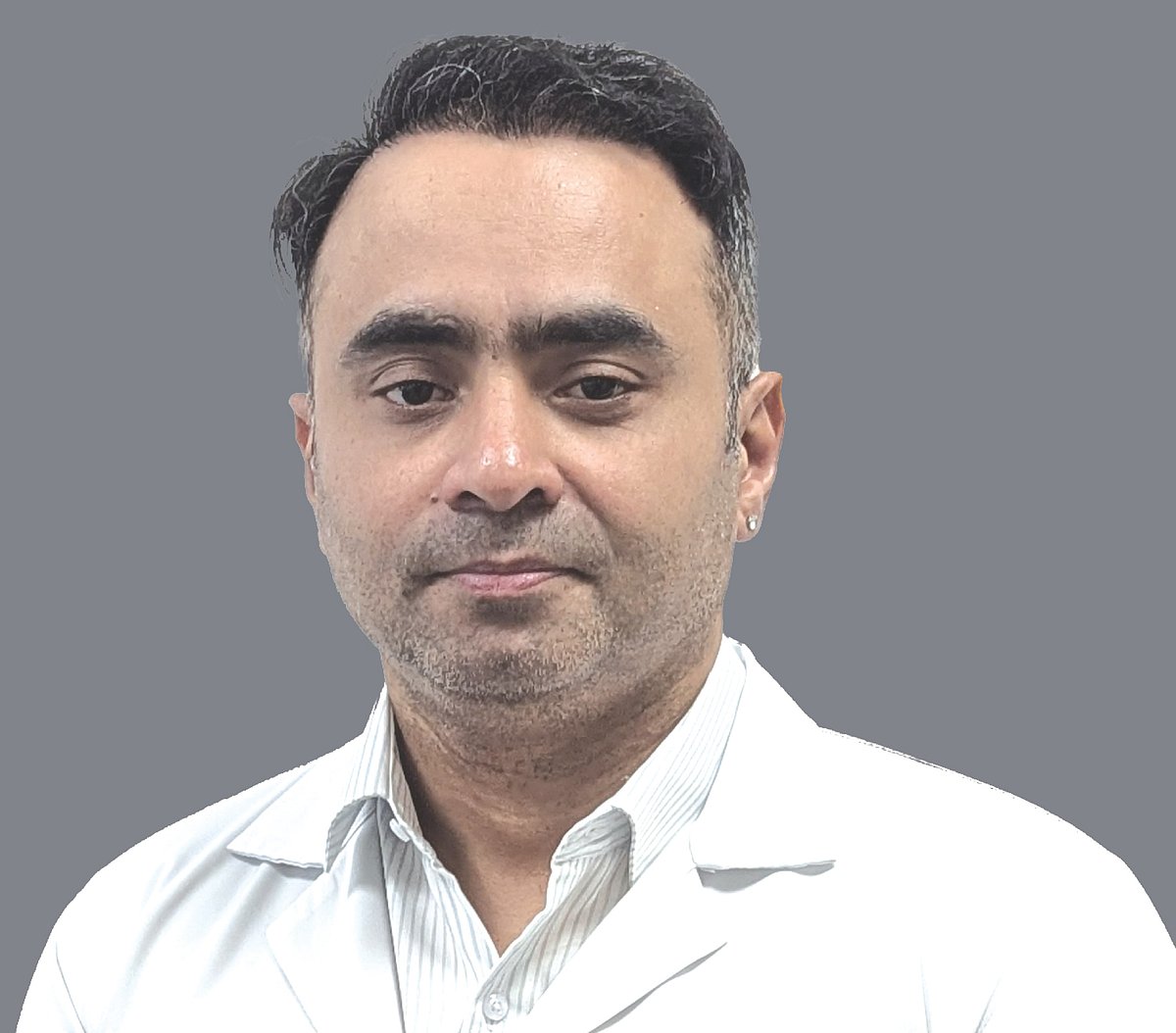
The surgical team, led by Dr Renju Prem, Lead Surgeon in Oral and Maxillofacial Surgery at Aster Hospital Mankhool, performed a detailed procedure known as Open Reduction and Internal Fixation (ORIF) with multiple orbital reconstructions under general anaesthesia.
The anaesthesia team, including Dr Abhishek J Narayan and Dr Jawad Ebn Mohammed, made the critical decision to use sub-mental intubation, given the extensive facial and nasal fractures that ruled out a conventional airway approach.
Surgeons then worked their way through the face from the jaw upward in what is known as a "bottom to top approach", using external incisions to fix broken bones, stabilise them with titanium plates and screws, rebuild the eye sockets, reposition the nerves, and restore the overall facial structure. Damaged bone fragments and knocked-out teeth were removed, and the nasal structures were reconstructed to recover both function and appearance.
A combination of medical images showing the patient's face before and after the surgery.
The team speaks
"This was an extraordinary challenge," said Dr Renju Prem. "Restoring the patient's face and function required meticulous planning, precision, and seamless collaboration across multiple specialties. The successful outcome demonstrates the high standard of care and clinical excellence we uphold at Aster Hospital, Mankhool,” he added.
Dr Abhishek J Narayan noted that managing anaesthesia for a surgery of this length and complexity was central to the patient's safety. "Our team worked closely with the surgical and critical care teams to achieve a smooth procedure and recovery," he said.
Dr Jawad Ebn Mohammed added: "Coordinating anaesthesia for pan facial trauma cases is always challenging due to airway risks and prolonged operative time. It was rewarding to see the patient recover successfully and regain both function and confidence."
Dr Renju Prem
Road to recovery
After surgery, the patient spent three to four days in the ICU under intensive monitoring, with support from cardiology and nephrology teams. He gradually moved to oral feeding and normal activity before being discharged in stable condition after roughly two weeks in hospital. His facial structure restored, his jaw functioning, and his health stabilised.
For the patient himself, the experience has been transformative. "The doctors and staff have truly changed my life. They not only restored my face and jaw but also gave me back my confidence and my ability to live normally again. I am deeply thankful for their expertise, dedication, and care,” he said.
ملاحظة تحريرية | Editorial Note:
نُشر هذا المقال في الأصل بواسطة Gulf News.
خبر (Khabr) هي منصة إعلامية أردنية مرخّصة تعمل بالذكاء الاصطناعي.
نضيف قيمة تحريرية من خلال: تحليل ذكي للأخبار، ملخصات تلقائية، رواية صوتية بالذكاء الاصطناعي، ترجمة متعددة اللغات، وتدقيق الحقائق.
هدفنا جعل الأخبار أكثر وضوحاً وسهولةً للقارئ العربي.
This article was originally published by Gulf News.
Khabr is a licensed Jordanian AI-powered news platform (Registration #82086).
We add editorial value through: AI-powered news analysis, automated summaries, AI audio narration, multi-language translation (Arabic, English, French, Turkish), and AI fact-checking.
Our mission is to make news more accessible and understandable for Arabic-speaking audiences worldwide.
هذا الخبر ضمن تغطية خبر لقسم صحة.
نقدّم لك تحليلات ذكية وملخصات يومية لأهم الأخبار من مصادر موثوقة متعددة.
المصدر: Gulf News.
يوجد 6 مقالات مرتبطة بهذا الموضوع.
This article is part of Khabr's coverage of Health.
We provide AI-powered analysis, summaries, and multi-source aggregation to keep you informed.
Source: Gulf News.
Tags: طب, حوادث, إصابات.
🍪 نستخدم ملفات تعريف الارتباط لتحسين تجربتك وعرض الإعلانات المخصصة. باستخدامك للموقع، فإنك توافق على سياسة ملفات تعريف الارتباط وسياسة الخصوصية.
We use cookies to enhance your experience and show personalized ads. By using this site, you agree to our Cookie Policy and Privacy Policy.
🔍
FREEFree 1GB Internet + Free International Calls
$1 trial — eSIM in 190+ countries — No roaming charges
_doctor_generic_resources1_16a0854e159_large.jpg)