تحليل ذكي | AI Editorial Analysis
•Weather ePaper Today’s Paper Journalism of Courage Home ePaper India Cities UPSC Premium Entertainment Politics Sports World Explained Opinion Business Lifestyle Tech Subscribe Sign In TrendingUPSC Of...
•Its delegation comprised more than 70 people with diverse areas of expertise.
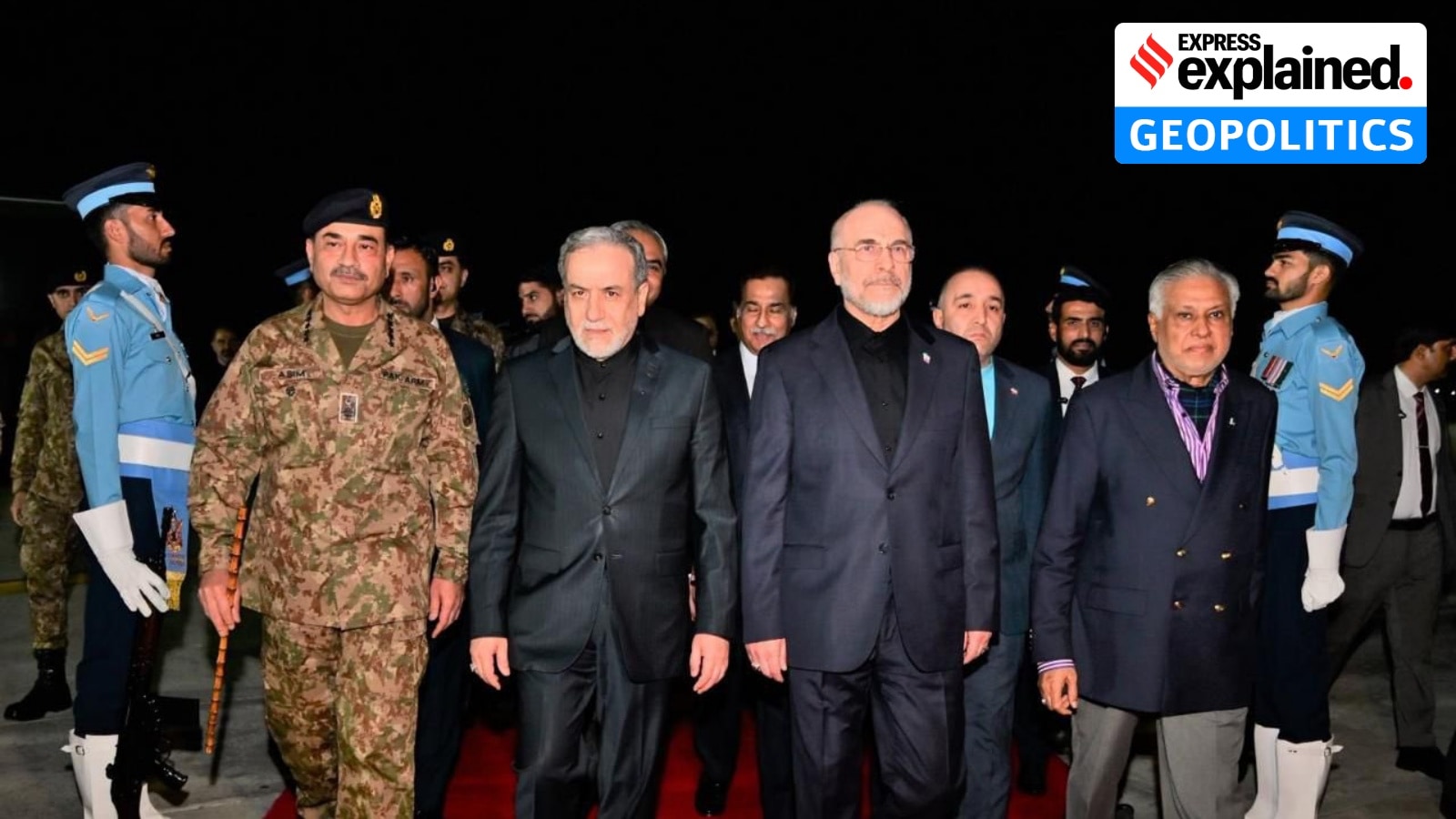
•By: Explained Desk4 min readNew DelhiApr 14, 2026 06:32 AM IST (L-R) Pakistan's Army chief, Field Marshal Asim Munir; Iran's Foreign Minister, Abbas Araghchi; Iranian Speaker of Parliament, Mohammed B...
هذا الخبر من Indian Express. خبر يقدم أدوات ذكاء اصطناعي للتلخيص والترجمة والاستماع.
Weather ePaper Today’s Paper Journalism of Courage Home ePaper India Cities UPSC Premium Entertainment Politics Sports World Explained Opinion Business Lifestyle Tech Subscribe Sign In TrendingUPSC OfferIPL 2026US NewsPuzzles & GamesLegal NewsFresh TakeHealthResearch🎙️ Podcast Advertisement function checkAndLoadWindowSizeScript() { if (window.jQuery) { // jQuery is loaded, include your script jQuery(document).ready(function($) { // Your existing script for checking window width if (window.innerWidth) var page_w = window.innerWidth; else if (document.all) var page_w = document.body.clientWidth; if (page_w > 1024) { $(".add-left, .add-right").show(); } else { $(".add-left, .add-right").hide(); } }); } else { // jQuery is not loaded, check again after 0.2 seconds setTimeout(checkAndLoadWindowSizeScript, 200); } } // Initial call to the function checkAndLoadWindowSizeScript(); NewsExplainedExplained Global‘Diplomacy never ends’: After US-Iran stalemate in Islamabad, what top Iranian delegates have signalled ‘Diplomacy never ends’: After US-Iran stalemate in Islamabad, what top Iranian delegates have signalled Considering that this was the first time both countries held direct negotiations since 1979, Iran’s approach to the talks signalled seriousness. Its delegation comprised more than 70 people with diverse areas of expertise. By: Explained Desk4 min readNew DelhiApr 14, 2026 06:32 AM IST (L-R) Pakistan's Army chief, Field Marshal Asim Munir; Iran's Foreign Minister, Abbas Araghchi; Iranian Speaker of Parliament, Mohammed Bagher Ghalibaf; and Iran's Ambassador to Pakistan, Reza Amiri Moghadam. Photo: X/IranAmbPak Make us preferred source on Google Whatsapp twitter Facebook Reddit PRINT Even as US President Donald Trump continues to dial up the rhetoric after the marathon US-Iran peace talks in Islamabad on April 11 and 12 failed to reach an agreement, Iran is yet to rule out diplomatic pathways to end the conflict. US Vice President J D Vance, who led the American delegation, said that Iran’s refusal to commit to never seeking a nuclear weapon was a deal-breaker. On the other hand, Iran’s foreign ministry spokesperson Esmail Baghaei said that the talks were “full of mistrust and suspicion”, pointing to differences both sides had over the reopening of the Strait of Hormuz, among other issues. Although both sides have stated no further negotiations were scheduled, one line by Baghaei stood out: “Diplomacy never ends.” Considering that this was the first time both countries held direct negotiations since 1979, Iran’s approach to the Islamabad talks signalled seriousness. Its delegation comprised more than 70 people, and the presence of experienced diplomats, financial and legal experts, and military officials implied a focus on resolving longstanding issues pertaining to economic sanctions and the nuclear option. Mohammed Bagher Ghalibaf, Speaker of Iran’s parliament, led the delegation along with Foreign Minister Abbas Araghchi. Other notable individuals in the Iranian camp included Reza Amiri Moghadam, Iran’s ambassador to Pakistan; Ali Bagheri Kani, member of Iran’s National Security Council; Admiral Ali Akbar Ahmadian, a former top official of the Islamic Revolutionary Guard Corps and secretary of the National Security Council; General Esmail Ahmadi Moghadam, a retired military commander and head of Iran’s National Defense University; and Abdolnasser Hemati, governor of the Central Bank of Iran. Among them, who are the prominent players and what have they said in the aftermath of the talks? Since the conflict began in February, Mohammad Bagher Ghalibaf’s profile has only risen owing to his public statements and him being perceived as a “pragmatic hardliner” in the Iranian establishment. Few were surprised when he was chosen to lead Iran’s delegation. Following the talks, Ghalibaf posted on X that the Iranian delegation had “raised forward-looking initiatives”, but the US ultimately failed to gain its trust during the negotiations. His statement — “we will not for a moment cease our efforts to consolidate the achievements of the forty days of Iran’s national defence” — has underlined the high stakes involved. As Iran’s Foreign Minister, Abbas Araghchi was also at the forefront along with Ghalibaf — primarily owing to the central role he played in the 2015 Iran nuclear deal with the US and other countries (which Trump scuttled in 2018). After the talks, Araghchi said on X that Iran had engaged with the US “in good faith to end war” but had encountered “maximalism, shifting goalposts, and blockade” when an “Islamabad MoU” was within reach. “Zero lessons earned. Good will begets good will. Enmity begets enmity,” he said, sounding a word of caution. As Iran’s ambassador to Pakistan, Reza Amiri Moghadam also took part in the negotiations. Of all statements coming from the Iranian side, his echoed a sentiment of optimism. Calling the Islamabad talks “not an event but a process”, he said on X: “The Islamabad Talks laid the foundation for a diplomatic process that, if trust and will are strengthened, can create a sustainable framework for the interests of all parties.”
المصدر: Indian Express
| Source: Indian Express
ملاحظة تحريرية | Editorial Note:
نُشر هذا المقال في الأصل بواسطة Indian Express.
خبر (Khabr) هي منصة إعلامية أردنية مرخّصة تعمل بالذكاء الاصطناعي.
نضيف قيمة تحريرية من خلال: تحليل ذكي للأخبار، ملخصات تلقائية، رواية صوتية بالذكاء الاصطناعي، ترجمة متعددة اللغات، وتدقيق الحقائق.
هدفنا جعل الأخبار أكثر وضوحاً وسهولةً للقارئ العربي.
This article was originally published by Indian Express.
Khabr is a licensed Jordanian AI-powered news platform (Registration #82086).
We add editorial value through: AI-powered news analysis, automated summaries, AI audio narration, multi-language translation (Arabic, English, French, Turkish), and AI fact-checking.
Our mission is to make news more accessible and understandable for Arabic-speaking audiences worldwide.