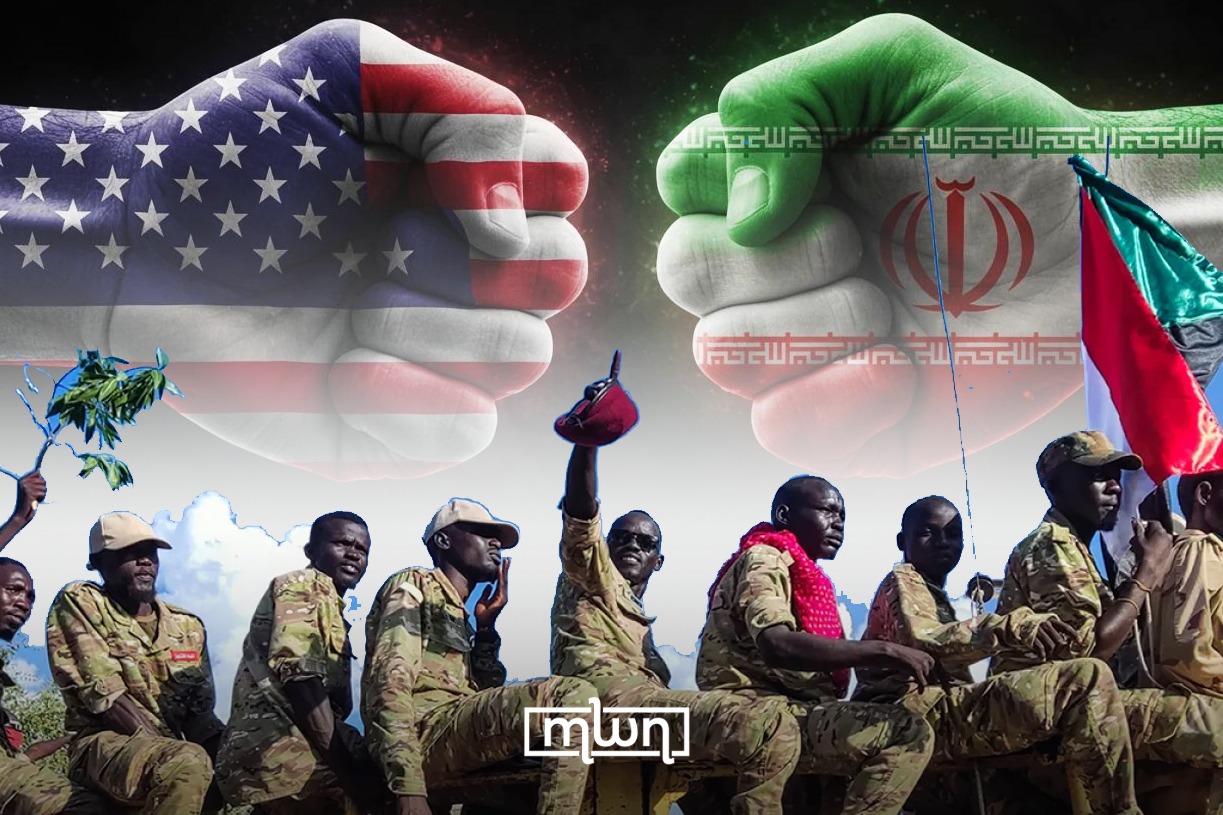
The U.S.-Iran conflict has sent geopolitical shockwaves not only through Iran’s familiar allies – Hezbollah, the Houthis, and Iraqi Shia militias – but also to the Horn of Africa, where Iran has established a foothold. By crippling the Iranian regime’s leadership and military capabilities (though the regime remains an asymmetrical threat), the U.S. has also weakened some of Iran’s lesser-known allies in Sudan, namely the Sudanese Armed Forces (SAF) and its closely enmeshed Sudanese Muslim Brotherhood.
Following the U.S. terrorist designation of the Sudanese Muslim Brotherhood, Western nations should follow suit – formally designating the group themselves, increasing scrutiny of Islamist organizations, and cutting off funding streams to further degrade their capabilities.
American pressure reverberates through Iran’s proxies to Sudan
U.S. actions against Iran have already shown tangible effects in limiting the influence of Iran’s allies. For example, sanctions have weakened Iran’s ability to fund Hezbollah in Lebanon. Earlier this year, the U.S. Treasury imposed sanctions on Iranian revenue sources funding the Houthis in Yemen, targeting entities linked to the group’s oil and weapons operations. Beyond financial measures, U.S. strikes against Iran directly threaten the regime and its network of militias across Iraq.
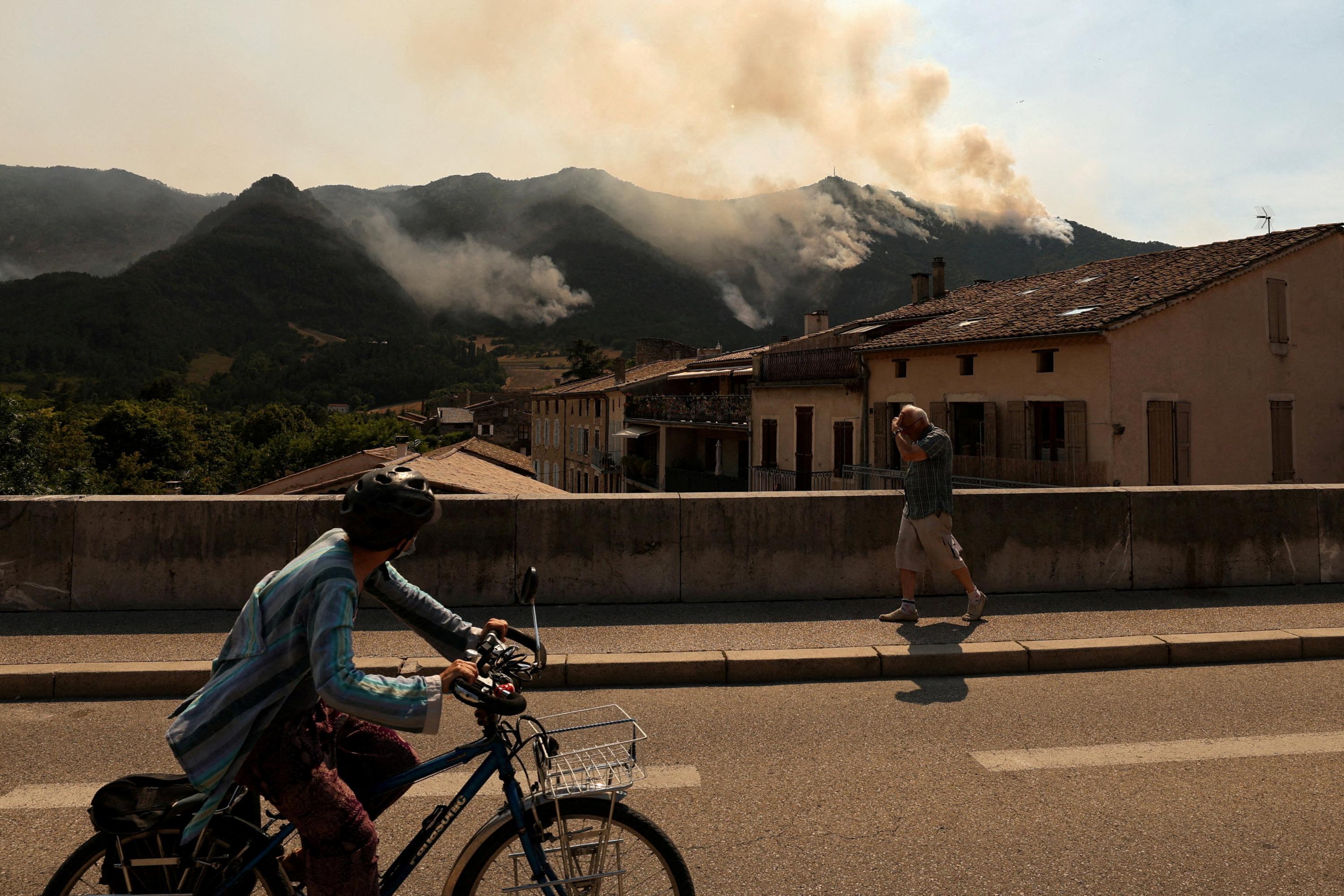
Iran’s lesser-known proxies in Sudan have taken notice, with some publicly declaring support for Tehran. Viral social media clips show SAF commanders, aligned with the Muslim Brotherhood, announcing their outright support for Iran. Another SAF Muslim Brotherhood officer urged Iran to attack its Gulf neighbors. Pro-Iranian rhetoric has worried Sudanese intelligence services, which determined that the military’s apparent tilt toward Tehran could adversely affect Sudan’s diplomatic relations, according to a leaked intelligence report. The same report indicates that the U.S.-Iran war has already disrupted elements of the SAF’s operational capabilities.
The collapse of its Iranian benefactor comes at a particularly hard time for Sudan’s Islamist forces, with Washington having recently designated the Sudanese Muslim Brotherhood as a Specially Designated Global Terrorist and a Foreign Terrorist Organization. The U.S. Treasury’s Office of Foreign Assets Control (OFAC) sanctions on other Sudanese Islamist actors, including the Al-Baraa Bin Malik Brigade, further restrict the Sudanese Islamists’ access to international financial channels and limit their ability to receive support from Iran.
An informed reader might find the Iranian-Sudanese Islamist alliance puzzling given centuries of Sunni-Shia hostility. Yet Sunni Islamist thinkers like Hasan al-Banna and Sayyid Qutb influenced not only the Muslim Brotherhood but also the Iranian revolution. Even the recently killed Ali Khamenei admired Qutb and translated some of his works into Farsi. With this shared ideological grounding – and common adversaries in the West – it is unsurprising that Iran supported Sunni Islamist groups across the region, from Hamas and Palestinian Islamic Jihad to Omar al-Bashir’s National Islamic Front in Sudan. Considering this history, the U.S. decision to add the Sudanese Muslim Brotherhood to its terror list aligns with longstanding U.S. policy to contain and neutralize Iran’s nefarious activities.
Absorbing Islamist militias into the SAF risks radicalizing it further
While the U.S. outlawing of the Sudanese Muslim Brotherhood is a positive step, its effectiveness faces a significant obstacle: upwards of three-quarters of the SAF is comprised of Muslim Brotherhood members, who are at all echelons. To meaningfully reduce the Brotherhood’s influence in Sudan, the U.S. needs to demand the decoupling of the Muslim Brotherhood from the SAF. If that proves unattainable, the U.S. should expand its pressure campaign to encompass the SAF itself, targeting the institutions and networks that enable Islamist dominance.
It is thus imperative to reject proposals such as that advanced by Yasser al-Atta, a member of Sudan’s Sovereign Council and deputy commander-in-chief of the armed forces, to integrate Islamist militias into the SAF. Absorption will not moderate these actors; on the contrary, integration risks radicalizing the SAF even further. The SAF’s extremist elements already committed widespread abuses against marginalized communities. In March of this year, the SAF killed 60 people in an attack on a Teaching Hospital. Formal integration would only expand their capacity to commit war crimes.
The international community must confront a Brotherhood-controlled SAF determined to obstruct peace
Even before the U.S. moved to designate Muslim Brotherhood chapters, Sunni-majority nations had already recognized the threat. Countries such as Egypt, Saudi Arabia, and the United Arab Emirates have outlawed the organization due to the existential threat it posted. By contrast, European governments have taken a more permissive approach, even though they too are at risk.
The UAE has gone so far as to restrict its citizens from studying in the United Kingdom due to fears of radicalization. Meanwhile, neither France nor Germany has enacted a formal ban, leaving Austria as the most prominent European case to implement one. Outside Europe, countries such as Australia have outlawed some Islamist organizations, though not the Muslim Brotherhood.
The international community must face the reality that Islamists control the SAF, making it an ineffectual partner for negotiating an end to Sudan’s civil war. By legitimizing the SAF as a negotiator, the international community risks prolonging this conflict into a fourth year with devastating consequences. With a death toll in the hundreds of thousands and, over 15 million people in need of aid, and 12 million displaced – many of whom will become concerned diaspora communities in the countries mentioned above – the world must fail in its response to this moment of reckoning posed by the Sudanese crisis.
So what could these countries do? First, they must proscribe the Sudanese Muslim Brotherhood through all available legal mechanisms. Second, they should identify and support alternative Sudanese parties that advocate for a more peaceful and pluralistic Sudan. Third, by taking these steps, they will also advance the interests of their own Sudanese diaspora communities, who are directly affected by the ongoing conflict.
The post Designate, Decouple, Defund: The West’s Strategy Against Sudan’s Islamist Forces appeared first on Morocco World News.